
Precision Flange-Integrated Hydraulic & Mechanical Systems
Explore our industrial-grade hydraulic actuators and precision-machined subsystems manufactured to strict dimensional tolerances for rigorous dynamic duty cycles.
Global Enterprise Sourcing Demand for Industrial Cylinder Flanges
Analyzing procurement dynamics, load dissipation requirements, and engineering selection parameters across heavy machinery, aerospace support, and offshore hydraulic architectures.
Severe Axial & Bending Fatigue Resistance
Global procurement heads in heavy construction and open-pit mining prioritize flanges engineered to absorb continuous cycle thrust and unexpected side loads. Front flange (MF3) and rear rectangular flange (MF4) configurations require strict finite element analysis (FEA) to verify that cross-sectional shear stress remains well below the fatigue threshold under multi-meganewton thrust spikes.
Metallurgical Integrity & Defect Elimination
Enterprise procurement specifications require isotropic grain flow achieved exclusively via closed-die forging or precision rolled billets. Casting porosities and lamellar tearing in poor-quality flanges lead to catastrophic high-pressure fluid leaks. Verified supply chains mandate 100% Ultrasonic Testing (UT) to ASTM A388 standards and complete EN 10204 3.1 chemical certification.
Total Cost of Ownership & Interchangeability
Standardized bolting patterns aligned with ISO 6020/2, ISO 6022, and NFPA standards prevent premature joint separation. Sourcing managers demand modular cylinder flange components that drop seamlessly into legacy mobile infrastructure, eliminating costly machining adaptations in the field and drastically minimizing unplanned asset downtime.
Macro Industry Engineering Solutions for Severe Cylinder Mountings
Comprehensive metallurgical matrix comparison and mounting geometry classifications delivering structural integrity for tier-1 original equipment manufacturers.
| Flange Mounting Standard | Common Materials | Primary Industrial Sector | Rated Yield Strength | Key Operational Advantage |
|---|---|---|---|---|
| ISO 6020/2 MF1 / MF2 (Head / Cap Rectangular) | AISI 1045 / C45E Normalized | Automated Tooling & Factory Injection | ≥ 355 MPa | Compact footprint; high rigidity against axial rebound tension. |
| ISO 6022 MF3 / MF4 (Circular Front / Rear) | 42CrMo4 / AISI 4140 Quenched & Tempered | Heavy Metallurgy, Continuous Casting Mills | ≥ 650 MPa | Symmetric circular bolt arrangement for uniform hydrostatic load distribution. |
| NFPA Flange Foot Style | Ductile Iron 65-45-12 / Cast Steel | North American Mobile Construction | ≥ 310 MPa | Excellent vibrational dampening and low mechanical crack propagation. |
| Subsea Marine Flange (Custom SAE) | Super Duplex UNS S32750 / 316L | Offshore Rigs & Deep-sea Winches | ≥ 550 MPa | Outstanding PREN (>42) pitting resistance in hypersaline ocean depths. |
| Integrated Monoblock Barrel Flange | Forged Q345B / 20MnV6 | Underground Mining & Excavator Booms | ≥ 490 MPa | Eliminates the structural heat-affected zone (HAZ) of external weld joints. |
Macro Commercial Ecosystem & Manufacturing Modernization
The global fluid power flange market is rapidly shifting from decentralized workshop fabrication to centralized multi-axis smart machining centers characterized by extreme process repeatability.
Supply Chain Resiliency
Global supply chain shocks have prompted tier-1 machine builders to consolidate procurement. Sourcing complete packages—including hydraulic cylinder heads, pistons, spherical bearings, retention knobs, and mounting flanges—from single-source precision manufacturers shortens purchasing cycle times from months to weeks.
Autonomous CNC Machining Precision
Modern cylinder flanges rely on 5-axis horizontal CNC centers featuring live tooling. Spigot concentricity, thread pitch alignment, and high-precision O-ring groove face finishes (Ra 0.8 μm) are executed in a single operational clamp, entirely removing human positioning variance and preventing seal extrusion blowouts.
Decarbonization & Lightweighting
By leveraging topological FEA optimization, contemporary flange designs cut non-functional structural mass by 14% to 22% without sacrificing ultimate load safety factors. This yields lighter overall boom weight on mobile vehicles, translating to measurable reductions in equipment diesel consumption.
Future Technology Roadmap: Next-Generation Cylinder Flanges
A strategic technological view into additive hybrid metallurgy, integrated telemetry sensing, and advanced nanotech surface treatments shaping fluid power engineering through 2030.
Embedded IoT Health Monitoring
Direct integration of micro-drilled fiber-optic strain gauges and piezoelectric pressure transducers into the flange perimeter. Enables real-time load telemetry, capturing erratic shock wave pressures and structural deflection right at the mechanical interface.
Directed Energy Deposition (DED)
Combining heavy forged structural steel hubs with 3D laser-deposited nickel-chromium alloys along internal fluid channels and sealing seats. Yields uncompromised subsea corrosion resilience while keeping commercial manufacturing costs economically viable.
Plasma Nitriding & Diamond-Like Coatings
Transitioning away from hard chrome plating toward ecofriendly microwave plasma nitriding and HVOF tungsten-carbide coatings, giving cylinder flange sealing faces superior resistance to fretting corrosion and high-velocity abrasive fluid erosion.
Localized Engineering Support & International Standards Compliance
Full-spectrum traceability, certified testing regimes, and responsive technical engineering services for seamless enterprise deployment worldwide.
Full Heat Traceability
Every single flange is laser-etched with a unique tracking serial number matching raw heat treat lot records, mechanical elongation tests, and metallurgical spectrographic analyses.
Non-Destructive Testing
Stringent internal MPI (Magnetic Particle Inspection) for micro-crack detection and coordinate measuring machine (CMM) verification on all Critical to Quality (CTQ) sealing grooves.
Corrosion Preservation
Multi-stage ultrasonic hydrocarbon wash combined with VCI vapor corrosion inhibitor packaging or zinc-nickel electro-galvanizing capable of passing 1,000+ hour ASTM B117 salt spray tests.
Rapid 24/7 OEM Response
Dedicated technical sales engineers deliver bilingual engineering support, reverse CAD drawing confirmations, and sample rapid prototyping to ensure on-time mass production.
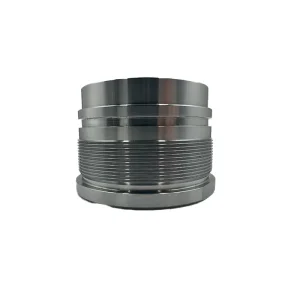
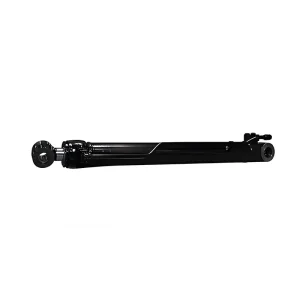
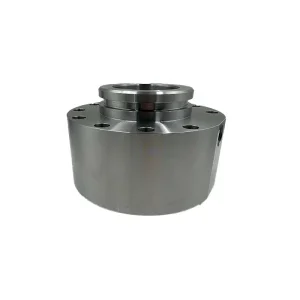
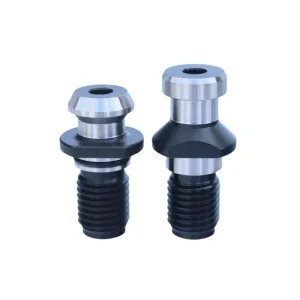
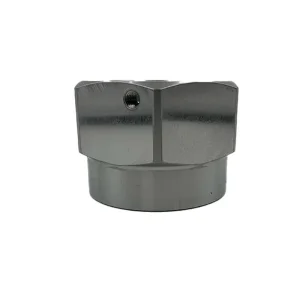
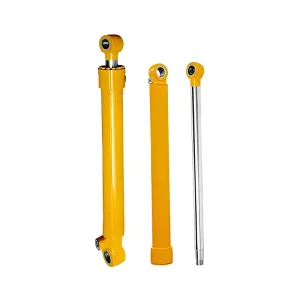
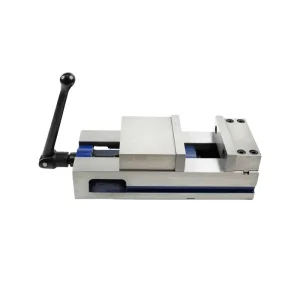
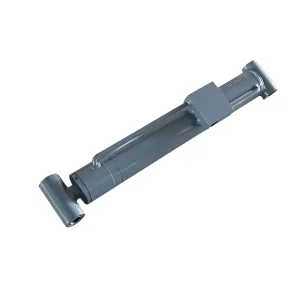
Precision Hydraulic Cylinder Parts, Tooling & Mounting Components
Complete your hydraulic actuation assembly with factory-direct precision parts, forged cylinder nuts, custom heads, retention studs, and heavy machine vises.
Frequently Asked Questions on Cylinder Flange Sourcing & Engineering
In-depth insights covering mounting selections, material parameters, fabrication approaches, and OEM customizations directly from experienced fluid power engineers.