Precision OEM Industrial Solutions: Core Actuation & Tooling
Engineered to micron-level runout and high-pressure tolerances. Sourced by global OEMs for mining, infrastructure, and automated multi-axis machining facilities.
The Physics of Spindle-Tool Interfaces: Total Indicator Reading & Harmonics
Evaluating toolholder dynamics, surface finish propagation, and why the CNC tool adapter is the primary bottleneck for operational throughput in precision engineering.
In high-speed and heavy-load modern CNC milling, boring, and turning environments, the cutting edge does not operate in isolation. The entire kinematic chain—from machine spindle bearings, through the mechanical clamping drawbar, across the taper-shank interface, into the CNC tool adapter, and finally holding the cutting tool shank—acts as a unified resonant harmonic system. When evaluating the Best CNC Tool Adapter Manufacturers & Factories, technical procurement directors cannot judge suppliers purely on nominal dimensional drawings. True machine productivity is governed by sub-micron Total Indicator Reading (TIR) runout, dynamic balancing grade (ISO 1940-1), structural core elasticity, and damping coefficients under severe chatter frequencies.
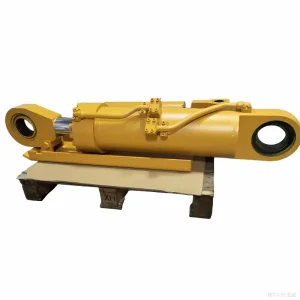
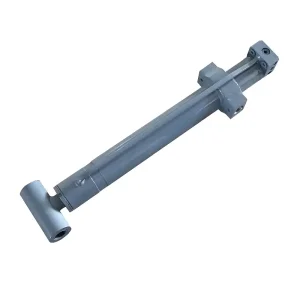
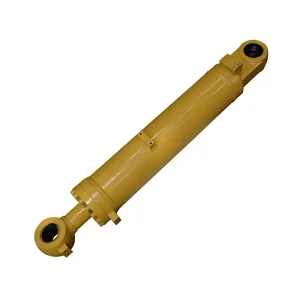
A toolholder runout of just 0.01 mm (0.0004 in) at the cutter edge reduces operational carbide insert life by upwards of 40% to 50%. This failure occurs because uneven chip thickness forces an asymmetrical mechanical load over one single cutting flute, inducing thermal micro-cracking and premature flank wear. Qingdao Micro Precision Machinery’s machining philosophy originated from our internal manufacturing of safety-critical hydraulic cylinders, deep-hole boring, and hard-turned valve bodies since 2006. We understand firsthand that poor clamping stiffness and taper fretting corrosion translate directly into dimensional deviations, surface gouging, and scrap parts on multimillion-dollar factory floors.
Macro Enterprise Sourcing: Tailored Adapter Solutions by Sector
How multi-tier manufacturing facilities across aerospace, energy, mold making, and heavy machinery structure their high-precision tooling inventory.
Aerospace & Defense 5-Axis Profiling
Demands HSK-A63/A100 and Dual-Contact BBT holders configured for difficult heat-resistant superalloys (Inconel 718, Titanium Ti-6Al-4V). The requirement centers on anti-pullout security (Safe-Lock systems) and internal high-pressure coolant channels (≥70 Bar) to evacuate heat during deep monoblock blisk pocketing.
Heavy Duty Hydraulic & Energy Plant Machining
Processing large excavator booms, massive crane cylinder barrels, and forging blocks requires BT50 and CAT50 adapters with maximum cross-sectional bending stiffness. Large side-lock Weldon mounts, morse taper adapters, and heavy face-mill arbors prevent micro-movement under interrupted cuts exceeding 12 mm depth.
High-Precision Die, Mold & Tooling Fabrication
Dies for automotive body stampings demand high surface finishes (Ra ≤ 0.2 μm) without bench polishing. Slim-contour shrink-fit adapters and ultra-precision ER/hydraulic chucks ensure access into steep cavities while operating smoothly at 20,000–35,000 RPM, eliminating chatter scallop marks entirely.
CNC Tool Adapter Spindle Interface Standard Comparison
A rigorous engineering comparison to guide factory procurement officers in selecting the proper clamping shank standard according to machine kinematics and duty cycle.
| Interface Standard | Contact Geometry | Max RPM Range | Radial & Axial Stiffness | Primary Industrial Applications |
|---|---|---|---|---|
| BT (JIS B6339 / MAS 403) | 7:24 Steep Taper Contact Only | 8,000 – 15,000 RPM | Moderate (Taper expands at high centrifugal speeds) | General mechanical milling, job shops, medium CNC vertical centers. |
| BBT (Dual Contact Face/Taper) | Simultaneous 7:24 Taper + Spindle Flange | 15,000 – 24,000 RPM | High (Flange face contact prevents axial Z-drift) | Automotive transmission housings, aerospace components, high-precision molds. |
| CAT (ANSI B5.50) | 7:24 Steep Taper Contact Only | 8,000 – 14,000 RPM | Moderate (Imperial drive slots with unequal depths) | North American production lines, infrastructure and defense machinery. |
| HSK (DIN 69893 Forms A/E/F) | 1:10 Hollow Shank + Dual Face Contact | 20,000 – 45,000+ RPM | Exceptional (Centrifugal force enhances internal clamping) | High-speed aerospace machining centers, multi-axis die sinking, medical micro-milling. |
| PSC (ISO 26623 Polygon Capto) | Polygonal 1:20 Taper + Flange Face | 10,000 – 25,000 RPM | Maximum Torsional (Zero keyway play, self-centering) | Turn-mill multi-tasking centers, heavy oilfield turning, specialized toolrooms. |
Critical Engineering Insight: Avoiding the "Taper Bell-Mouth" Phenomenon
At spindle speeds above 12,000 RPM, standard steep-taper 7:24 holders (BT40/CAT40) experience centrifugal expansion of the spindle nose. Under high speed and cutting load, the machine spindle bore expands faster than the solid toolholder shank, pulling the adapter upward along the Z-axis. This causes severe tool length inaccuracies, heavy fretting corrosion, and bell-mouthing of the spindle. For modern 4- and 5-axis applications, Qingdao Micro Precision Machinery recommends investing in dual-contact BBT or hollow-shank HSK-A interfaces to guarantee zero axial movement under maximum torque.
Factory Metrology & Metallurgy: What Separates Top-Tier Manufacturers
The manufacturing blueprint: how alloy steel forging, controlled sub-zero cryogenics, and automated grinding deliver consistency batch after batch.
When auditing potential suppliers for high-volume CNC toolholder and adapter supply contracts, procurement officers must look beyond polished showroom samples. The difference between an economy adapter that degrades after 300 machine hours and an industrial-grade adapter lies in strict raw material metallurgical selection, cryogenic heat stabilization, and sub-micron final finish grinding.
Alloy Selection: 20CrMnTi vs. SCM420
Premier factories reject generic low-carbon steel in favor of premium vacuum-degassed 20CrMnTi or SCM420 chrome-molybdenum alloy steel. These alloys guarantee exceptional surface case-hardening depth (0.8 – 1.2 mm) while maintaining an elastic, shock-absorbing ductile core (tensile strength ≥980 N/mm²) that prevents catastrophic breakage under heavy interrupted milling shock.
Deep Sub-Zero Cryogenic Treatment (-196°C)
Precision adapters undergo sub-zero cryogenic treatment in liquid nitrogen tanks for 24 to 48 hours following carburizing and quenching. This transforms retained austenite into fully stabilized martensite, eliminating residual internal stresses and ensuring the toolholder will not warp, distort, or lose its AT3 taper accuracy over years of thermal cycling.
CNC In-Process Air-Gauge Metrology
Every taper must pass precision pneumatic air-gage testing to guarantee taper contact area exceeds 85% to 90% (AT3 grade per DIN 7178). Spindle tapers ground on ultra-precision Studer CNC cylindrical grinders achieve surface roughness Ra ≤ 0.2 μm, preventing spindle fretting corrosion and micro-slippage during rapid directional reversals.
CNC Toolholding Technology Roadmap (2025 – 2030)
The progression toward digitalized Industry 4.0 machining: embedded sensors, active vibration damping, additive manufacturing, and near-zero carbon manufacturing.
Integrated RFID & NFC Data Storage
Direct integration of DIN 69873 / ISO 15686 compliant chips into toolholder flanges. Eliminates manual setup errors by automatically broadcasting measured tool length, radial runout offsets, and remaining insert cycle life directly to the CNC controller upon automatic tool change (ATC).
Additive Internal Viscoelastic Dampers
Selective Laser Melting (SLM) additive manufacturing creates internal non-linear lattices and hydraulic tuned-mass dampers inside long-reach boring bars and tool extensions. Chatter is suppressed at the cutting zone, enabling 6× to 10× diameter overhang ratios with zero vibration.
Wireless Piezoelectric Force Sensing
Adapters with embedded micro-strain gauges and wireless transmitters monitor real-time cutting torque, vibration frequencies, and interface temperature. Machine AI models adjust feed rates in milliseconds to prevent tool breakage during hard metal roughing.
Supercritical CO2 + MQL Micro-Channels
Internal dual-channel conduits deliver high-pressure liquid carbon dioxide (-78°C) mixed with precise micro-doses of ester oil directly to the cutting shear zone. Extends titanium and superalloy machining speeds by 200% while eliminating flooded toxic coolant sumps.
Localized Support, Strict Compliance & Export Quality Protection
Ensuring overseas procurement managers receive dependable deliveries, complete material traceability, and zero-defect customs clearance.
Sourcing precision CNC tooling and customized hydraulic components from industrial manufacturers requires confidence in logistics, packaging, and regulatory certifications. At Qingdao Micro Precision Machinery Co., Ltd., based in Qingdao, China (est. 2006), our export-grade logistics network delivers seamless supply continuity to North America, Western Europe, Southeast Asia, and South America.
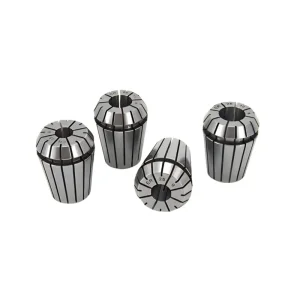
Every single batch of toolholders, retention knobs, ER collets, and hydraulic cylinders is packed using protective anti-corrosion VCI (Vapor Corrosion Inhibitor) packaging, wrapped in shock-absorbing protective foam sleeves, and packed into fumigated international wooden export crates. All shipments include complete EN 10204 3.1 Material Test Reports, heat treatment case-depth hardness documentation, and coordinate measuring machine (CMM) inspection reports. We maintain strict compliance with ISO 9001:2015, CE declarations for automated tooling units, and RoHS/REACH environmental safety standards.
| Compliance Parameter | Factory Inspection Standard | Export Verification Document |
|---|---|---|
| Dimensional & Taper Geometry | DIN 7178 Taper Angle, ISO 6H Thread Tolerance, DIN 69871 Flange Width | 100% CMM & Air Gauge Full Inspection Report |
| Metallurgy & Heat Treatment | Case depth 0.8-1.2mm, Surface Hardness 58-62 HRC, Core 32-38 HRC | EN 10204 3.1 Chemical & Metallurgical Certificate |
| Dynamic Balancing | ISO 1940-1 Grade G2.5 at 20,000 / 25,000 RPM Specification | Individual Dynamic Balance Graph and Certification Stamp |
| Packaging & Rust Protection | DIN EN ISO 11348 Rust Resistance under 95% Sea Transit Humidity | Triple Vacuum Sealing + VCI Rust Inhibitor Barrier Pass |
Frequently Asked Questions: CNC Tool Adapters & Actuation Sourcing
In-depth technical answers addressing the most common questions raised by manufacturing directors and corporate sourcing professionals.
Precision Tooling, Workholding & Flow Control Valves
Engineered components designed for heavy industrial automation, machining centers, earthmoving vehicles, and hydraulic circuit management.
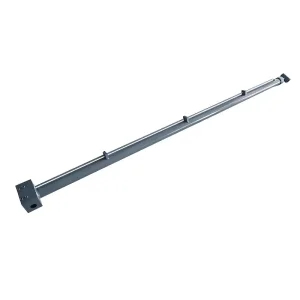
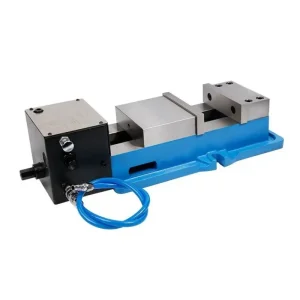
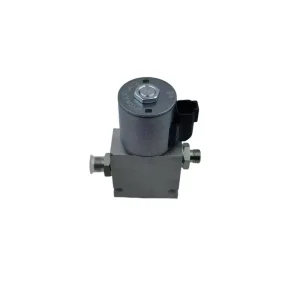
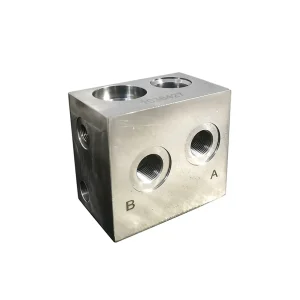
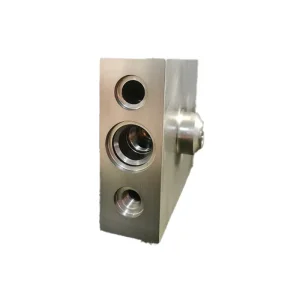
Cheap T13A Hydraulic Flow Control Valve Block MPM-HFCVB13A Supplier, Manufacturers
View Specifications