
High-Duty Hydraulic Actuators & Control Units for Mining Operations
Essential hydraulic motion control modules deployed in deep extraction, heavy payload haulage, and dynamic sorting platforms across Conakry's export terminals.
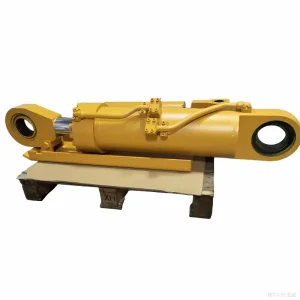
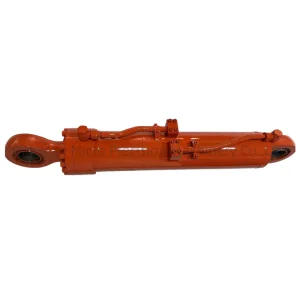
Macro-Industrial Dynamics: The Strategic Role of Heavy Fluid Power in Guinea’s Mining Axis
The Republic of Guinea stands as an epicentre of global natural resource extraction, possessing over a third of the planet’s known high-grade bauxite reserves alongside the monstrous iron-ore wealth of the Simandou range. As the principal logistics, administrative, and maritime portal of the country, Conakry functions as the ultimate clearinghouse for all intensive extractive machinery. Bauxite transit from the inland corridors of Boké, Boffa, and Kindia funnels directly toward Conakry and associated maritime terminals such as Kamsar and Port de Dapilon. Under these relentless production regimes, mobile extraction equipment—including 400-ton excavators, heavy articulation haul trucks, continuous ship loaders, and underground Load-Haul-Dump (LHD) utility vehicles—is pushed to extreme utilization rates running continuously on a 24/7 basis.
Within this high-throughput environment, hydraulic cylinders act as the primary muscular force transmitting immense mechanical loads. A single mechanical fracture, rod micro-pitting incident, or high-pressure seal blowout on a critical hydraulic cylinder halts the mining value chain, creating substantial downstream financial repercussions that can exceed tens of thousands of dollars per hour. The abrasive nature of laterite clay, pulverized bauxite dust (notoriously high in aluminum oxide silicates), seasonal torrential monsoons, and extreme maritime salinity present an operational trifecta that rapid degrades conventional hydraulic actuators. Achieving hydraulic reliability in Conakry demands specialized metallurgy, advanced tribological rod surface treatments, engineered seal packages, and fail-safe safety blocks built specifically for uncompromised longevity.
Global Engineering Needs vs. African Local Extraction Realities
Global multi-national mining consortia operating within West Africa require rigorous adherence to global standards: ISO 10100 for hydraulic cylinder testing, ISO 4406 for oil particulate cleanliness, and DIN/EN design margins for cyclic stress tolerance. However, field realities in the regions surrounding Conakry present acute operational friction: intermittent supply of ultra-clean hydraulic fluids, heavy thermal shocks alternating between scorching daytime direct insolation and tropical deluges, and the invasive particulate threat of fine bauxite and laterite. These micro-fine dust particles enter wiper-seal assemblies, acting as an abrasive lapping compound that causes scoring on cylinder rods, accelerating internal cross-contamination and catastrophic seal bypass.
As a seasoned precision engineering and manufacturing authority, Qingdao Micro Precision Machinery mitigates these operating factors. We implement dual-lip polyurethane/PTFE stepped rod wipers reinforced with brass anti-contamination scraper rings that mechanically strip hardened crystalline laterite scale before it contacts secondary elastomeric seals. For corrosive marine atmospheric risks along the Port of Conakry loading quays, standard chrome-plated rods are replaced or upgraded with micro-cracked hard chrome coatings over induction-hardened 42CrMo4 alloy cores, or optionally treated with advanced high-velocity oxygen-fuel (HVOF) thermal spray tungsten carbide coatings that exhibit zero corrosion over extended field service.
Technological Architecture: Heavy Hydraulic Engineering Framework
Engineered structural specifications designed to eliminate structural yield, internal micro-leakage, and premature rod buckling under cyclic mechanical shocks.
Metallurgical Integrity & Cold Honing
Fabricated from cold-drawn ST52.3 / E355 or seamless 27SiMn alloy barrels. Precision honed internally to Ra ≤ 0.2 µm surface roughness to maintain complete hydro-dynamic lubrication films under high load dynamics.
Triple Barrier High-Temp Sealing
Utilizing high-grade Fluoroelastomer (FKM) and engineered PTFE compounds capable of operating continuously up to 120°C, preventing seal hardening and extrusion failures caused by sustained hydraulic fluid friction.
Integral Dynamic Cushions & Valves
Integrated progressive deceleration cushions engineered directly into the cylinder base and head caps, absorbing kinetic energy at end-strokes and preventing impact damage during heavy bucket cycle transitions.
| Performance Parameter | Standard Mining Specification | Conakry Extreme-Duty Specification | Testing & Compliance Protocols |
|---|---|---|---|
| Nominal Working Pressure | 25 - 31.5 MPa (250 - 315 Bar) | 35 - 42 MPa (350 - 420 Bar) | 100% Hydrostatic Proof Test (1.5x Overpressure) |
| Piston Rod Core & Coating | 45# Carbon Steel + Hard Chrome | 42CrMo4 Induction Hardened + Nickel-Chrome / HVOF | ASTM B117 Salt Spray ≥ 850 Hours verified |
| Seal Configuration | Standard NBR + Polyurethane U-cup | PTFE Step Seals + FKM O-Rings + Brass Wipers | ISO 3601-1 Dimensional / Zero Leakage Target |
| Bore Diameters Available | Φ40 mm to Φ320 mm | Φ80 mm to Φ600 mm (Custom Large-Bore) | Precision Laser Metrology & Ultrasonic Wall Check |
| Integrated Safety Controls | Optional External Check Valves | Direct-Flanged Overcenter / Hose-Burst Cartridges | Dynamic Response Lock-in < 15 Milliseconds |
Localization Strategy, West African Supply Chain Security, and Support
A persistent vulnerability faced by mine operators in the Boké and Simandou zones is lengthy logistics lead times from North America and Europe. Air freighting emergency replacements weighing upwards of 800 kilograms is economically unsustainable, while standard sea freight cycles from standard regional distributors can lead to downtime lasting months. Qingdao Micro Precision Machinery addresses this critical bottleneck through streamlined export workflows originating from Qingdao port—one of the largest deep-water industrial shipping hubs globally—connecting directly with the Autonomous Port of Conakry (Port Autonome de Conakry - PAC).
We provide localized engineering support by preparing tailored spare parts kits alongside whole-cylinder replacements. Our technical packages include pre-matched seal sets, replacement cylinder heads, induction-hardened piston rods, and manifold service valves matched to each serial-numbered actuator. Through comprehensive technical dossiers provided in both English and French, engineering teams on-site at Boké, Boffa, and Kamsar can execute preventative refurbishments with zero field-machining required, eliminating unplanned production delays and maintaining consistent ore throughput.
Technology Roadmap: Smart Sensors, Digital Health Monitoring, and Decarbonization
The global mining sector is accelerating toward automated, sensor-guided extraction fleets. In alignment with this shift, our advanced engineering division is integrating smart sensing architectures directly into custom mining cylinders destined for West African deployments. By embedding digital linear variable differential transformers (LVDTs) and non-contact magnetostrictive stroke sensors securely within the pressurized cylinder core, real-time displacement telemetry can be streamed directly to machine control systems. This enables automated bucket positioning, autonomous haulage coordination, and real-time boom angle monitoring across active surface operations.
Simultaneously, pressure and temperature transducer micro-ports integrated into our hydraulic manifolds provide predictive maintenance warnings. Sensor arrays detect minute variations in pressure drop rates and unexpected thermal elevation across sealing interfaces, alerting central control teams to internal seal wear weeks before a complete breakdown occurs. This operational visibility facilitates scheduled maintenance during planned fleet shutdowns, avoiding unexpected mid-shift structural breakdowns in active mining zones.
Frequently Asked Questions (FAQ) for Conakry Mining Procurement
Comprehensive technical and commercial clarifications regarding custom fabrication, delivery lead times, and metallurgical choices for Guinean operating sites.
How do your hydraulic cylinders resist the highly abrasive bauxite dust common in Guinea?
Can you manufacture 1:1 drop-in replacement cylinders for global OEM fleets like CAT, Komatsu, or Sandvik?
What is the typical maritime shipping lead time from your factory to the Port of Conakry?
How do you guarantee that cylinder weld seams will not fatigue under heavy cyclic mining shocks?
What documentation and certifications are provided with shipments to Guinea?
Specialized Mining Actuators, Precision Tooling & Hydraulic Components
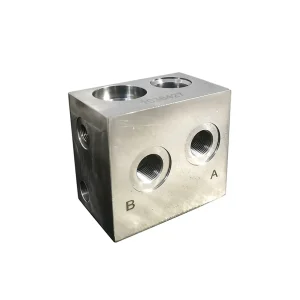
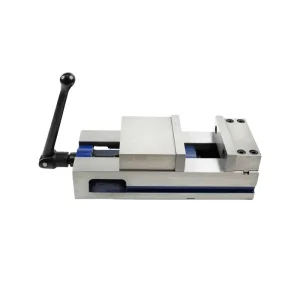
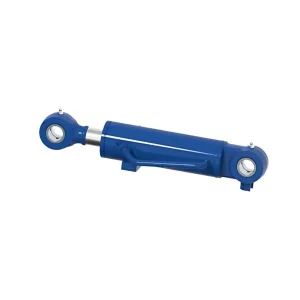
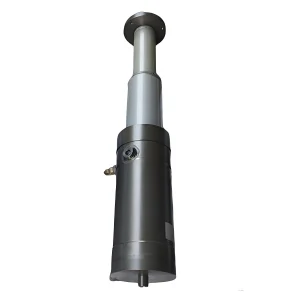
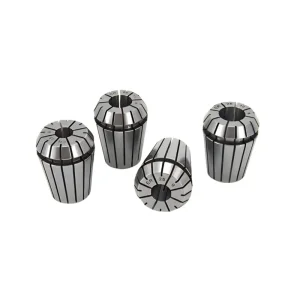
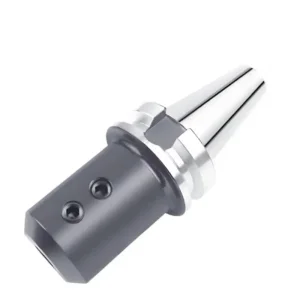
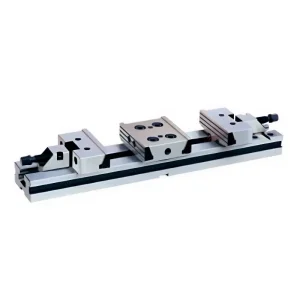
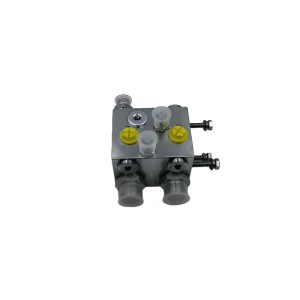
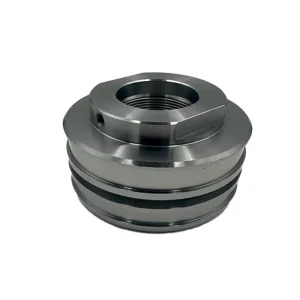
Comprehensive auxiliary portfolio: OEM cylinder assemblies, multi-stage telescopic hoists, manifold control valves, and CNC tooling for maintenance workshops.
Ready to Upgrade Your Mining Equipment Fluid Power?
Contact our specialized industrial fluid power engineers today to discuss your technical drawings, bespoke dimensions, or fleet-wide component replacement requirements in Conakry, Boké, Kindia, and the Simandou mining corridor.
Send Inquiry Now