
High-Precision Hydraulic & Tooling Assemblies
Direct factory supply of precision-machined tool arbors, multi-stage telescopic cylinders, high-pressure directional control valves, and heavy-duty industrial workholding modules.
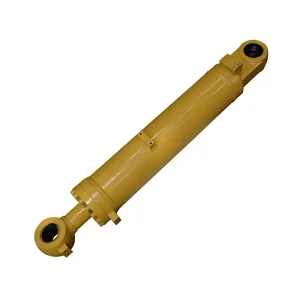
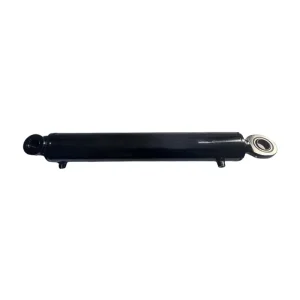
Engineering High-Reliability Steering Actuators: Kinematics, Dynamics & Fluid Control
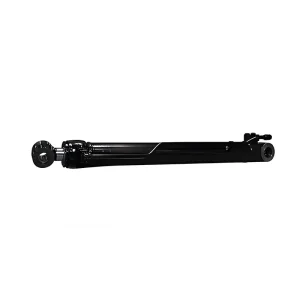
Steering actuation represents one of the most safety-critical dynamic subsystems in modern off-highway equipment, heavy transport, and electro-hydraulic mobile platforms. Unlike typical lifting or tilting cylinders that operate unidirectionally against gravitational resistance, a steering actuator operates in continuous, bi-directional equilibrium under fluctuating torsional, radial, and lateral shock loads.
At Qingdao Micro Precision Machinery Co., Ltd. (MPM), our two-decade manufacturing tenure highlights that steering failure rarely stems from catastrophic yield failure of the barrel shell. Rather, field degradation originates from tribological micro-galling between the rod and gland bushing, lateral side-load eccentricity, micro-fissuring of the hard chromium matrix, or seal extrusion caused by high-frequency pressure peaks.
Symmetrical vs. Asymmetrical Kinematic Architecture
Off-highway steering dynamics rely predominantly on two physical architectures: balanced double-acting equal-displacement dual-rod cylinders and paired single-rod cross-linked configurations. In a dual-rod balanced actuator, the effective piston surface area ($A_1$) is mathematically identical on both extension and retraction chambers ($A_1 = A_2 = \frac{\pi}{4}(D_{bore}^2 - d_{rod}^2)$). This structural equality ensures homogeneous fluid volume displacement per unit time ($Q = v \cdot A$), providing identical steering velocity, force response, and wheel-turning inertia in both port directions.
Conversely, in compact axle installations where chassis envelope dimensions preclude through-rod designs, MPM designs custom single-rod asymmetrical steering actuators engineered with progressive internal bypass ports or paired in opposing cross-compensating hydraulic topologies to cancel out differential volumetric velocity.
Dynamic Side-Load Absorption & Bearing Stress
When an articulated loader or heavy-duty quarry hauler navigates severe rutting, violent radial reactions transfer directly through the steering knuckle into the cylinder spherical eye ends. If the cylinder’s internal guide length-to-diameter ratio ($L_g / D_b$) is undersized, the localized contact stress ($\sigma_{contact}$) on the bronze-impregnated or composite PTFE guide rings will exceed material elastic yield limits.
MPM incorporates CNC-machined spheroidal graphite iron (QT500-7) or 40Cr-forged cylinder heads fitted with extended dual-bearing rings. This geometric configuration dissipates angular bending moments across a broader contact surface, preventing metal-to-metal contact with the piston rod even under extreme transient chassis articulation angles exceeding 40 degrees.
| Actuator Engineering Parameter | Standard Industrial Spec | MPM Precision Heavy-Duty Spec | Operational Engineering Benefit |
|---|---|---|---|
| Bore ID Honing Tolerance | ISO H9 to H10 (Ra 0.4–0.8 µm) | ISO H8 Skived & Roller Burnished (Ra < 0.2 µm) | Significantly minimizes micro-leakage and extends dynamic seal lifespan beyond 1,000,000 cycles. |
| Piston Rod Surface Hardness | HRC 28–32 (Standard Induction) | HRC 55–60 (Case Depth 1.8–2.5 mm; 42CrMo4) | Prevents rod bruising, surface indentation from road debris, and micro-cracking under deflection. |
| Hard Chrome Plating Thickness | 15–20 µm Single Layer | 30–50 µm Micro-Cracked Chrome (>30 cracks/mm) | Traps microscopic lubricating boundary oil films while enduring >500 hrs ASTM B117 salt spray testing. |
| End-of-Stroke Deceleration | External Bump Stops / None | Integrated Hydraulic Cushioning (Floating Bushing) | Eliminates chassis shock loads, dampens kinetic energy, and protects internal tie-rods/threads from sheer. |
| Working Pressure Range | 16–21 MPa (160–210 Bar) | Nominal 28–35 MPa (Peak Proof: 42 MPa / 420 Bar) | High power density enabling reduced actuator envelope dimensions in congested electric chassis. |
Enterprise Sourcing: Managing Total Cost of Ownership (TCO) in Wholesale Actuators
Strategic purchasing managers evaluate hydraulic steering actuators beyond the baseline invoice price. Reliability metrics, warranty claim exposure, and downtime liabilities define true acquisition economics.
Direct Invoice vs. Lifetime Failure TCO
Procuring low-cost steering cylinders with inferior rod finishes and generic nitrile seals yields negligible initial savings that vanish upon the first field leak. A steering cylinder failure during mining operations can incur downtime losses exceeding $5,000 per hour.
- Zero internal drift sealing eliminates redundant cycle pump work.
- High-grade polyurethane buffers minimize shock transmission to the chassis.
- Extended MTBF (Mean Time Between Failures) past 15,000 operating hours.
PPAP Level 3 & APQP Compliance
Global Tier-1 heavy equipment OEMs mandate strict compliance with Automotive and Off-Highway Advanced Product Quality Planning frameworks. MPM operates under documented verification gates from preliminary CAD kinematic review to final PPAP submission.
- Material Mill Test Reports (MTR) according to EN 10204 3.1.
- Coordinate Measuring Machine (CMM) dimensional capability reports.
- Full Failure Mode and Effects Analysis (DFMEA & PFMEA) documentation.
Supply Chain Agility & Container Logistics
Uncertain maritime schedules and port bottlenecks require Tier-1 component manufacturers to maintain optimized packaging geometry, rapid batch traceability, and seamless customs classification protocols.
- Corrosion-inhibiting VCI vacuum encapsulation for maritime routes.
- Certified ISPM-15 heat-treated fumigated wooden export crating.
- Direct dispatch from Qingdao deep-water container terminal hub.
Sector-Specific Actuation: Engineered for High Duty-Cycle Environments
No single hydraulic specification satisfies all mobile applications. MPM tailors actuator metallurgy, sealing compounds, and port geometry to match specific industry duty cycles.
Construction & Earthmoving
Articulated dump trucks, wheeled loaders, and backhoe units undergo severe oscillating steering demands through mud, gravel, and ambient temperature shifts (-30°C to +50°C).
- Heavy-gauge cold drawn ST52 / E355 barrels.
- Polyurethane metal-cased scrapers block stone chips.
- Integrated pilot-operated check valves prevent steering drift.
Subterranean Mining & LHD Fleets
Underground Load-Haul-Dump (LHD) equipment operates in cramped, abrasive tunnels exposed to acidic mine drainage, intense humidity, and continuous three-shift operations.
- Nickel-chromium dual-layer plating for acid resistance.
- Heavy forged spherical rod ends with grease lubrication channels.
- High-temperature fluoroelastomer (FKM/Viton) dynamic seals.
Precision Autonomous Agriculture
Modern GPS-guided row-crop tractors and autonomous combines demand sub-millimeter steering responsiveness to avoid crop trampling during autonomous navigation.
- Ultra-low breakaway friction PTFE bronze-composite seals.
- Integration-ready for electro-hydraulic proportional orbital valves.
- High volumetric efficiency eliminating directional hysteresis.
Material Handling & Forklifts
Electric counterbalance forklifts, reach stackers, and automated guided vehicles (AGVs) demand compact dual-rod steering actuators with integrated tie-rod-free designs.
- Compact balanced dual-acting geometry for tight turning radii.
- Ultra-quiet hydraulic flow pathways to minimize noise emissions.
- Integrated mounting flanges matching leading axle beam specs.
Metallurgical Discipline & Precision CNC Machining Operations
Hydraulic actuator longevity is determined on the machine shop floor. Qingdao Micro Precision Machinery operates advanced multi-axis CNC machining centers, high-capacity skiving and roller-burnishing equipment, and automated induction-hardening lines dedicated to eliminating geometric runout.
Barrel Honing vs. Roller Burnishing
Traditional honing methods rely on abrasive stones that generate cross-hatch micro-grooves. While effective for holding lubricating films in low-pressure pneumatic systems, in high-pressure (35 MPa) steering circuits, excessive cross-hatch depth triggers micro-abrasion along the primary elastomeric seal lip.
MPM utilizes CNC skiving and cold-roller burnishing technology on seamless cold-drawn steel tubes (E355/DIN 2391). The burnishing tool physically deforms surface micro-peaks into micro-valleys, inducing residual compressive stress in the inner barrel wall while achieving a mirror surface finish of $Ra \le 0.15\ \mu m$. This surface treatment enhances fatigue limit resistance under cyclic pulsating pressures by up to 25%.
Rod Metallurgy & Tribological Hard Chromium
Our steering actuator rods utilize high-tensile alloy steels, specifically 42CrMo4 (AISI 4140) or quenched-and-tempered 20MnV6. Raw bars undergo multi-pass centerless precision grinding to achieve strict ISO f7 or f8 diameter tolerances, preventing gland clearance blow-by.
High-frequency induction hardening achieves a controlled case depth of 1.8 mm to 2.5 mm with a core hardness transition designed to absorb dynamic impact bending without brittle fracture. Electro-plated micro-cracked hard chrome is deposited with controlled crack densities exceeding 30 cracks per linear millimeter, optimizing oil retention and corrosion protection in aggressive ambient environments.
Robotic Friction & Submerged Arc Welding
Critical structural connections between the cylinder barrel, blind end cap, and forged mounting trunnions are joined using closed-loop robotic submerged arc and friction welding setups. Ultrasonic flaw detection (UT) is executed across 100% of safety-critical weld seams.
Cleanroom Seal Installation
Hydraulic fluid contamination causes over 75% of mobile hydraulic system breakdowns. MPM assembles actuator glands, high-performance Hallite/Parker seal packs, and composite guide rings within an ISO Class 7 positive-pressure cleanroom assembly facility.
100% Hydrostatic Pressure Proof Testing
Every actuator produced undergoes rigorous dual-stage testing on digital test stands: low-pressure seal seating at 1.5 MPa followed by high-pressure proof testing at 150% rated design pressure (up to 42 MPa), verifying zero internal slip and zero external weeping.
Next-Generation Actuation: Steer-by-Wire & Intelligent Sensor Integration
The global shift toward electrification, automated navigation, and tele-operated heavy fleets is replacing mechanical steering columns with intelligent electro-hydraulic actuation modules.
Integrated Linear Transducers (LVDT / Magnetostrictive)
Modern autonomous steering demands continuous absolute position feedback. MPM integrates deep-gun-drilled piston rods with sealed, non-contact magnetostrictive sensor probes.
- Resolution down to < 0.05 mm for precise wheel angle tracking.
- Fully protected within the oil chamber against gravel, mud, and water jet washdowns (IP69K).
- CANopen and SAE J1939 digital bus interface output options.
Electro-Hydraulic Steer-by-Wire (SbW) Architecture
Eliminating physical hydraulic lines from the operator cab reduces noise, cabin heat, and hydraulic burst hazards. Our SbW steering assemblies incorporate manifold-mounted proportional servo valves.
- Dual-redundant spool position sensors ensuring ISO 13849 PL-e compliance.
- Sub-15 millisecond full-stroke directional response time.
- Dynamic speed-sensitive steering resistance feedback for operators.
IoT Predictive Diagnostics & Condition Monitoring
Future-ready actuator designs feature embedded high-frequency pressure transducers and micro-accelerometers that stream real-time operational telemetry to vehicle ECUs.
- Detects seal degradation and micro-bypass leakage prior to field failure.
- Tracks cumulative pressure-cycle history for predictive fatigue life tracking.
- Supports remote fleet condition-based maintenance (CBM) strategies.
Global Sourcing Strategies: Navigating Wholesale Procurement Dynamics
Strategic original equipment manufacturers and Tier-1 distributors balance cost, production capacity, and supply chain continuity through targeted global manufacturing partnerships.
The Qingdao Heavy Machinery Manufacturing Cluster
Qingdao serves as one of the world's primary industrial epicenters for heavy equipment engineering, structural steel fabrication, and precision hydraulic components. Operating in this dense industrial ecosystem provides MPM with distinct manufacturing advantages: immediate access to premier steel mills (such as Baosteel and Xingcheng Special Steel), high-precision plating infrastructure, and specialized heat treatment facilities.
Furthermore, our direct physical proximity to Qingdao Port—one of the largest deep-water automated container terminals globally—eliminates costly domestic inland transshipment, mitigates intermodal transfer damage, and shortens transit lead times to European, North American, and Asia-Pacific industrial corridors.
Dual-Sourcing & Risk Mitigation for Global OEMs
Global supply chain disruptions over recent years have exposed the vulnerabilities of single-region component sourcing. Forward-thinking equipment builders have implemented diversified dual-sourcing strategies, pairing domestic assembly with high-volume, cost-optimized component manufacturing partners in China.
MPM acts as a high-capacity contract manufacturing partner, providing exact interchangeability with leading European and American cylinder footprints (complying with ISO 6020/2 and DIN 24554 dimensional mounting geometries). This guarantees seamless production continuity without chassis redesign investments.
Regulatory Compliance, Material Traceability & Field Support
Ensuring complete accountability across every stage of the manufacturing cycle through international compliance certifications and comprehensive metallurgical documentation.
Complete Heat-Lot Traceability
Every single cylinder barrel, rod, and piston machined in our facility is laser-etched with a discrete serial identification number linked to its raw material melt-heat number, heat treatment log, and inspection record, fully compliant with EN 10204 3.1 material test certification standards.
Environmental & Safety Compliance
Our surface electroplating, painting, and cleaning operations conform strictly to international environmental mandates, including European REACH (EC 1907/2006) regulations and RoHS directives. All finished components receive multi-coat waterborne polyurethane industrial finishes with high anti-corrosion ratings.
Dedicated Global Engineering Support
Our engineering support services extend beyond dispatch. MPM’s English-speaking mechanical and fluid-power sales engineers provide direct technical support, reverse-engineering guidance from field-worn samples, CAD 3D modeling support (STEP/IGES), and rapid prototype deliveries within 3 to 4 weeks.
Frequently Answered Engineering & Sourcing Questions
Direct technical feedback addressing the operational, metallurgical, and commercial inquiries most critical to procurement directors and chief mechanical design engineers.
What engineering parameters are mandatory to generate a formal production quotation?
Can MPM reverse-engineer steering actuators from field-worn OEM samples?
How does MPM prevent piston rod bending and seal extrusion during high-pressure steering spikes?
Which international manufacturing standards and thread profiles do your factories support?
What are typical production lead times for prototype development versus wholesale volume orders?
How does MPM manage internal cleanliness and particle contamination prior to export packaging?
Complementary Hydraulic Actuation, Valving & Machining Tooling
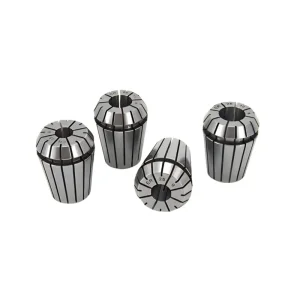
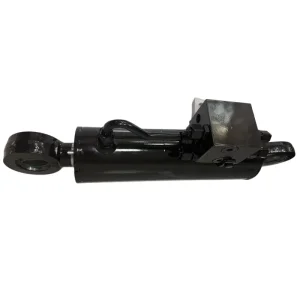
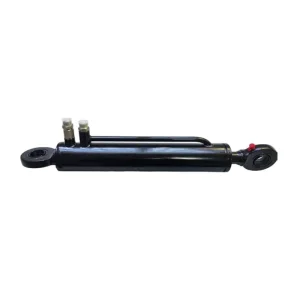
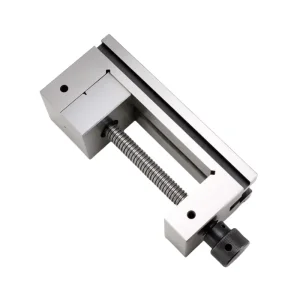
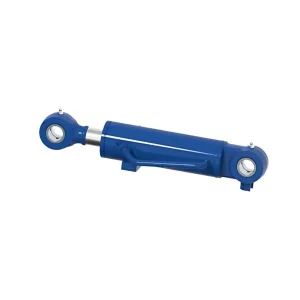
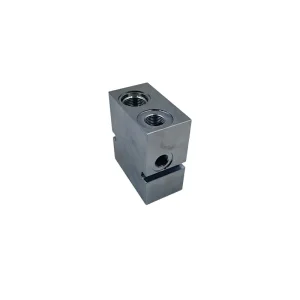
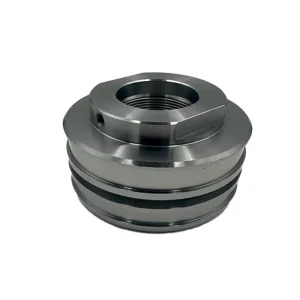
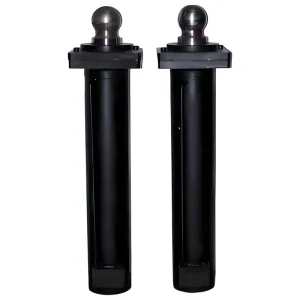
Explore our wholesale line of specialized agricultural turnover cylinders, single-rod steering components, precision collets, machine vices, and heavy replacement pistons.
Request an Engineering Review & Wholesale Quotation
Connect directly with our fluid power engineering team in Qingdao. Submit your cylinder specifications, dimensional drawings, or field replacement requirements for rapid technical evaluation and direct volume pricing.