Precision Hydraulic & Mechanical Tooling Catalog
Explore our export-certified CNC accessories, hydraulic cylinders, and high-tolerance engineered components built for international distributors.
High-Precision ER Collet Clamping Nut Architecture
A comprehensive technical overview of clamping mechanics, dynamic thread design, and harmonic stability in automated milling systems.
In high-speed CNC milling, drilling, engraving, and tapping operations, the ER Collet Clamping Nut represents the primary mechanical nexus between spindle torque transmission and end mill stability. An inferior clamping nut introduces microscopic runout (T.I.R.), uneven circumferential preload, and centrifugal harmonic vibration, which drastically degrades carbide cutting edge longevity and ruins part surface finishes. As a verified ISO 9001 certified CNC tooling and precision hydraulic component manufacturer based in Qingdao, China, Qingdao Micro Precision Machinery Co., Ltd. (established in 2006) engineers industrial-grade clamping nuts adhering strictly to DIN 6499 / ISO 15488 mechanical tolerances.
Every ER nut manufactured in our automated machining center is processed through forged 42CrMo alloy structural steel or premium 20CrMnTi carburizing steel. Following multi-axis CNC thread turning, our nuts undergo sub-zero cryogenic heat treatment and gas carbonitriding to achieve uniform case hardening (HRC 54–58) while retaining exceptional core fracture toughness. The internal eccentric extraction ring is ground with micron-level tolerances, allowing effortless collet snap-in locking and distortion-free extraction during automated tool change cycles.
Standard Hex & Slotted A/UM Types
Engineered for conventional vertical machining centers and general job shop routing. Designed with precision-machined external wrench slots or hexagonal drive flats conforming to universal spanner standards.
- Thread standards: M13x0.75 to M64x2.0
- Black oxide & chemical nickel rust protection
- Recommended for spindle speeds up to 15,000 RPM
G2.5 High-Speed Balanced Nuts
Dynamically balanced via asymmetric peripheral perimeter milling or calibrated micro-drilling. Mitigates centrifugal forces that cause tool deflection and spindle bearing micro-fretting.
- Rated for 25,000 to 30,000 RPM HSC milling
- Total runout deviation controlled under 0.003 mm
- Laser-engraved RPM and maximum torque specs
Frictionless Ball-Bearing Clamping Nuts
Equipped with an internal hardened ball-bearing raceway ring. Eliminates torsional friction transmitted into the spring collet during manual tightening, boosting axial clamping force by over 25%.
- Prevents collet micro-twist and radial taper gouging
- Superior grip for deep heavy-roughing operations
- Compatible with standard ER tool holder arbors
China Factory Direct Supply Chain Competitiveness
Leveraging Qingdao’s integrated maritime logistics and vertically consolidated precision CNC turning, grinding, and metallurgical infrastructure.
In-House CNC Fleet & Grinding
Our 3,500 m² modern manufacturing plant operates multi-axis automated CNC turn-mill centers, cylindrical internal/external grinding stations, and automated thread whirlers capable of outputting over 20,000 precision components each month.
- Direct oversight from raw billet cutting to final lap
- Sub-micron laser inspection benches on line
- Continuous batch repeatability across high-volume OEM runs
Tier-1 Alloy Sourcing & Metallurgy
We source certified metallurgical bars directly from domestic heavy-industry steel hubs. Complete heat treatment reports, spectrometry chemical composition certifications, and ultrasonic non-destructive testing accompany every wholesale consignment.
- Traceable batch tracking from smelt to carton
- Controlled quenching atmospheres preventing decarburization
- Enhanced fatigue resistance under severe thermal shock
Qingdao Port Global Shipping Hub
Situated within an hour of Qingdao Port (one of the world's premier container ports), our facility affords overseas industrial procurement agents streamlined sea freight consolidations, express air corridors, and rapid customs clearance.
- Fast export turnaround for palletized bulk orders
- DDP, FOB, CIF, and CFR trade incoterm flexibility
- Heavy-duty anti-corrosion VCI sealed export packing
| ER Collet Nut Model | Standard Thread Pitch | Outer Diameter (mm) | Spanner Type | Max Recommended Torque | Balancing Grade Options |
|---|---|---|---|---|---|
| ER8-A / ER8-M | M10 × 0.75 | 12.0 mm / 13.5 mm | Mini A / Hex Spanner | 15 Nm | Standard / G2.5 @ 30,000 RPM |
| ER11-A / ER11-M | M14 × 0.75 / M13 × 0.75 | 19.0 mm / 16.0 mm | Mini Cast / Hexagonal | 30 Nm | Standard / G2.5 @ 30,000 RPM |
| ER16-A / ER16-UM | M22 × 1.50 / M19 × 1.00 | 28.0 mm / 32.0 mm | Open Ended / Slotted Hook | 55 Nm | G2.5 @ 25,000 - 30,000 RPM |
| ER20-A / ER20-UM | M25 × 1.50 | 34.0 mm / 35.0 mm | Hook Spanner / Hex Flat | 80 Nm | G2.5 @ 25,000 - 30,000 RPM |
| ER25-UM | M32 × 1.50 | 42.0 mm | Hook Spanner / Roller Wrench | 130 Nm | G2.5 @ 20,000 - 25,000 RPM |
| ER32-UM / Ball Bearing | M40 × 1.50 | 50.0 mm | DIN 6499 Spanner Flange | 170 Nm | G2.5 @ 20,000 - 25,000 RPM |
| ER40-UM / Ball Bearing | M50 × 1.50 | 63.0 mm | C-Hook / Roller Spanner | 220 Nm | G2.5 @ 18,000 - 22,000 RPM |
| ER50-UM | M64 × 2.00 | 78.0 mm | Heavy Duty Pin Wrench | 300 Nm | G2.5 @ 12,000 - 15,000 RPM |
Global Sourcing Demands, Regulatory Compliance & OEM Support
How we mitigate cross-border supply chain risks for European, North American, and Asia-Pacific tooling brands.
RoHS & REACH Compliance
Every surface treatment—from electroless nickel deposition to black manganese phosphate conversion—is verified free from hazardous heavy metals and regulated SVHC substances.
OEM Private Label & Laser Etch
Full custom branding services: precision fiber laser marking of customer logos, specific part coding, torque guidelines, and individual custom barcode retail packaging.
Rigorous Lot-by-Lot FAI
First Article Inspection (FAI) reports, dimensional coordinate measuring machine (CMM) certificates, and metallurgical hardness test traces provided prior to shipment sign-off.
Anti-Corrosive Ocean Packaging
Individual VCI (Vapor Corrosion Inhibitor) poly-bagging, shock-absorbing custom inner cell boxes, and desiccated, heat-treated fumigated wooden pallets for long ocean transit.
Mission-Critical Industrial Applications & Case Studies
Where precision ER clamping nuts determine process reliability across demanding manufacturing sectors.
High-Speed 5-Axis Aerospace Machining
Machining complex structural spars, engine brackets, and titanium turbine impellers necessitates sustained spindle velocities exceeding 24,000 RPM. Our G2.5 balanced ER nuts curb chatter marks, prevent micro-taper binding, and safeguard expensive ceramic bearings against premature radial failure.
Automotive Precision Tooling & Mold Making
Hardened die-casting dies and automotive injection molds require hours of mirror-finish micro-ball milling. Using our ball-bearing ER32 and ER40 nuts increases rigid retention forces, preventing microscopic cutter pull-out when plowing through pre-hardened H13 or NAK80 tool steels.
Automated Multi-Spindle Woodworking & Composites
Heavy production environments routing carbon fiber, dense hardwoods, and aerospace composite panels generate extreme fine dust. Our anti-friction coated ER nuts reject dust accumulation, ensuring reliable repetitive tool clamping without thread jamming or thread stripping.
Emerging Technology Trends in ER Clamping Systems
Anticipating the technological demands of Industry 4.0, smart toolholding, and advanced surface functionalization.
PVD & DLC Friction-Reducing Coatings
Modern advanced clamping nuts are shifting away from plain black oxide toward thin-film Diamond-Like Carbon (DLC) and PVD coatings. These coatings reduce thread friction coefficient by up to 60%, allowing standard tightening torque to convert more completely into pure linear collet grip force.
High-Pressure Coolant Sealing (HP-ER)
With high-pressure through-spindle coolant (up to 70-100 bar) becoming standard for deep-hole drilling and titanium chip clearance, internal sealing ring clamping nuts (ER-C) prevent pressurized cutting fluid blow-by, focusing high-velocity hydraulic stream directly onto the cutter face.
Torque-Monitored Digital Tool Clamping
Human error in tool setup accounts for significant tool breakage. Next-generation tool rooms utilize digital Bluetooth torque wrenches synchronized with clamping nut profiles, verifying that every ER11 to ER50 nut is fastened to its precise engineered torque limit.
Technical & Procurement FAQ: ER Collet Nuts
Clear, engineering-backed answers addressing the most common inquiries from industrial buyers, machine tool builders, and tooling distributors.
What is the mechanical difference between ER-A (Hex) and ER-UM (Slotted) clamping nuts? +
The distinction lies primarily in the external tightening profile and nominal outer diameter. ER-A types (typically utilized on smaller sizes like ER11, ER16, and ER20) possess hexagonal external flats intended for open-end wrenches or calibrated torque spanners. ER-UM types feature round outer bodies with machined radial notches designed for hook spanners or roller-bearing wrenches. The UM geometry allows a more symmetrical profile, which provides superior dynamic balance characteristics at elevated rotational speeds (18,000+ RPM) compared to hex nuts.
Why does an ER collet clamping nut utilize an eccentric extraction ring? +
The internal eccentric ring (conforming to DIN 6499 specifications) is deliberately machined off-center. When inserting the spring collet, it must be tilted slightly and snapped into the eccentric groove first. When the nut is later unscrewed during tool change, this eccentric shoulder exerts an axial pulling force directly onto the collet shoulder, breaking the steep 8-degree locking taper friction automatically. Without this eccentric design, the collet would remain wedged tightly inside the tool holder arbor even after the nut is completely removed.
How does improper tightening torque affect tool runout and tool longevity? +
Both under-tightening and over-tightening severely compromise tool performance. Under-tightening leads to insufficient radial grip force, allowing the cutting tool to slip axially (cutter pull-out) or rotate under heavy load, causing chatter and premature tool fracture. Conversely, over-tightening deforms the collet slots, induces eccentric thread pitch distortion, crushes the collet taper, and can induce micro-cracks in the nut’s internal threads. We strictly recommend utilizing calibrated torque wrenches in accordance with our verified torque schedule.
Can Micro Precision manufacture customized ER nuts with OEM branding? +
Yes. As an authentic manufacturer based in Qingdao, China, we offer complete OEM/ODM production lines. We can manufacture clamping nuts with custom thread geometries, specialized corrosion coatings (such as chemical nickel, DLC, or manganese phosphating), non-standard diameters, and high-precision fiber laser branding displaying your company logo, designated SKU coding, and torque ratings. Full customized packaging options for industrial retail distributors are readily available.
What quality validation methods are performed on wholesale production batches? +
Every production lot is subjected to a 5-stage quality assurance protocol: 1) Spectrometric material composition verification; 2) Thread class 4H/6H Go/No-Go thread gage inspection; 3) Rockwell superficial core and case hardness verification (HRC 54–58); 4) Dynamic balance testing on Schenck balancing analyzers down to ISO 1940 G2.5 thresholds; and 5) Optical optical projector / CMM runout inspections verifying Total Indicator Reading (T.I.R.) within 0.003 mm.
What are the minimum order quantities (MOQ) and lead times for export consignments? +
For standard metric ER collet clamping nuts maintained in stock, minimum order quantities can start as low as 50 to 100 units. For fully customized OEM configurations or specialized surface treatments, standard batch MOQs typically start at 300 to 500 units per specification. Production lead times generally average 15 to 25 business days, with rapid ocean loading through Qingdao Port or priority air cargo courier directly to your destination facility.
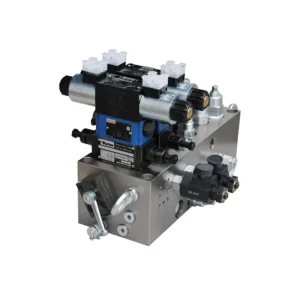
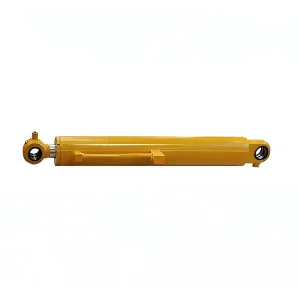
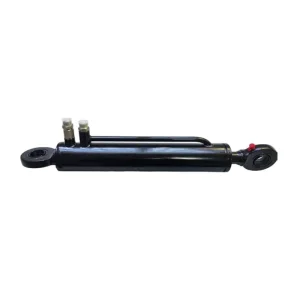
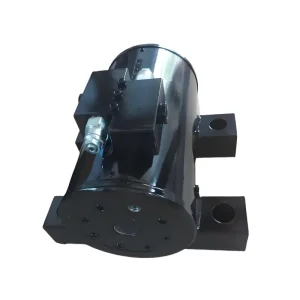
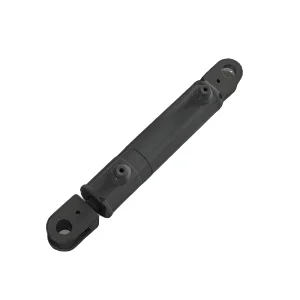
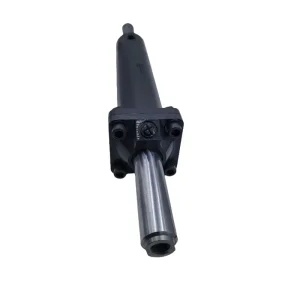
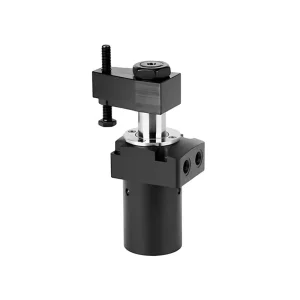
Hydraulic Manifolds, Actuators & Heavy Equipment Cylinders
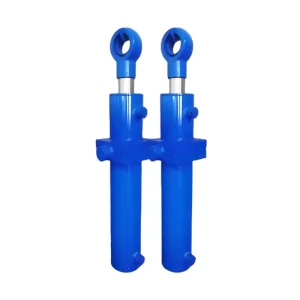
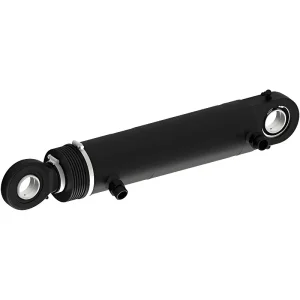
Complementary precision hydraulic assemblies engineered in our Qingdao plant for industrial, mining, and material handling applications.