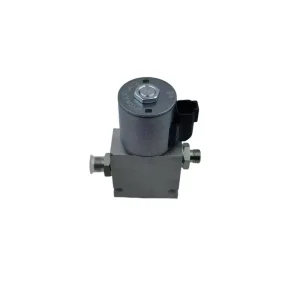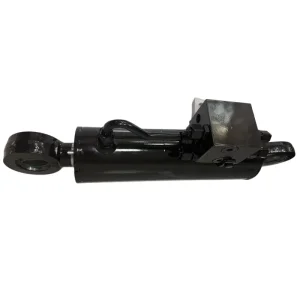
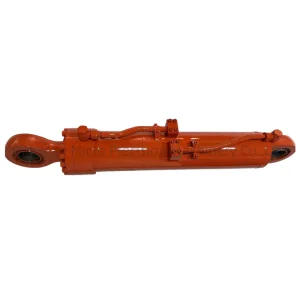
Precision Manufacturing Lineup
Primary Export Tooling & Hydraulic Assemblies
Direct OEM factory component integration designed for demanding industrial duty cycles, tight tolerances, and high dynamic stress resistance.
Industrial Procurement Blueprint
DIN Retention Knob Engineering & Strategic Sourcing
Analyzing the metallurgical integrity, clamping force dynamics, and reliability metrics necessary to prevent spindle damage in continuous 5-axis CNC machining.
Critical Mechanical Interface
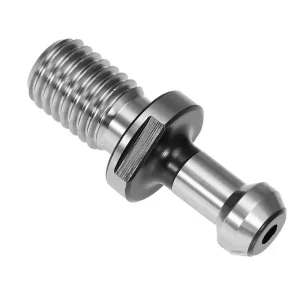
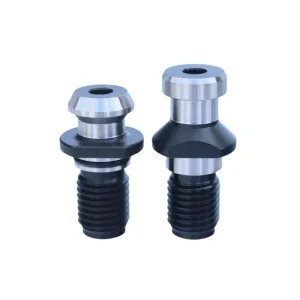
The DIN retention knob (pull stud conforming to DIN 69872 / ISO 7388/2 Type A/B) constitutes the single failure-critical bridge connecting the machine tool drawbar gripper to the taper shank. Sourcing managers must balance core ductile toughness against case-hardened surface wear resistance.
Spindle Kinetic Balancing
With high-speed machining (HSM) reaching spindle thresholds above 24,000 RPM, unbalance forces scale quadratically. Factory-direct wholesale pull studs require precision cylindrical grinding to maintain dynamic concentricity under 0.003 mm runout, preventing premature spindle bearing failure.
Stress Rupture Prevention
Tensile yield failures under clamping forces exceeding 25 kN are catastrophic. Modern manufacturing mandates precision-rolled threads rather than cut threads, guaranteeing uninterrupted continuous metallurgical grain flow along the root radius to resist severe dynamic cycle fatigue.
58-62 HRC
Surface Wear Hardness
32-38 HRC
Core Toughness Ductility
≤ 0.003 mm
Head-To-Thread Runout
100% MPI
Magnetic Particle Inspected
Engineering Specifications
Standardized DIN Retention Systems & Physical Parameters
Comprehensive cross-standard compatibility reference for automated tool changers (ATC) in high-throughput production lines.
| Standard Designation | Nominal Taper Size | Head Angle / Profile | Coolant Channel Feature | Clamping Pull Force (kN) | Recommended Torque (Nm) | Substrate Material Class |
|---|---|---|---|---|---|---|
| DIN 69872 Form A | SK30 / SK40 / SK50 | 15° Reverse Flange Angle | Central Bore Through-Hole | 9.0 - 25.0 kN | 45 - 280 Nm | 20MnCr5 / SCM415 Case-Hardened |
| DIN 69872 Form B | SK40 / SK50 | 15° Sealed Head Variant | Dual O-Ring Sealed Annulus | 18.0 - 25.0 kN | 90 - 280 Nm | SNCM420 Special Low Alloy Steel |
| ISO 7388/2 Type A | ISO 30 / 40 / 50 | 15° Rounded Nose Corner | Drilled with High-Pressure Vent | 8.5 - 24.5 kN | 45 - 275 Nm | 16MnCr5 Carburized & Tempered |
| ISO 7388/2 Type B | ISO 40 / 50 | 45° Gripper Engagement | Internal Cross-Drilled Coolant | 15.0 - 25.0 kN | 85 - 270 Nm | Tool Steel Premium Hardened |
| JIS B6339 (MAS 403) | BT30 / BT40 / BT50 | 30° / 45° / 60° Sloped Face | Solid or Through-Coolant | 7.0 - 28.0 kN | 40 - 300 Nm | SCM435 Quenched & Cryo-Treated |
Future Evolution
Technology Roadmap: Intelligent Tooling Interfaces (2025–2030)
Navigating the intersection of Industry 4.0 telemetry, sustainable cryo-machining, and high-strength metal additive components.
Phase 1: Sensor-Embedded Dynamic Pull Studs
Direct integration of miniaturized strain-gauge telemetry and SAW (Surface Acoustic Wave) transponders into pull stud bodies. This enables real-time transmission of active drawbar retention forces to machine CNC controllers, preventing tool pull-out and part scrap in unstaffed shifts.
Phase 2: Ultra-High Pressure Through-Spindle Cooling
As titanium and nickel alloy roughing demands internal pressures exceeding 140 bar (2000 psi), micro-precision engineering shifts toward hydro-dynamically shaped internal coolant vents with diamond-like carbon (DLC) internal bore coatings to eradicate cavitation wear.
Phase 3: Hybrid Additive-Forged Multi-Material Structures
Deploying functionally graded metallurgy via direct energy deposition (DED): tough, shock-dampening nickel alloys within the inner thread core transitions seamlessly to ultra-hard cobalt-free carbide matrices along the gripper contact surface, doubling fatigue life cycles.
Global Commerce
Industrial Adoption & Sourcing Realities Across Continents
Mapping the regional deployment of CNC tool holding standards and macro supply-chain requirements across major manufacturing sectors.
European Union (DACH Region Core)
The European aerospace and premium automotive sectors depend predominantly on DIN 69872 Form A and ISO 7388/1 interfaces. Rigorous environmental directives like REACH and RoHS demand completely lead-free, hexavalent-chromium-free anti-corrosion surface treatments.
North American Re-Shoring Wave
While ANSI/ASME B5.50 (CAT shanks) remains widespread across US production floors, high-performance horizontal machining centers (HMCs) increasingly adopt dual-contact DIN variants to run European-engineered 5-axis mold-and-die routines without tooling deflection.
Asia-Pacific High-Volume Hub
Mass contract manufacturers in consumer electronics and electric vehicle (EV) battery systems leverage high-speed automated tool changers with cycle times below 0.8 seconds. This rapid cycling demands zero micro-fracturing on retention knob clamping surfaces during million-cycle runs.
Reliability & Risk Mitigation
Quality Assurance Protocols & Comprehensive Export Certification
End-to-end trace documentation, lot tracking, and metallurgical verification for cross-border engineering contracts.
EN 10204 3.1 Traceability
Every wholesale production heat is accompanied by certified raw chemical assays and mechanical yield certs. Buyers receive full visibility into carbon content, case hardening depth (0.8 - 1.2 mm), and sub-zero cryogenic stabilization results.
Non-Destructive Testing (NDT)
100% of safety-critical pull studs undergo fluorescent wet magnetic particle inspection (MPI) and ultrasonic verification to ensure total freedom from subterranean forging voids, micro-fissures, and quench-induced surface cracks.
Corrosion-Proof Export Packaging
International intermodal transits can subject bare steel to extreme moisture and salt air. All pull studs are immersed in vapor corrosion inhibiting (VCI) oil, sealed in individual vacuum capsules, and boxed in rigid containers that prevent thread damage in transit.
Technical FAQ
Frequently Asked Questions for Sourcing & Engineering Teams
Authoritative answers on DIN pull stud specification, clamping forces, thread tolerances, and service lifespan.
What are the key functional differences between DIN 69872 Form A and Form B retention knobs?
DIN 69872 Form A features an open central drilled bore that allows high-pressure coolant to flow directly through the spindle and drawbar into the cutting tool holder. Form B is a sealed head variant without the central bore, engineered for machines with dry cutting cycles or external coolant delivery. Form B variants commonly feature dual O-ring seal grooves on the neck to safeguard the spindle drawbar mechanism from fine debris ingress.
Why is core ductility as critical as surface hardness for CNC pull studs?
If a retention knob is through-hardened above 55 HRC, it becomes brittle and susceptible to catastrophic shear failure under dynamic impact loads or during emergency spindle stops. By carburizing or induction hardening the surface to 58-62 HRC while keeping a ductile core at 32-38 HRC, the component resists wear from steel gripper balls while retaining elasticity to absorb axial shock without shearing.
How does thread form precision impact spindle taper life?
Cut threads often introduce micro-notches and lead-angle deviations. When torqued into the tool shank, an inaccurate thread misaligns the retention knob axis with the holder taper. Under heavy drawbar retention (up to 25 kN), this axis error tilts the tool holder inside the spindle, causing uneven taper contact, fretting corrosion, high tool runout, and accelerated wear on the spindle taper bore.
What is the standard replacement interval for DIN retention knobs in high-output shops?
Under continuous industrial operation, pull studs should be proactively replaced every 2,000 to 3,000 spindle operational hours or around 500,000 tool changes. Pull studs showing visible galling, thread stretch, or indentations on the clamping neck radius must be retired immediately, as retention knob breakage during heavy cuts can severely damage both spindle assemblies and workpieces.
Can JIS B6339 (MAS 403) retention knobs be interchanged with DIN 69872 profiles?
No. Although thread pitches may match (e.g., M16x2.0 on SK40 and BT40), head geometries, retention collar angles, and neck lengths differ substantially. DIN 69872 has a 15-degree reverse slope angle, whereas JIS B6339 commonly uses 30, 45, or 60-degree angles with distinct gauge lengths. Mixing these standards prevents full gripper engagement and can cause tool ejection at speed.
Integrated Machinery Assets
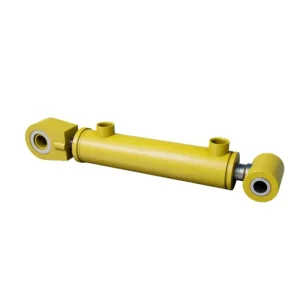
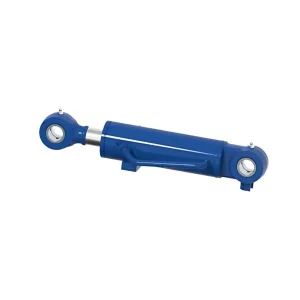
Industrial Hydraulic Infrastructure & CNC Tooling
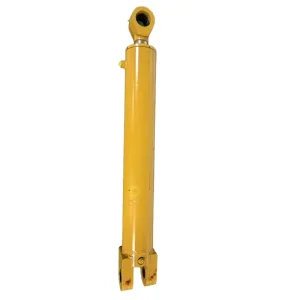
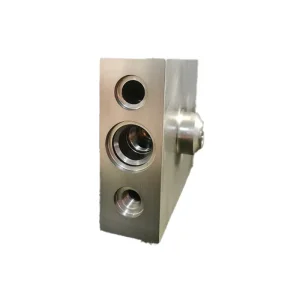
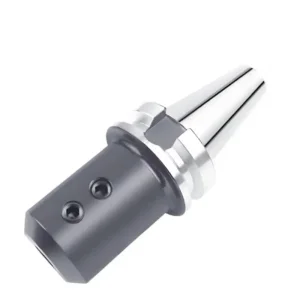
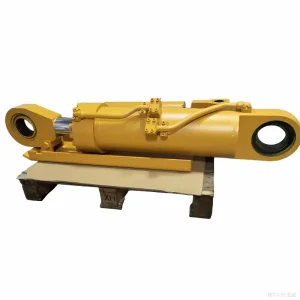
Heavy machinery hydraulic cylinders, manifold valve blocks, and tool retention components manufactured in our Qingdao industrial facility.