Precision Fluid Power & Kinematic Actuation Elements
Verified hydraulic infrastructure components designed for continuous duty-cycle endurance in mobile and stationary industrial equipment.
Commercial Status & Technological Evolution of Directional Valve Blocks
How monolithic integrated manifold architectures have replaced discrete line piping, unlocking thermodynamic efficiency and compact design across the worldwide fluid power landscape.
Consolidated Fluid Routing
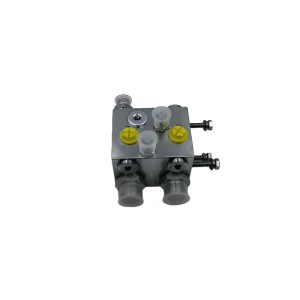
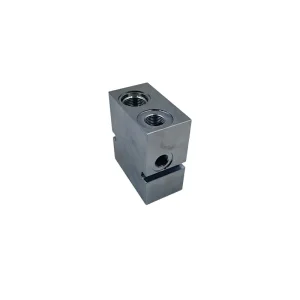
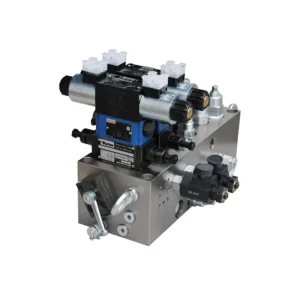
Modern directional valve blocks eradicate extensive pipe networks, drastically cutting down leak paths, line friction losses, and installation mass across high-payload machinery.
Hydraulic Energy Conservation
By leveraging optimized Computational Fluid Dynamics (CFD) cavity routing, internal delta-P (pressure drop) is slashed by up to 22%, saving energy and minimizing heat generation.
Electro-Hydraulic Digital Control
Modern directional control blocks converge high-response proportional cartridge valves with direct digital PLC loops to enable real-time automation in advanced mobile machinery.
Precision Manufacturing & Efficiency Advantages in Qingdao, China
Combining end-to-end metallurgical control, multi-axis horizontal CNC machining centers, and comprehensive testing to deliver superior valve blocks to tier-one global buyers.
5-Axis Single-Setup Machining
Internal multi-angle crossover passages and cartridge cavities are bored in single clamp setups, eliminating cumulative tolerance drift and misalignment.
Integrated Cluster Supply Ecosystem
Situated in Shandong's heavy industrial core, our facility leverages immediate access to ductile iron casting mills, certified heat treatments, and precision tool makers.
Rigorous Deburring & Cleaning
High-pressure hydro-deburring and ultrasonic cleaning protocols eliminate cross-bore burrs and micro-swarf, safeguarding downstream spools against jamming.
Complete Engineering Autonomy
Our Qingdao engineers conduct drawing validation, reverse engineering from field samples, and 3D manifold routing quickly to expedite OEM prototype turnarounds.
| Design Parameter | Ductile Iron (QT500-7 / 65-45-12) | Hydraulic Grade Steel (C45E / 1045) | Aluminum Alloy (6061-T6 / 7075-T6) |
|---|---|---|---|
| Nominal Working Pressure | Up to 350 Bar (5,076 PSI) | Up to 420 Bar (6,090 PSI) | Up to 210 Bar (3,045 PSI) |
| Cavity Cleanliness Standard | ISO 4406 Cleanliness Level 16/14/11 | ISO 4406 Cleanliness Level 15/13/10 | ISO 4406 Cleanliness Level 16/14/11 |
| Internal Leakage Rate | < 3 drops/min at nominal pressure | < 1 drop/min at nominal pressure | < 3 drops/min at nominal pressure |
| Corrosion Protection Surface | Black Oxide, Zinc-Nickel electroplating | Electroless Nickel, Manganese Phosphate | Clear/Black Anodizing (Type II or III) |
Mission-Critical Applications for High-Pressure Directional Valve Blocks
Engineered to resist harsh operating environments, from high-shock mining sites to high-precision CNC machinery.
Heavy Earthmoving & Excavators
Directional valve manifolds coordinate boom, arm, and swing operations, keeping response times under 15ms and resisting hydraulic water hammer shocks during hard bucket impacts.
Mobile Truck Cranes & Aerial Lifts
Our valve blocks combine directional control with counterbalance and hose-burst safety locks to hold suspended boom loads securely without fluid migration or hydraulic drift.
Agricultural & Forestry Machinery
Compact modular blocks control reversible plough turnovers, header heights, and steering functions. Built to handle seasonal duty peaks, dust ingress, and thermal fluctuations.
Mining Underground Loaders (LHD)
High-pressure steel directional blocks engineered for underground Load-Haul-Dump equipment, built with fire-resistant fluid seals that hold up in confined tunnel environments.
Precision CNC Tooling Stations
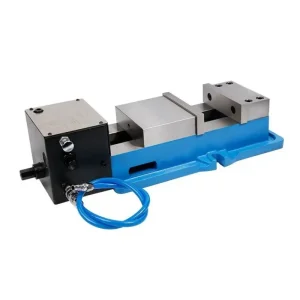
Directional modules manage hydraulic indexing tables, tool change grips, and pneumatic/hydraulic vises, delivering accurate clamping cycles with low pressure ripple.
Marine Deck Winches & Offshore Cranes
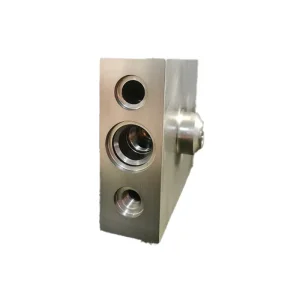
Machined from treated solid steel billet with nickel-rich anti-corrosion finishes to protect against marine atmospheric salt fog, spray, and deep-sea pressures.
Emerging Trends & International Procurement Priorities
Key technical shifts and quality standards guiding fluid power engineers and procurement leaders worldwide.
Additive & CFD Hybrid Routing
Integrating 3D flow-optimized curved passages eliminates stagnant internal pockets, turbulent flow drag, and excessive system heat generation.
Verified Supply Traceability
Industrial OEMs increasingly require complete ultrasonic raw billet testing, heat batch tracking, and coordinate-measuring inspection reports for every port.
Weight Reduction Programs
Mobile equipment builders are adopting high-tensile 7075-T6 aluminum directional blocks to lower overall vehicle weight and support equipment electrification.
Single-Source Hydraulic Assemblies
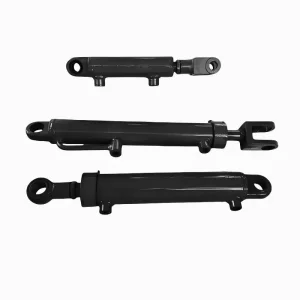
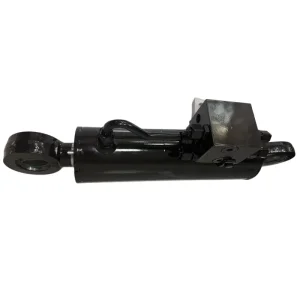
Buyers are shifting away from standalone manifold suppliers, preferring partners that supply matched cylinders, counterbalance blocks, and certified fittings together.
Frequently Asked Technical & Commercial Questions
Direct technical answers to help purchasing and engineering teams evaluate valve block production with Micro Precision.
What technical data is required to quote and machine a custom directional valve block?
How do you guarantee clean, burr-free internal galleries across intersecting oil cross-bores?
Can your factory reverse-engineer an obsolete or damaged directional valve block from a physical sample?
What hydrostatic pressure tests and dimensional validations are performed before dispatch?
Which block materials are best suited for mobile heavy machinery versus industrial hydraulic power units?
How do you protect exported blocks against rust during ocean transit?
Integrated Flow Control, Manifolds & Auxiliary Tooling
Explore our complete ecosystem of hydraulic counterbalance manifolds, precision solenoid controls, and machining accessories.