
Precision Hydraulic Actuation & Machine Components
Explore our core hydraulic assemblies, robust cylinder units, and CNC tool interfaces designed to withstand extreme mechanical stress, continuous cycling, and hazardous industrial conditions.
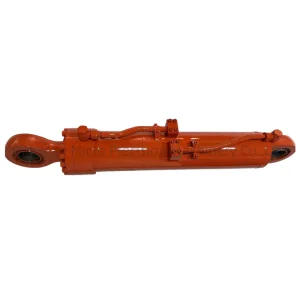
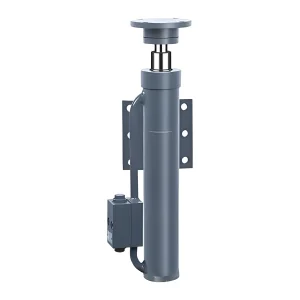
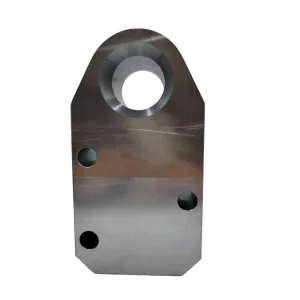
Macro-Industry Dynamics & Stabilizer Cylinder Architecture
In high-capacity mobile machinery, the dynamic displacement of ballast weights under variable load radii represents one of the most critical structural challenges in modern heavy mechanical engineering.
A counterweight stabilizer cylinder functions as the structural anchor in dynamic load compensation. Unlike standard single-action hydraulic actuators that simply push or pull against uniform loads, counterweight stabilizer cylinders operate under complex bidirectional loading patterns. When an all-terrain mobile crane extends its telescopic boom to full outreach or an ultra-heavy demolition excavator bites into structural reinforced concrete, the vehicle's tipping line shifts instantaneously. During these dynamic events, the counterweight stabilizer cylinder must continuously articulate ballast trays, lock static positions without hydraulic drift, and absorb secondary torsional vibrations transferred directly through the crane upper-carriage turntable or excavator undercarriage frame.
Modern mega-infrastructure projects—such as offshore wind turbine erection, liquefied natural gas (LNG) terminal prefabrication, and deep pit mining excavations—demand machinery with unprecedented structural integrity. Stabilizer cylinders in these installations serve as life-critical safety nodes. A hydraulic failure in a counterweight linkage during a 1,200-ton module hoist leads inevitably to catastrophic tip-over accidents. Consequently, original equipment manufacturers (OEMs) and heavy fleet operators enforce zero-tolerance metrics on weldment fatigue, internal rod micro-cracking, and seal bypass degradation.
Micro Precision Engineering: Proprietary Manufacturing Paradigms
At Qingdao Micro Precision Machinery Co., Ltd. (MPM), our counterweight stabilizer cylinders are manufactured using deep-hole boring, skiving, and roller-burnishing techniques on 27SiMn and 42CrMo4 seamless alloy tubes. By achieving an internal bore surface roughness of Ra ≤ 0.16 μm, we dramatically minimize friction hysteresis while extending seal lip longevity past 10,000 operational operating hours.
Zero-Drift Counterbalance Cartridges
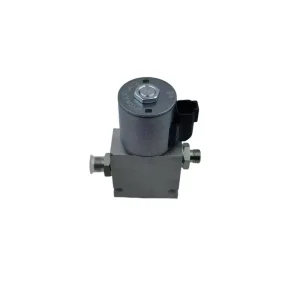
Integrated flanged manifold blocks house direct-acting, pilot-assisted counterbalance valves directly adjacent to the cylinder barrel, preventing line-rupture collapses and eliminating creeping load migration under static holding duties.
- Pilot ratio engineered from 3:1 to 10:1
- Cavity machining per SAE and Sun standard specs
- Zero internal leakage via hardened poppet seats
- Fast dynamic response under 12 milliseconds
HVOF & Laser Cladded Rod Surfaces
Extreme duty cycles require rods resistant to gravel pinging, chemical slurries, and aggressive marine salts. We deploy High-Velocity Oxygen-Fuel (HVOF) tungsten-carbide or nickel-chrome composite coatings.
- Hardness ratings exceeding 850–1050 HV0.1
- ASTM B117 neutral salt spray rating > 1,000h
- Micro-crack free amorphous metallurgical bonding
- Drastically reduced abrasive packing wear
Heavy Spherical Trunnion & Clevis Joints
Counterweights subject actuators to severe multi-axis angular deflection. Our end mountings utilize forged 40Cr/42CrMo knuckles fitted with self-lubricating spherical plain bearings to absorb bending moments.
- Eliminates rod buckling stresses during machine sway
- High dynamic load ratings per DIN ISO 12240-1
- Integrated labyrinth secondary seal protection
- Induction-hardened chrome alloy pivot pins
Global Supply Chain Realities & Engineering Procurement Trends
A rigorous examination of geopolitical sourcing trends, total cost of ownership (TCO) benchmarks, and the structural convergence between Western OEM engineering and high-tier Chinese precision manufacturing.
For decades, European and North American tier-1 crane and earthmover builders relied almost exclusively on domestic cylinder manufacturers. However, escalating raw material overhead, rising energy surcharges, and prolonged manufacturing lead times exceeding 38 to 52 weeks have forced multinational engineering syndicates to overhaul their component procurement strategies. The global construction machinery sector now demands suppliers capable of offering rapid custom prototyping, full design transparency, and verifiable metallurgical tracing without sacrificing structural reliability.
Qingdao Micro Precision Machinery addresses this industry-wide bottleneck by bridging western design codes with state-of-the-art Chinese CNC precision manufacturing. Headquartered adjacent to the Port of Qingdao—one of the world's most connected multimodal logistics hubs—MPM delivers full-service OEM/ODM fluid power solutions with average production turnarounds 40% faster than legacy European foundries.
| Engineering Metric | Standard Commercial Actuators | MPM Heavy-Duty Stabilizer Cylinders | Strategic Advantage |
|---|---|---|---|
| Barrel Material Standard | Standard ST52 / E355 Welded Tubing | Forged & Cold-Drawn 27SiMn / 42CrMo Seamless | +35% Higher Yield Strength Under Shock Loads |
| Rod Surface Finishing | Hard Chrome Plating (20-30 μm) | Double Chrome / HVOF Cermet Barrier (50+ μm) | Superior Salt-Spray Life & Scratch Resilience |
| Internal Tolerancing | Honed H8 / H9 Standards | Skived & Roller Burnished H7 Finish | Minimized Piston Seal Abrasion & Hysteresis |
| Valving Architecture | Remote Line-Mounted Manifolds | Direct-Flanged Integrated Manifold Blocks | Zero Risk of Hose Burst Catastrophic Release |
| NDT Inspection Level | Batch Sampling (1 per 20 units) | 100% Ultrasonic & Wet Magnetic Particle (MPI) | Zero Undetected Sub-Surface Weld Imperfections |
By standardizing on complete structural trace packages—including EN 10204 3.1 chemical analysis sheets, full ultrasonic testing reports for piston eye forgings, and digitized hydro-test pressure decay logs—MPM allows global procurement directors to fulfill their strictest quality assurance mandates while realizing decisive operational efficiencies.
Localized Engineering Compliance & Regional Regulatory Assurance
Exporting high-pressure hydraulic cylinders into North America, the European Union, Australia, and ASEAN mining corridors requires strict harmonization with regional statutory standards.
European Union: CE & Machinery Directive
Every cylinder shipped to the EU conforms to Machinery Directive 2006/42/EC and EN ISO 4413 (Fluid power general rules and safety requirements). Weldments strictly follow ISO 15614-1 WPS/PQR specifications with ISO 9606-1 certified robotic welders.
- Pressure Equipment Directive (PED) 2014/68/EU compliance
- Full traceability per EN 10204 Type 3.1 certificates
- Calculations verified against EN 13001 crane design codes
North America: ANSI, ASME & SAE
Our imperial and hybrid metric cylinders engineered for the US and Canadian markets adhere to ANSI/ASME B30.5 crane safety standards, SAE J514 porting interfaces, and NFPA fluid power standards, preventing installation errors.
- SAE Code 61 & Code 62 4-bolt split flange ports
- ASME Section IX qualified multi-pass welding
- Cold-weather low-temperature impact testing down to -40°C
Australasia: MDG 15 & AS/NZS Mining Codes
For Australian surface and underground operations, our stabilizer cylinders integrate safety interlocks and burst protection satisfying MDG 15 guidelines. Every manifold block is designed to prevent thermal fluid expansion locks.
- Flame-retardant synthetic hydraulic fluid compatibility
- Double mechanical safety check valves
- Heavy-duty debris wipers for iron ore dust environments
Mission-Critical Application Environments & Case Studies
Discover how MPM counterweight stabilizer cylinders deliver flawless equilibrium, cycle-after-cycle, under the planet's harshest operational extremes.
All-Terrain & Rough-Terrain Mobile Cranes
Operational Challenge: As modern telescopic boom cranes extend past 60 meters, the counterweight tray must shift rearward on sliding rails or pivot linkages to counter moment forces. High wind gusts induce cyclic bending stresses on the positioning cylinders.
The MPM Solution: Heavy-bore (220mm+), low-friction cylinders equipped with dual integrated counterbalances. These units guarantee zero hydraulic drift over 12-hour continuous lifts, ensuring load chart compliance under extreme side loads.
Lattice Boom Crawler Cranes (Superlift Trays)
Operational Challenge: In suspended superlift ballast arrangements, counterweight frames weighing up to 400 metric tons hang freely behind the mast. The cylinders must absorb dynamic shock loads caused by sudden wind surges or abrupt line release.
The MPM Solution: Cylinders engineered with internal progressive hydraulic end-cushioning spigots. This specialized deceleration geometry cushions peak deceleration forces, protecting the structural lattice pins from fatigue fracture.
Ultra-Class Mining Excavators & Face Shovels
Operational Challenge: Operating in remote open-pit gold, copper, and iron mines, 200 to 800-ton excavators face incessant 24/7 shock loading as buckets encounter unblasted bedrock. Abrasive silica dust damages standard polyurethane rod packings.
The MPM Solution: Heavy-walled integrated cylinder barrels (MPM-HCIB11 series) paired with proprietary bronze-filled PTFE chevron seal stacks and case-hardened metallic scrapers that mechanically eject abrasive rock chips.
Next-Generation Technology Roadmap & Digital Fluid Power
The industrial actuation landscape is shifting rapidly from passive mechanical hardware to intelligent, sensor-integrated electro-hydraulic subsystems.
Magnetostrictive Stroke Sensing
Internal gun-drilled piston rods housing non-contact magnetostrictive linear position transducers. Transmits real-time sub-millimeter stroke telemetry via CANbus (J1939) directly to vehicle safety control modules (ECUs).
Embedded IIoT Fluid Diagnostics
Micro-sensors embedded inside the cylinder head monitor fluid aeration, dielectric oil degradation, micro-vibrations, and high-frequency pressure spikes to alert maintenance teams weeks before seal blowout.
Bio-Lubricant & Hydrogen Resilient
Development of seal compounds and internal coatings compatible with HEES synthetic biodegradable ester fluids and extreme-temperature environments required for next-generation zero-emission hydrogen-electric heavy machinery.
Proportional Dynamic Compensation
Integration of electro-proportional fast-switching cartridge valves directly on the barrel. Actively anticipates tipping load dynamics and autonomously adjusts hydraulic stiffness within 8 milliseconds.
Expert Engineering Q&A: Counterweight & Stabilizer Actuation
In-depth responses to critical design, maintenance, and purchasing inquiries encountered by structural engineers and machinery fleet operators.
Our cylinders incorporate flanged, direct-mount pilot-operated counterbalance valves (load control valves) mounted directly onto the barrel ports. Because there are no flexible hydraulic lines between the valve and the fluid chamber, a complete exterior hose severance locks the fluid inside the cylinder instantaneously, holding the ballast safely in place.
Internal pressure loss is most commonly caused by piston seal extrusion under intense shock spikes, barrel bore swelling (ballooning) from using insufficient wall thicknesses, or micro-scoring caused by fluid contamination. MPM utilizes high-tensile 27SiMn seamless barrels with heavy wall cross-sections and dual bronze-filled PTFE step seals backed with fluoroelastomer energizers to eliminate drift.
Yes. Our engineering department specializes in precision reverse engineering. Working from customer-supplied physical samples, worn components, or original assembly drawings, we produce fully interchangeable cylinders matching pin-to-pin dimensions, mounting geometries, port standards, and duty ratings while often improving the seal and rod coating specifications.
For high-corrosion installations, standard chrome plating (which exhibits micro-cracking) is inadequate. We recommend our High-Velocity Oxygen-Fuel (HVOF) applied nickel-chromium-carbide thermal spray coatings or laser-cladded stainless alloys, which provide over 1,000 to 1,500 hours of neutral salt spray resistance per ASTM B117 standards without pitting.
Every shipment is accompanied by a full Quality Inspection Binder containing EN 10204 3.1 material mill certificates, raw material ultrasonic examination (UT) logs, heat treatment records, coordinate measuring machine (CMM) dimensional reports, hydro-testing pressure decay graphs (100% of units), and chroming thickness test verifications.
Upon final 2D/3D customer drawing approval, prototype machining and assembly typically require 4 to 6 weeks. Serial production runs of 50 to 500 units are routinely completed within 6 to 8 weeks, backed by expedited sea freight shipping out of Qingdao Port.
Auxiliary Actuation, Specialized Cylinders & Tooling Clamps
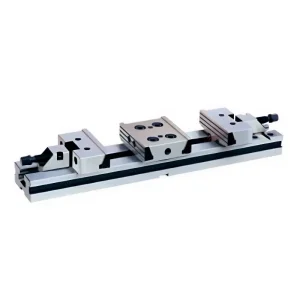
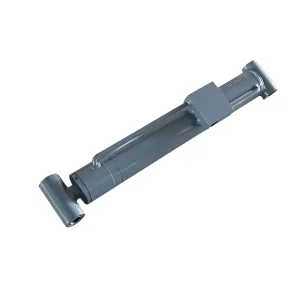
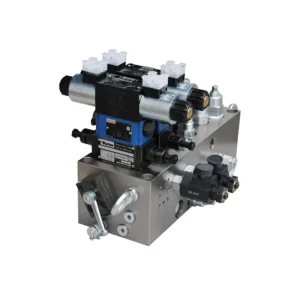
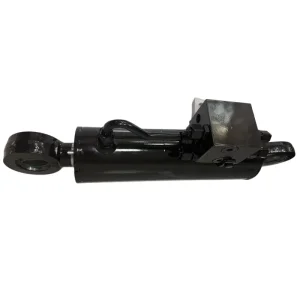
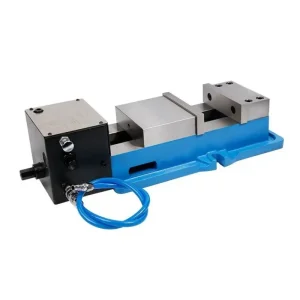
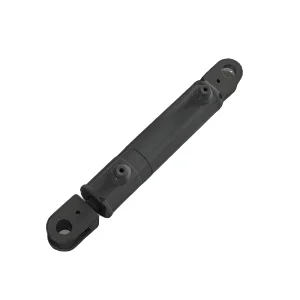
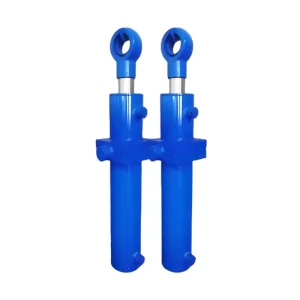
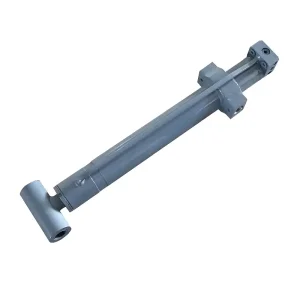
Complete your hydraulic circuit and machine tool configurations with our high-precision leveling cylinders, hydraulic manifolds, multi-stage telescopic rams, and CNC workpiece fixtures.
Request A Tailored Stabilizer Cylinder Calculation
Submit your application load charts, envelope constraints, or target CAD drawings. Our senior fluid power design engineers will provide finite element analysis (FEA) reviews, valve circuit schematics, and a verified quotation within 24 business hours.