
Precision Modular Components & Actuators
Direct from our Qingdao manufacturing base: certified modular hydraulic manifolds, high-pressure directional control stations, and heavy-duty actuators engineered for zero internal drift, low pressure drops, and severe duty cycles.
Enterprise Procurement Criteria for Modular Manifold Assemblies
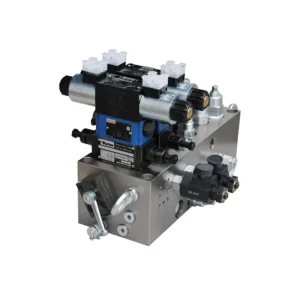
In modern industrial hydraulic design, replacing discrete interconnecting pipework with custom modular manifold assemblies represents the single most impactful strategy for eliminating external leakage paths, cutting machine envelope volumes, and lowering Total Cost of Ownership (TCO).
Hydraulic Integrity & Leakage Elimination
Traditional hard-plumbed hydraulic configurations introduce dozens of SAE 4-bolt flanges, JIC 37° fittings, and BSPP/metric threaded joints that inevitably loosen under cyclical hydraulic shock and vibrational resonance. Modular manifold blocks consolidate multi-valve functions into a single solid substrate, slashing external leak points by over 85%.
- O-ring face-seal subplate interface
- Reduced environmental contamination exposure
- Compliance with ISO 4401 porting dimensions
Optimized Fluid Dynamic Architecture
Internal flow galleries drilled on high-precision 5-axis CNC machining centers feature calculated cross-sectional transitions that suppress turbulence and localized cavitation. Engineered flow routing minimizes internal pressure drops (ΔP), improving hydraulic power transfer efficiency and directly lowering electrical and diesel prime-mover fuel consumption.
- Flow velocity maintained < 5 m/s in pressure lines
- Return galleries optimized < 2 m/s to prevent aeration
- Minimized heat dissipation into the oil reservoir
Simplified Assembly & Field Maintainability
For heavy equipment manufacturers and plant engineers, modular assemblies slash machine assembly man-hours by up to 70%. In the aftermarket, screw-in cartridge valves (SICV) and stackable sandwich valves allow field technicians to isolate, test, and swap out faulty relief, check, or counterbalance elements without disassembling rigid piping systems.
- Standardized Sun / HydraForce / Rexroth cavities
- Single-point diagnostic test couplings (Minimess)
- Direct drop-in interchangeability across serial runs
Macro-Industry Engineering Solutions
Across high-pressure mobile systems, marine hydraulic circuits, and high-speed industrial presses, modular manifold blocks are tailored around specific operational duty cycles, fluid media, and shock-load spectrums.
| System Architecture | Material Class | Nominal / Peak Pressure | Contamination Sensitivity | Primary Sector Applications |
|---|---|---|---|---|
| Monoblock Hardline System | Cast Iron HT250 / Ductile Iron | 210 bar / 250 bar | High (Scale in welded piping) | Legacy stationary presses, older mobile plant |
| Stackable Sandwich Assembly (ISO 4401) | Ductile Iron QT450 / 65-45-12 | 315 bar / 350 bar | Moderate (O-ring boundary interfaces) | Plastics injection molding, machine tools, die-casting |
| Cartridge (SICV) Modular Block | 6061-T6 Al / 7075-T651 / Forged C45 | 210 bar (Al) / 420 bar (Steel) | Low (Clean internal gallery flushing) | Excavator pilot control, AWP lifts, drill rigs |
| Custom Integrated Electro-Hydraulic | 42CrMo4 Alloy Steel / Nickel Plated | 350 bar / 450 bar | Strict (ISO 4406 Class 16/14/11) | Underground mining LHD, offshore winches, subsea ROV |
Mobile Earthmoving & Loaders
Main boom, bucket, and luffing control circuits require integrated counterbalance and relief manifold modules. Our high-pressure blocks withstand dynamic load holding, pilot-operated check sequencing, and hydraulic cushion damping under continuous shock vibration.
Underground Mining Equipment
Operating in corrosive underground salt caverns and coal mines, MPM manifold assemblies feature phosphate conversion coatings or electroless nickel plating. They provide fail-safe hose-burst protection and zero-creep load holding on underground LHD lift cylinders.
Precision CNC Machine Workholding
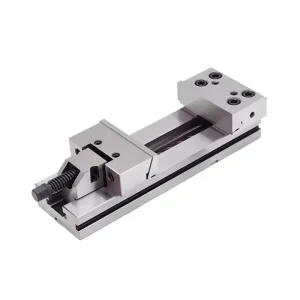
Machine tool fixtures, quick-change tombstone setups, and pneumatic-hydraulic vice clamping blocks demand micron-accurate pressure regulation. MPM supplies integrated high-repeatability valve blocks maintaining continuous clamping pressure over millions of cycles.
Agricultural & Forestry Implements
Variable-rate seeders, combine harvester headers, and reversible plough turnover cylinders rely on our compact modular flow-control and solenoid-diverter blocks. These modules maintain precise actuator synchronisation despite fluctuating pump supply speeds and varying oil temperatures.
Engineering Frontiers: Additive Manufacturing & IIoT Manifolds
Fluid power is undergoing a paradigm shift. Micro Precision Machinery is aligning manufacturing infrastructure to bridge classic subtractive CNC machining with digital smart-hydraulic innovations.
Generative Design & 3D Metal SLM Printing
Traditional cross-drilled manifolds require construction plugs that create dead zones where contamination gathers and eddy-current head losses occur. Laser Powder Bed Fusion (LPBF) and Selective Laser Melting (SLM) enable organically curved internal fluid channels, slashing flow resistance by 35% and reducing block weight by up to 50% for aerospace and mobile electrification platforms.
Embedded IIoT Sensors & Edge Analytics
Next-generation modular manifolds feature embedded IO-Link pressure, flow, and temperature transducers machined directly into secondary auxiliary ports. Integrated microcontroller nodes process micro-pulsations in real time, detecting early cartridge seat wear, seal degradation, and aeration before a cataclysmic hydraulic failure occurs.
Digital Electro-Proportional Displacement
The convergence of CANbus, J1939 protocols, and proportional solenoid valves directly built into the manifold body allows stepless, software-defined valve profiling. Machine builders can reprogram excavator boom deceleration curves, counter-balance ramping, and loader dampening over-the-air without physical spring swaps.
Global Material Standards & Manufacturing Discipline
A modular manifold assembly is only as dependable as its raw billet metallurgy, cavity machining concentricity, and microscopic surface finish. At MPM, our engineering selection covers the complete spectrum of fluid dynamics.
Ductile Continuous Cast Iron (65-45-12)
For high-pressure heavy mobile equipment operating up to 350 bar (5000 psi). Continuous cast ductile iron (Dura-Bar GGG40 / QT450-10) offers zero internal porosity, high graphite lubricity for moving spools, and superior fatigue resistance against continuous hydraulic pulse fatigue cycles.
- Tensile strength: > 450 MPa
- High vibration damping capacity
High-Strength Aircraft Aluminum
Engineered for lightweight platforms operating up to 210 bar (3000 psi). We machine forged billets of 6061-T6 and 7075-T651 aluminum, finished with hard-anodized surface treatments (MIL-A-8625 Type III) that achieve Rockwell C 60 surface hardness inside critical valve contact bores.
- Density: 2.7 g/cm³ for mobile weight savings
- 50-micron hardcoat wear resistance
Forged Carbon & Alloy Steels
For extreme duty applications such as subsea ROVs, oilfield exploration, and 420-bar forging press circuits. Blocks are CNC-machined from normalized AISI 1045 or 42CrMo4 alloy steel forged blanks, delivering unmatched yield strength and fracture toughness against extreme pressure water-hammer spikes.
- Proof pressures exceeding 600 bar
- Resistant to aggressive fire-resistant fluids (HFC/HFDU)
Rigorous Factory Acceptance Testing & Standards Compliance
A single trapped metal chip inside a cross-drilled oil gallery can cause an electro-hydraulic proportional cartridge spool to bind, leading to immediate field downtime. Our Qingdao plant enforces full process verification.
Thermal Deburring (TEM)
Every CNC-machined manifold is subjected to explosive thermal energy deburring. Microscopic flashings, burrs, and cross-hole drilling slivers inside inaccessible oil intersection galleries are 100% vaporized without affecting external thread tolerances.
Ultrasonic Flushing
Multi-stage ultrasonic industrial washing tanks using specialized alkaline cleaners remove all machining coolant residue, honing slurry, and fine particulate matter, ensuring fluid cleanliness to ISO 4406 Class 16/14/11 prior to cleanroom assembly.
1.5x Hydrostatic Pressure Testing
100% of manufactured manifold assemblies undergo high-pressure hydraulic testing. Blocks are pressurized to 150% of nominal working pressure to verify block casting integrity, expansion-plug sealing (Lee plugs/taper plugs), and zero external seat seepage.
CMM Dimensional Metrology
Zeiss Coordinate Measuring Machines (CMM) inspect all cartridge cavity depths, thread pitches, O-ring groove concentricities, and mounting face planarities to within ±0.005 mm, guaranteeing interchangeability with SUN, HydraForce, and Bosch Rexroth valves.
Frequently Asked Questions: Modular Manifold Engineering
Direct technical answers from Qingdao Micro Precision Machinery’s fluid power engineering department to address complex design, specification, and procurement inquiries.
What is the standard design protocol for sizing internal oil galleries?
Galleries are sized based on maximum continuous circuit flow rates to prevent turbulent flow (Reynolds number > 2300) and excessive fluid shear heating. We engineer pump pressure lines for a fluid velocity of 3 to 5 m/s, continuous return lines for 1.5 to 2.5 m/s, and pump suction channels for < 1.0 m/s. Intersecting drill holes maintain an intersection area at least 120% of the nominal passage cross-section to eliminate localized pressure drop bottlenecks.
How do you guarantee leak-free cross-drill construction plugs?
Traditional tapered NPT pipe threads often leak under cyclical hydraulic pressure pulsation due to thread spiral paths. Micro Precision Machinery uses SAE straight-thread O-ring boss plugs (ISO 11926-1) or metal-to-metal radial expansion sealing plugs (Lee Plugs / Koenig Expander). These expand into the manifold parent metal, creating a mechanical seal rated up to 450 bar without thread sealants or anaerobic chemical adhesives.
Can MPM manufacture manifold blocks from customer hydraulic schematics?
Yes. Our engineering department can design directly from a hydraulic circuit diagram (ISO 1219). Using 3D fluid modeling software (HydraForce i-Design, SolidWorks Flow Simulation, and Vest Manifold Design), our fluid power engineers optimize cavity locations, map shortest internal paths, verify structural wall thickness between pressurized drillings, and supply complete 3D STEP models and manufacturing drawings for your sign-off.
What surface treatments protect against marine and salt-spray corrosion?
For ductile and carbon steel manifolds operating in offshore or open highway environments, we provide zinc-nickel electroplating (giving over 1,000 hours of neutral salt spray protection to ASTM B117 without red rust) or manganese phosphating. For marine subsea blocks, electroless nickel plating (ENP, 25-50 microns) provides a non-porous, corrosion-resistant barrier across both external surfaces and complex internal galleries.
How do you verify wall thickness between high-pressure internal galleries?
Our CAM software generates comprehensive clearance verification maps. For ductile iron at 350 bar, we maintain a minimum structural web thickness of 3.5 to 5.0 mm between intersecting drillings to prevent internal blowout or fatigue cracking. On critical high-pressure modules, Finite Element Analysis (FEA) verifies stress concentrations around internal thread transitions.
What cartridge valve cavities does your tooling inventory support?
We maintain dedicated in-house form tooling and reamers for all global industry cavity standards, including SUN Hydraulics cavities (T-2A, T-3A, T-10A, T-11A, T-17A), HydraForce / SAE standard screw-in cavities (VC08-2, VC10-2, VC12-3, VC16-4), and Bosch Rexroth / Parker cavity configurations, maintaining H7 bore tolerances and Ra 0.4 micron micro-finishes on critical sealing lands.
Electro-Proportional Valves, Tooling & Hydraulic Actuators
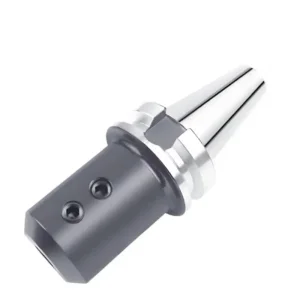
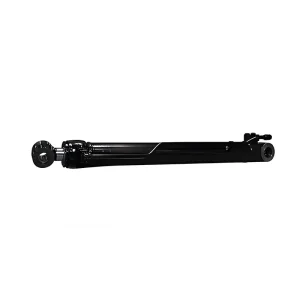
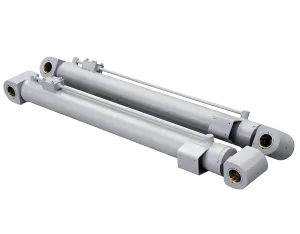
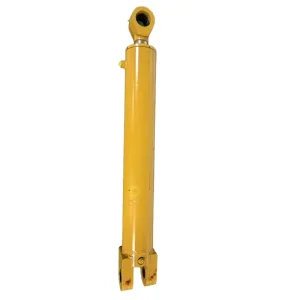
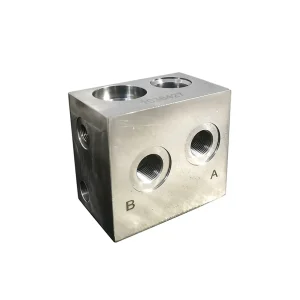
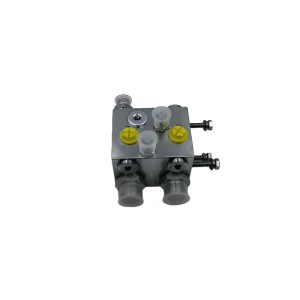
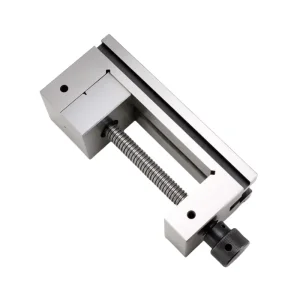
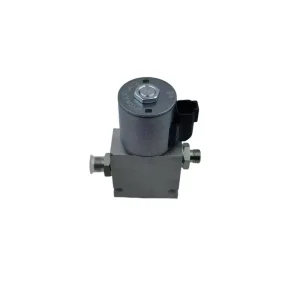
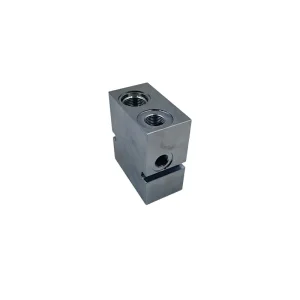
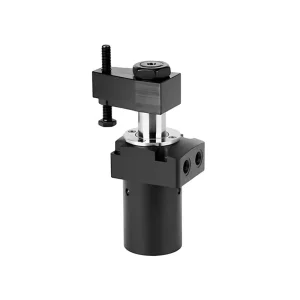
Explore our complete manufacturing lineup: from solenoid-controlled cartridge valving and custom angle cylinders to buffer cylinders and high-precision CNC tool systems.
Engineering Consultation & Custom Manifold Billet Quotes
Partner directly with Qingdao Micro Precision Machinery Co., Ltd. Founded in 2006, our 3,500 m² machining facility combines world-class 5-axis CNC machining centers, coordinate measuring metrology, and in-house hydraulic assembly cleanrooms. Exporting across Europe, North America, Southeast Asia, and Australasia.