
High-Integrity Actuators & Control Manifolds
Direct from Qingdao Micro Precision Machinery (Est. 2006). Certified OEM and custom fluid power solutions deployed across critical braking, articulation, and heavy-payload earthmoving assemblies worldwide.
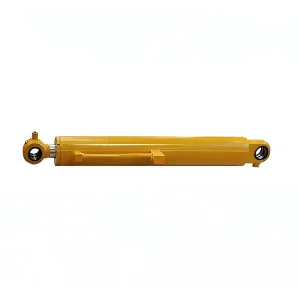
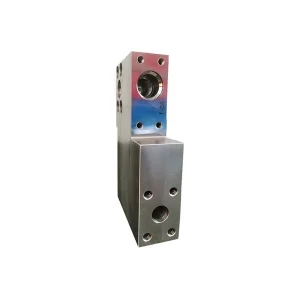
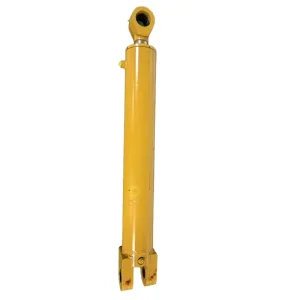
Emergency Brake Valve Blocks: Zero-Tolerance Fail-Safe Hydraulics
In high-tonnage mining haulers, mobile port cranes, high-capacity excavators, and wind turbine pitch controllers, the emergency brake block (also classified as an emergency braking manifold or hydraulic dumping valve block) represents the ultimate line of physical defense against catastrophic kinematic runaway.
When hydraulic system integrity is compromised by power outage, pump cavitation, pilot-line rupture, or operator emergency stop triggers, the emergency brake block must instantaneously de-energize or vent pressurized oil to tank, allowing spring-applied multi-disc wet brakes, caliper spring packs, or counterweight locking pins to mechanically arrest mechanical motion. A delay of merely 50 milliseconds can translate into meters of uncontrolled braking distance under 100-ton dynamic momentum.
Operating from our modern 3,500 m² facility in Qingdao, China, Qingdao Micro Precision Machinery Co., Ltd. (MPM) has engineered and machined custom hydraulic emergency blocks, integrated valve manifolds, buffer cylinders, and precision CNC components for nearly two decades. Adhering strictly to DIN, ISO, and JIS engineering tolerances, we bridge the gap between Tier-1 precision metallurgy and flexible, direct-from-factory customization.
Mission-Critical Deployment Scenarios
Emergency braking manifolds operate in environments plagued by thermal extremes, shock vibrations, particulate ingress, and moisture. Our specialized block configurations are purpose-designed for specific mission profiles.
Underground LHD & Mining Haulage
Confined underground mine stopes present steep grades (up to 20%), corrosive acidic mine drainage, and abrasive slurry dust. MPM emergency brake valve blocks integrate spring-applied hydraulic release (SAHR) circuits featuring dual redundant high-speed dump valves, ensuring instantaneous mechanical lockup if tramming hydraulic lines suffer rock impact.
Harbor Gantry & Tower Cranes
Exposed to severe marine salt-mist corrosion and cross-wind gusts, port STS container cranes and heavy luffing tower cranes demand emergency rail clamp and drum hoist braking blocks. Fabricated from nickel-plated forged carbon steel or solid 42CrMo4 blocks, our assemblies prevent catastrophic slewing or hoist slippage under power cut-off.
Heavy Construction & Earthmoving
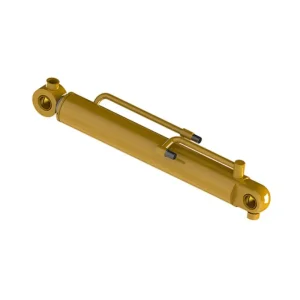
High-tonnage hydraulic excavators, backhoe loaders, and wheel dumpers require emergency pilot dumping manifolds coupled directly to swing motors and travel drives. Our valve blocks safeguard machinery operators against uncontrollable inertia on steep grades, matching seamlessly with custom boom, arm, and buffer cylinders.
Wind Turbine Aerodynamic Braking
Turbine nacelles require ultra-compact, leak-free emergency pitch control and yaw brake manifold blocks. Designed with zero-leakage poppet logic cartridges and integrated accumulator charging circuits, our blocks ensure aerodynamic feathering occurs smoothly during severe grid-loss emergencies.
Autonomous AGVs & High-Bay Forklifts
Electrified warehouse logistics vehicles and autonomous reach trucks carry severe human-collision liabilities in tight storage aisles. Compact aluminum alloy 7075-T6 emergency brake blocks actuate fail-safe parking brakes when LiDAR failsafes or optical interlocks trigger an immediate emergency circuit break.
Next-Generation Valve Block Architectures
The industrial landscape is transitioning from legacy purely hydraulic check blocks to cyber-physical electro-hydraulic brake systems featuring ISO 13849-1 (PL e / Cat 4) functional safety, micro-second telemetry, and additively optimized internal galleries.
| Performance Parameter | Legacy Hydraulic Block | MPM Standard Industrial Block | MPM Next-Gen Smart Safety Block |
|---|---|---|---|
| Base Raw Material | Cast Grey Iron (HT250 / GG25) | Ductile Iron QT500-7 / Forged 42CrMo4 | Additive 316L / Ultralight Al-Zn 7075-T6 |
| Nominal Working Pressure | 210 Bar (3,045 PSI) | 350 - 420 Bar (5,075 - 6,090 PSI) | Up to 500 Bar Hydrostatic Peak |
| Emergency Response Latency | 35 ms - 60 ms | 12 ms - 18 ms | < 6 ms (High-Speed Bi-Stable Solenoids) |
| Internal Leakage Rate | < 5 drops/min at rated load | < 0.1 ml/min (Zero-Leak Poppets) | Hermetic Hardened Seat Sealing (<0.01 ml/min) |
| Internal Gallery Machining | Cross-Drilled intersecting ports | High-Precision 5-Axis Gun Drilled | CFD-Optimized Smooth Curved Flowpaths |
| Functional Safety Compliance | Not Formally Certified | ISO 13849-1 Cat 3 / PL d capable | Certified ISO 13849-1 Cat 4 / PL e & SIL-3 |
| Sensory Telemetry | None / External Pressure Gauge | Standard IO-Link Pressure Transducer Ports | Integrated CANopen / J1939 Temperature & Spool Sensors |
CFD Flow Optimization
Eliminating cavitation hotspots, flow turbulence, and excessive pressure drops within internal galleries by optimizing 90-degree intersection radii via custom tooling and computational fluid dynamics simulations.
Micron-Tolerant Cavity Bores
Cartridge valve cavities (Sun Hydraulics, HydraForce, and Rexroth standard footprints) are honed to tight H7/H8 tolerances with surface finishes exceeding Ra 0.4 µm to guarantee valve spool responsiveness.
Dual-Coil Redundant Logic
Failure of a single electrical lead or burned solenoid coil must never lock up an excavator or crane in an unrecoverable state. Dual-coil de-energization logic provides uncompromised functional safety failover.
China Supply Chain Resilience & MPM Production Scale
Why Tier-1 international equipment brands source their emergency braking valve manifolds, hydraulic buffer cylinders, and precision CNC components from Qingdao Micro Precision Machinery.
Shandong Metallurgical Cluster
Our Qingdao manufacturing facility is nested within Shandong's world-leading precision casting, forging, and heavy machinery corridor. Direct mill-access to defect-free continuous-cast ductile iron bars (QT500-7) and vacuum-degassed 42CrMo4 blocks ensures material density free from sub-surface shrinkage voids.
Integrated Machining & Tooling
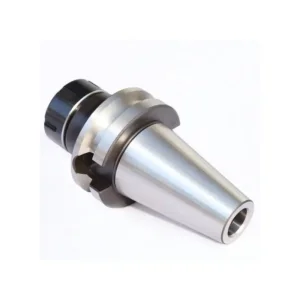
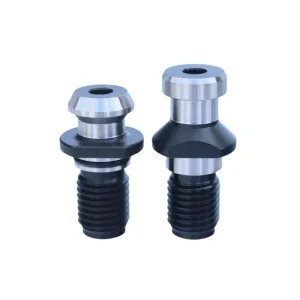
Unlike assembly-only shops, MPM machines its own ER tool holders, DIN 69872 retention knobs, cylinder barrels, and cylinder heads in-house. This closed-loop tooling control ensures zero spindle runout, ultra-stable milling cycles, and precise manifold cavity concentricity across 20,000 monthly units.
Port-Centric Global Delivery
Situated within minutes of the Port of Qingdao—one of the largest deep-water automated container hubs in the world—we provide direct sea-freight routes to Rotterdam, Hamburg, Los Angeles, and Busan, avoiding domestic transit delays and curbing overall landed logistics costs.
Hydrostatic & Helium Testing
Every emergency brake manifold block undergoes 100% pressure-proof testing up to 1.5x maximum operating pressure (up to 630 Bar test benches). Ultrasonic multi-axis cleaning, automated thermal deburring, and high-pressure oil flushing eradicate micro-particulates down to NAS 1638 Class 6 (ISO 4406 17/15/12).
Agile Prototyping to Mass Rollout
Our dedicated engineering review team evaluates client 2D blueprints and 3D STEP models within 24 hours. From customized prototype delivery in 14-21 business days to volume production scaling seamlessly, we eliminate engineering bottlenecks for global aftermarket distributors and OEMs alike.
End-to-End Certified Quality Lifecycle
A rigorous, five-phase manufacturing traceability framework ensuring dimensional stability, leak integrity, and fail-safe mechanical operation.
Spectrometric Metallurgical Assay
Direct glow-discharge optical emission spectrometry verification of carbon, silicon, and manganese equivalents in incoming raw casting billets before batch acceptance.
Thermal Stress Relieving & Aging
Controlled electric furnace annealing cycles to normalize internal casting stresses, preventing block micro-distortion during high-pressure operating cycles over decades.
Multi-Axis CNC Machining & Honing
High-torque horizontal machining centers with automated pallet changers complete cavity drilling, thread tapping, and port finishing in a single setup for absolute concentricity.
Thermal Deburring & Ultrasonic Bath
Explosive methane-oxygen thermal deburring (TEM) incinerates burrs at internal oil passage intersections, followed by ultrasonic multi-stage particle decontamination.
100% CMM & Hydrostatic Certification
Coordinate Measuring Machine inspection to ±0.005 mm tolerances, proof-pressure testing at 150% rating, followed by rust-preventative dipping and seaworthy packing.
Frequently Asked Technical & Sourcing Questions
Clear, direct answers for hydraulic systems designers, OEM procurement managers, and aftermarket equipment engineers.
What exact role does an emergency brake valve block perform compared to standard control manifolds?
Which material is best suited for emergency brake blocks: ductile iron or forged steel?
Can Qingdao Micro Precision Machinery customize emergency brake blocks to accept standard Sun, HydraForce, or Rexroth cartridge cavities?
What are the cleanliness benchmarks applied to your hydraulic valve blocks prior to export shipment?
What minimum technical parameters must an OEM provide to receive an engineering quote?
Precision Cylinders, Tooling & Power Station Manifolds
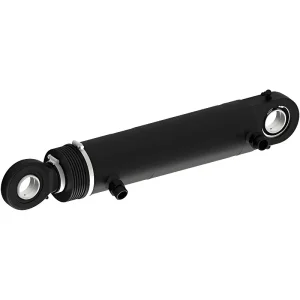
Explore our full range of manufactured equipment: robust double-acting cylinders, CNC spindle accessories, turnover systems, and integrated station valve blocks engineered for extreme duty cycles.
-
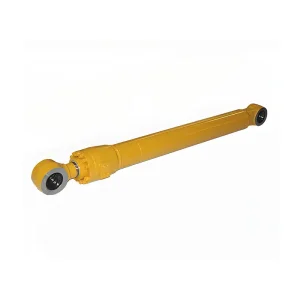
Cheap Boom Cylinder MPM-HCB212 for Excavator and Loader Manufacturer, Factories
-
-
-
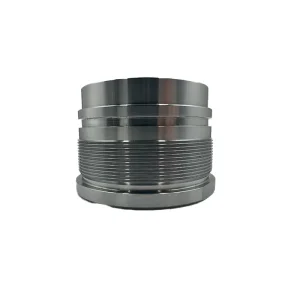
High-Quality Hydraulic Cylinder Head MPM-HCHD11 Suppliers, Manufacturer
-
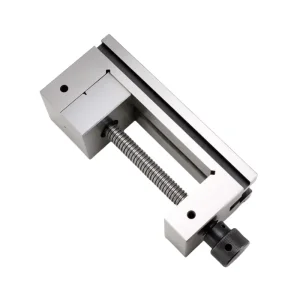
Best QGG Precision Tool Vice MPM00330 Suppliers, Manufacturers
-
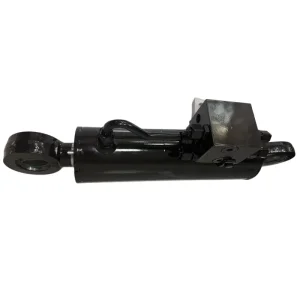
China Reversible Plough Turnover Hydraulic Cylinder Suppliers, Manufacturers
-
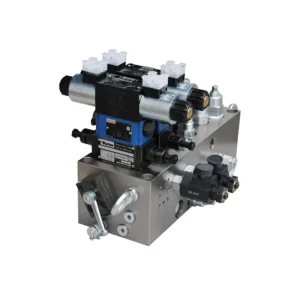
Cheap Hydraulic Station Valve Block MPM-HSVB12 Manufacturers, Factory
-
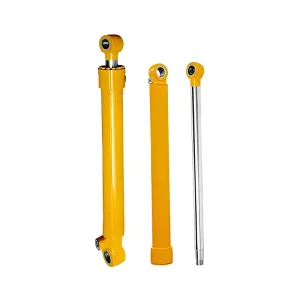
China Small Excavator Stick Cylinder Suppliers, Manufacturers