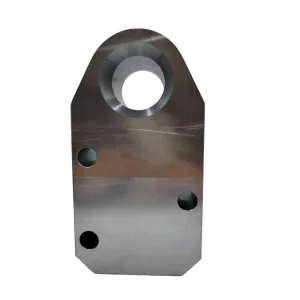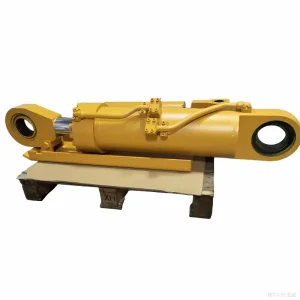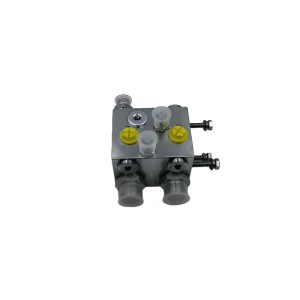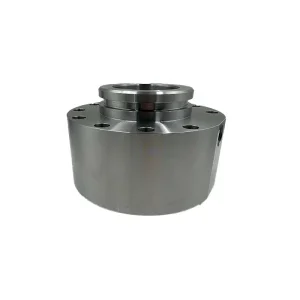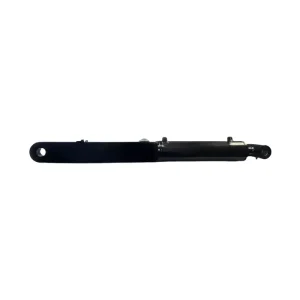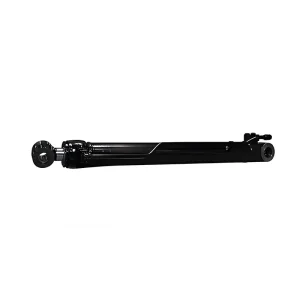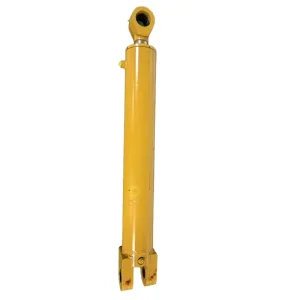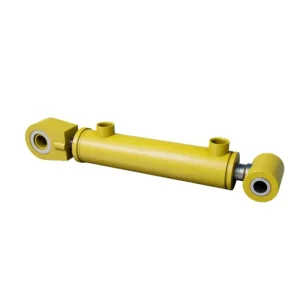
Precision Actuators & Control Assemblies
Explore high-duty crane cylinders, multi-stage telescopic systems, and precision fluid-control valve blocks manufactured to rigid OEM tolerances.
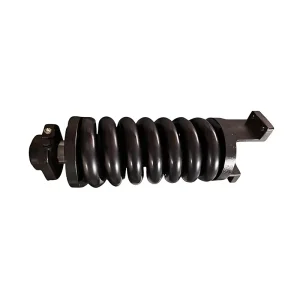
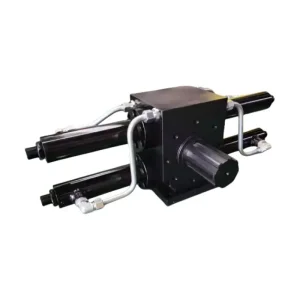
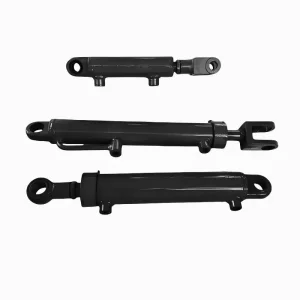
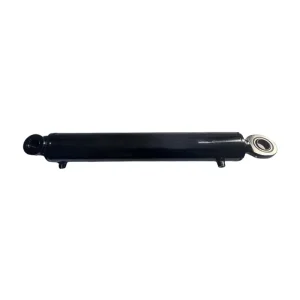
Evolution of Crane Luffing Cylinder Technology
From mobile telescopic boom all-terrain cranes to colossal offshore crane vessels, boom luffing systems endure the harshest combined bending, tensile, and buckling loads in modern industrial lifting.
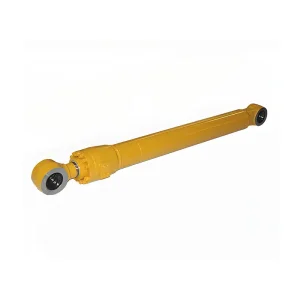
In structural heavy lifting, the crane luffing cylinder (also termed the boom hoist cylinder or derrick actuator) serves as the primary load-bearing backbone. Unlike auxiliary actuators, the luffing cylinder continuously sustains dynamic suspended loads under variable working radii. Over the past decade, lifting machinery OEM requirements have moved aggressively toward ultra-high-tensile steels, internal damping cushioning, and intelligent position sensing. As structural designs become more slender to optimize mobile transport weights, buckling resistance and stroke-end stability dictate the entire crane safety envelope.
Modern mega-infrastructure and offshore wind turbine installations demand luffing mechanisms operating at continuous pressures exceeding 350 to 420 bar. In these operating regimes, conventional welded cylinders fail prematurely through cyclic fatigue at the base joint, micro-pitting along chrome plating, or thermal breakdown of primary elastomer seals. Consequently, premier global crane builders demand integrated, FEA-optimized luffing cylinders capable of enduring multi-million pressure reversal cycles under freezing sub-zero conditions or salt-fog marine atmospheres.
Buckling Analysis & Euler Theory
Long strokes with colossal extended lengths demand rigorous 2nd-order Euler-Rodrigues column buckling analysis. Modern manufacturing utilizes seamless hot-rolled alloy tubes (e.g., St52-3, 27SiMn, 42CrMo4) cold-drawn and deep-hole bored with strict wall concentricity to prevent deflection under full boom payloads.
Integrated Dual Counterbalance
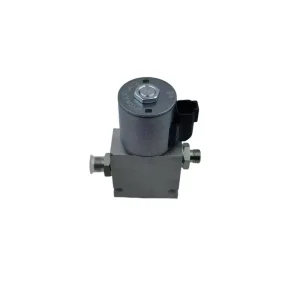
Luffing safety requires catastrophic hose-rupture prevention. High-integrity manifolds bolt directly onto cylinder ports via solid steel flanging, housing zero-leak pilot-assisted check and counterbalance valves that freeze the boom instantaneously (<15 ms) upon pressure drop or valve failure.
Advanced Surface Metrology
Marine cranes and coastal crawler units suffer severe chloride corrosion. Tier-1 luffing cylinder manufacturers implement HVOF (High-Velocity Oxy-Fuel) thermal spray tungsten carbide or double-layer micro-crack chrome plating, certified for 1,000+ hours in ASTM B117 neutral salt spray testing.
OEM Buyer Intent & Sourcing Evaluation Criteria
Purchasing directors and chief engineers from crane OEMs evaluate global hydraulic actuator suppliers based on strict engineering parameters, lifecycle cost, and metallurgical accountability.
| Evaluation Vector | Commercial Grade / Standard Supplier | Precision OEM Grade (MPM Standard) | Impact on Crane Operational Lifecycle |
|---|---|---|---|
| Cylinder Barrel Steel | Commercial ST52 cold-drawn welded tubes | Quenched & tempered 27SiMn / 42CrMo4 seamless forged | Eliminates longitudinal fracture risks under shock loads and sub-zero impacts (-40°C). |
| Piston Rod Finishing | Standard Hard Chrome (20 μm), Ra 0.2–0.4 μm | Induction hardened 50-55 HRC, double chrome/laser clad, Ra ≤ 0.15 μm | Triples seal pack lifespan; prevents premature hydraulic fluid contamination and weeping. |
| Internal Sealing System | Generic NBR/polyurethane U-cups | Step-seal tandem arrays, PTFE bronze filled, Hallite / Merkel packs | Zero internal bypass drift, maintaining boom angle within 0.05° over 24-hour static hold. |
| Integrated Manifolds | Remotely piped sandwich subplates | Direct face-mounted forged steel manifold blocks (MPM-HCVB series) | Eliminates burst hose failure between safety valve and cylinder chamber; fulfills EN 13000 safety. |
| Quality Traceability | Batch hydro test; visual checks | 100% full-stroke pressure test, ultrasonic weld scan, 3.1 Mill Certs | Complete metallurgical provenance safeguarding OEMs against product liability damages. |
Drawing Precision & Tolerancing
Global OEMs mandate adherence to ISO 2768-mK or custom drawing tolerances. Cylinder head threads and barrel concentricity require tight CNC tolerances to avoid binding under load.
Duty Cycle Longevity
Container handlers and shipyard knuckle-boom cranes run 24/7. Cylinders must exceed 2,000,000 full pressure cycles without gland leakage, internal galling, or cushion chamber blowout.
Cold-Climate Charpy Impact
Arctic mining and North Sea construction cranes require Charpy V-notch impact toughness ≥ 27J at -40°C. Cylinder end-caps and forged eyelets must resist brittle fracture during dynamic gusts.
Integrated Sensor Cavities
Transition to electro-hydraulic autonomous operation requires cylinders with internal gun-drilled channels for magnetostrictive linear transducers, enabling sub-millimeter stroke feedback.
Engineering Solutions for Demanding Lifting Environments
A breakdown of field failures, operational challenges, and MPM's advanced architectural hydraulic resolutions across mission-critical crane sectors.
Mobile All-Terrain & Truck Cranes
Challenge: Axle-weight restrictions demand lightweight cylinders, while rapid road transport subjects cylinders to continuous vibration and bouncing dynamic whip.
Solution: Thin-walled high-strength quenched and tempered steel alloy barrels with integrated lightweight forged trunnion mounts and hydraulic end-stroke deceleration cushions to eliminate shock transfer to the crane chassis.
Crawler Cranes & Heavy Derrick Systems
Challenge: Extreme side-load moments caused by lattice boom twisting during heavy slewing maneuvers, leading to piston ring scoring and rod gland extrusion.
Solution: Heavy-duty spherical plain bearings with PTFE woven composite self-lubricating wear rings, widened guide bushing surfaces, and precision induction-hardened chrome rods resisting extreme side-thrust vectors.
Offshore Pedestal & Marine Vessel Cranes
Challenge: High-salinity atmospheric corrosion, aggressive wave-induced heave compensation forces, and stringent offshore classification certification (DNV, ABS, Lloyd's).
Solution: Nickel-chromium electroplating or laser-clad Inconel coatings, stainless steel piping, 316L hydraulic test points, double rod wiper systems, and DNV-approved hydrostatic burst testing procedures.
Localized Support & International Compliance Assurance
Operating a global supply chain requires adherence to international industrial safety standards, local regulatory frameworks, and rigorous material documentation.
Sourcing hydraulic actuators across international borders requires complete assurance of structural safety. Qingdao Micro Precision Machinery (MPM) engineers every custom crane luffing cylinder, outrigger actuator, and boom elevation cylinder in full compliance with global lifting machinery mandates, including EN 13000:2010+A1:2014 (Cranes - Mobile Cranes Safety), ASME B30.5, and ISO 4305 stability criteria.
Our localized engineering support bridges cross-continental technical gaps. Every customer proposal includes complete 3D STEP solid models, 2D manufacturing prints with ISO fit/tolerance allocations, FEA stress contour simulations under maximum rated load, and sealing friction torque calculations. Every export consignment is accompanied by EN 10204 3.1 inspection certificates, Charpy V-notch toughness records, hard chrome micro-crack inspection reports, and hydraulic pressure decay curves validating absolute zero-leak performance before sea or air dispatch.
ISO 9001:2015 Process Control
Every operational station—from raw bar stock band sawing and CNC gun drilling to sub-arc welding, assembly in cleanrooms, and testing—follows standardized QA workflows with full traceability back to heat heats.
Multilingual Engineering Dispatch
Dedicated technical liaisons fluent in technical English and European machine safety directives provide prompt feedback within 24 hours, addressing dimensional tolerances, port threading, and valve cavity interfaces.
Heavy Export Packaging
Luffing cylinders undergo specialized anti-corrosion VCI oil flushing, shrink vapor barrier bagging, custom wooden cradles with integrated load-bearing supports, and steel strap tie-downs to ensure zero transit damage.
Engineering Horizons: Smart Luffing Actuation
The convergence of electrification, telematics, and lightweight materials is revolutionizing crane hydraulic design.
IoT-Enabled Predictive Telematics
Embedding high-frequency acoustic emission sensors and dynamic pressure transducers inside the cylinder gland to predict seal breakdown, seal extrusion, and oil contamination before catastrophic in-field boom droop occurs.
Laser Cladding & Micro-Alloying
Replacing traditional electroplated hard chrome with ultra-dense Laser Additive Direct Deposition (LMD) stellite or titanium alloys, eliminating hexavalent chromium hazards while delivering microhardness > 65 HRC with minimal porosity.
Electro-Hydrostatic Actuation (EHA)
Developing closed-circuit self-contained luffing actuators integrating low-inertia servomotors and fixed-displacement pumps directly on the cylinder barrel, drastically lowering hydraulic fluid volume and cutting crane fuel use by up to 30%.
Frequently Asked Questions on Crane Luffing Cylinders
Authoritative technical guidance for hydraulic engineers, technical procurement specialists, and crane fleet maintenance managers.
What is the primary operational distinction between a luffing cylinder and a standard boom cylinder?
A crane luffing cylinder functions almost entirely as an equilibrium-critical structural column. While general boom cylinders (e.g., excavators) experience dynamic cyclic digging shock, luffing cylinders must withstand massive, continuous static and dynamic suspended loads across extreme stroke lengths without buckling. The safety tolerance for internal pressure drift is near zero, demanding specialized load-holding counterbalance valves mounted directly onto the cylinder barrel.
How do you prevent hydraulic "boom drop" or creeping when the crane holds a load suspended overnight?
Hydraulic drift in luffing cylinders stems from either internal piston seal bypass or seat leakage in the counterbalance control block. We eliminate this by pairing zero-leak, tungsten-carbide-seated counterbalance valves (such as the MPM-HCVB3A series) with virgin PTFE bronze-filled step seals and pre-energized elastomeric O-rings, ensuring pressure hold variation remains under 0.5 bar per 24-hour test period.
Which raw materials are specified for heavy crane luffing cylinder barrels and piston rods?
For high-tonnage mobile and crawler cranes, we specify forged and quenched seamless alloy tubes in 27SiMn or 42CrMo4 (equivalent to AISI 4140), deep-hole bored and honed to Ra ≤ 0.2 μm. Piston rods are machined from induction-hardened 42CrMo or 40Cr forged round stock (hardened to 50–56 HRC at a depth of 2–3 mm), followed by double chrome plating or nickel-chromium alloy deposition.
Can Micro Precision Machinery reverse-engineer replacement luffing cylinders for obsolete cranes?
Yes. OEM crane models from Liebherr, Terex, Tadano, Zoomlion, Grove, or Manitowoc that are no longer supported can be fully reproduced. Our engineers conduct reverse engineering from worn samples, on-site measurement sheets, or damaged cylinder prints, upgrading outdated seal profiles and obsolete valve cavities to modern ISO/DIN standards.
What non-destructive testing (NDT) procedures do your luffing cylinders undergo prior to delivery?
Every luffing cylinder undergoes 100% full-stroke hydrostatic proof testing at 1.5× design working pressure (up to 600 bar). Critical structural welds (trunnions, base eyes, and head caps) undergo ultrasonic testing (UT) and magnetic particle testing (MT). Cylinder rods are inspected for chrome micro-crack density and salt-spray corrosion resistance per ISO 9227 / ASTM B117 standards.
What specific engineering details are required to receive a fast, accurate technical quotation?
Please provide: 1) Bore diameter, rod diameter, and stroke length; 2) Extended and retracted pin-to-pin mounting dimensions; 3) Maximum operating pressure and proof test parameters; 4) End-mounting types (spherical plain bearing bore diameter or trunnion pin details); 5) Counterbalance valve configuration; and 6) Minimum operating temperature and environmental parameters (marine, arctic, desert).
OEM Cylinders, Barrels & Kinematic Assemblies
Explore our precision-machined mechanical components, custom hydraulic barrels, and heavy mobile machinery cylinders.