
Featured Belgian Market Engineering Solutions
Engineered to withstand extreme cyclic loading, saline atmospheres of Flemish coastal logistics, and demanding Walloon manufacturing frameworks.
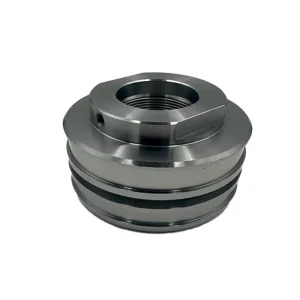
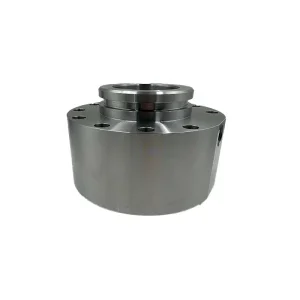
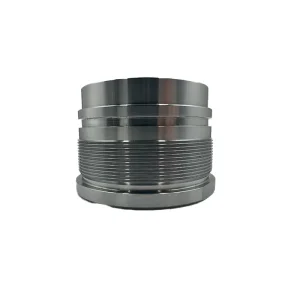
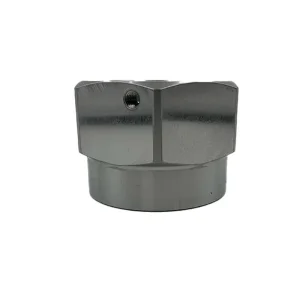
Belgium's Industrial Landscape: The Gateway to European Logistics & Mechanical Engineering
Belgium occupies a vital logistical position at the industrial center of Western Europe. Home to the Port of Antwerp-Bruges—the second-largest seaport in Europe—the country processes billions of tons of freight annually. This continuous operational tempo demands uninterrupted reliability from automated straddle carriers, dockside container cranes, and internal transshipment vehicles.
In parallel, the heavy chemical hubs of Flanders and the historical metallurgical and metalworking fabrication sectors of Wallonia (concentrated along Liège and Charleroi) maintain intense requirements for heavy-duty hydraulic machinery. Belgian agricultural machinery builders also lead the field in high-efficiency harvest and tillage equipment requiring high-pressure, leak-free linear actuation under severe shock loading.
Procuring precision-engineered hydraulic components that comply with stringent European machinery directives while retaining cost advantages from consolidated smart manufacturing has become the primary strategy for Belgian original equipment manufacturers (OEMs).
Global Enterprise Procurement Demands: Total Cost of Ownership
Enterprise procurement managers across Ghent, Brussels, and Antwerp balance rapid availability, dimensional accuracy, and supply chain redundancy.
Metallurgical Integrity
Hydraulic failure often stems from micro-porosity in cast heads or micro-cracks in rolled steel tubing. Belgian engineers demand high-grade 20MnV6, 42CrMo4, and St52-3 structural steels, inspected via non-destructive magnetic particle testing (MPI) to prevent rupture under transient peak pressures.
Extended Seal & Surface Life
Harsh North Sea marine environments trigger rapid corrosion on chrome platings. Procuring hard chrome coatings exceeding 30–50 microns with Ra < 0.2 µm ensures low friction, prevents seal degradation, and withstands salt-spray exposure up to 500 hours (ISO 9227 NSS).
JIT Direct Integration
Belgian OEMs operating Lean and Just-in-Time (JIT) assemblies require precision parts delivered ready for mounting. Component cleanliness levels down to ISO 4406 18/16/13 ensure zero contamination during initial system commissioning on machine shop floors.
Macro-Sector Tailored Engineering Frameworks
Cross-functional fluid power component engineering built around key Benelux operational conditions.
1. Maritime Port & Offshore Logistics
Quay crane tieback cylinders and container spreader actuators at Zeebrugge demand integrated valve blocks that maintain holding pressure even during catastrophic power loss.
- Ceramic or nickel-chrome multi-layer rod surface protection
- Integral anti-cavitation and counterbalance manifold ports
- Stainless steel hydraulic gland flanges for saltwater defense
2. Construction & Civil Infrastructure
Belgium's civil re-engineering projects (such as the Oosterweel Link) operate earthmoving equipment continuously under abrasive soil and fluctuating hydrological conditions.
- End-cushioned design reducing hydraulic shock spike loads
- Induction-hardened chrome piston rods (54–60 HRC)
- Heavy-duty spherical plain bearings with maintenance-free PTFE
3. Agro-Machinery Automation
Farming in Flanders and Wallonia relies on compact, high-pressure equipment. We engineer components offering maximum stroke-to-retracted-length ratios for reversible ploughs and potato harvesters.
- Forged steel cylinder bases with zero internal pinhole defects
- Double-acting 180° rotation precision turnover circuits
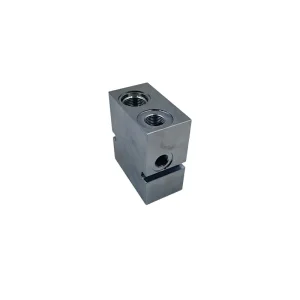
- High-pressure hydraulic manifold blocks with zero internal cross-leakage
Technical Roadmap & Industry 4.0 Transition
Anticipating the technological shift of the European mechanical sector toward electrification, energy-conservation valves, and smart sensory integration.
Smart Cylinders (Sensor Integration)
Integrating internal linear displacement transducers (magnetostrictive sensors) directly inside hollowed cylinder rods to enable real-time telemetry on automated guided vehicles (AGVs).
Bio-Hydraulic Compatible Seals
Developing engineered polyurethane and fluoroelastomer (FKM) compound seals stable against biodegradable synthetic ester oils mandated under European environmental forestry directives.
High-Pressure Lightweighting
Replacing traditional castings with single-piece CNC-machined alloy forgings, cutting structural weight by 18% while expanding working fatigue thresholds up to 450 bar.
Additive & Monoblock Manifolds
Redesigning hydraulic manifolds with curved CFD-optimized internal passages, reducing fluid turbulence, heat build-up, and throttling losses by up to 23% in high-cycle operations.
Localization Support, Compliance & Quality Assurance
Ensuring frictionless importing, CE declaration compatibility, and traceable batch consistency for Belgian engineering partners.
Full European Compliance & Traceability
Every wholesale hydraulic shipment destined for Antwerp or Brussels includes full EN 10204 3.1 material test certificates documenting chemical compositions and tensile mechanical yields. We design with strict adherence to DIN, ISO, and CETOP mounting standards.
- Machinery Directive 2006/42/EC Ready: Pressure calculations and safety factors matched to European norms.
- Thread Tolerance: Precision ISO 6H thread cutting on locking cylinder nuts and cylinder heads.
- Export Packaging: Vacuum-sealed rust-inhibiting VCI film, shock-absorbing custom dunnage, and fumigated plywood crating suitable for direct unloading at Zeebrugge or Brussels South Charleroi Airport cargo centers.
Direct Logistics Connectivity to Belgium
Operating from our advanced Qingdao precision facility, shipments leverage Qingdao’s direct container lines to the Port of Antwerp, maintaining scheduled transit times of 28 to 32 days, or emergency air-freight corridors into Brussels Airport (BRU) / Liège Cargo Airport (LGG) within 5 business days.
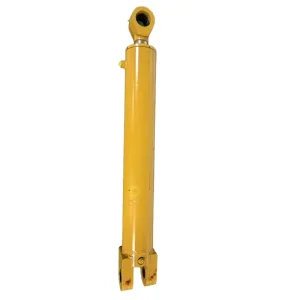
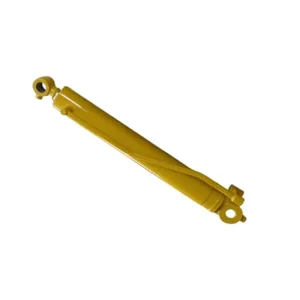
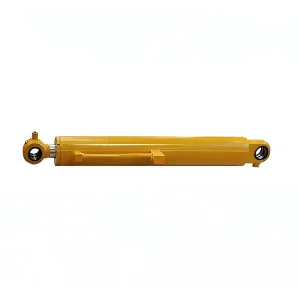
Inquire for Localized Delivery SchedulesIndustrial Heavy Cylinder Assemblies & Precision Components
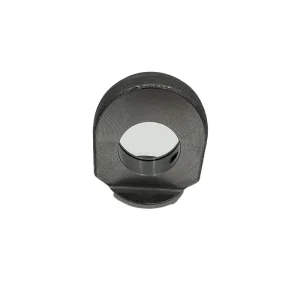
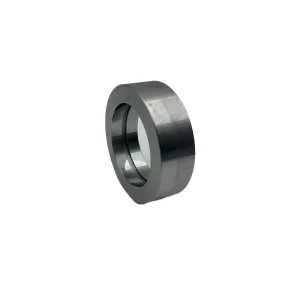
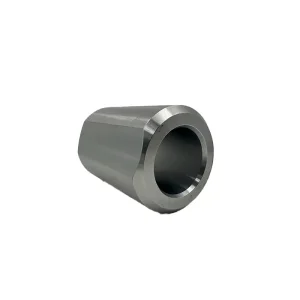
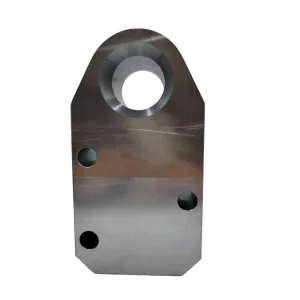
Comprehensive product range for continuous-duty applications across heavy excavation, material handling, and hydraulic valve automation.
Technical & Procurement FAQ for Belgian Importers
Key information regarding ordering, dimensional compliance, material testing, and European logistics.