
Precision Agricultural Cylinder Series for Korean Applications
Direct OEM-engineered actuators designed for rigorous soil conditions, intensive paddy cycles, and sub-millimeter furrow adjustment.
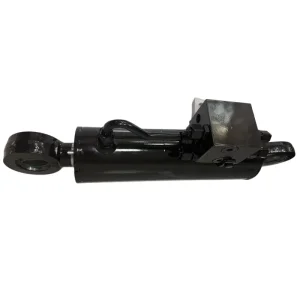
China Reversible Plough Turnover Hydraulic Cylinder Suppliers, Manufacturers
View Product Specs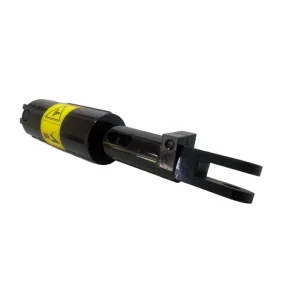
High-Quality Width Adjustment Cylinder for Reversible Plough Supplier, Factories
View Product Specs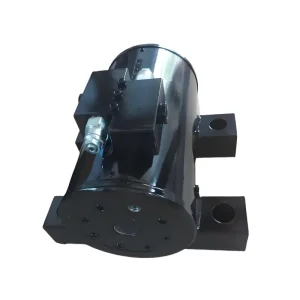
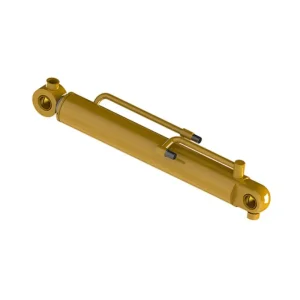
China Small Excavator Bucket Cylinder Suppliers, Supplier
View Product SpecsSouth Korea’s Agricultural Machinery Landscape: Structural Demands & Hydraulic Evolution
A comprehensive technical appraisal of how Korea's demographic transition, smart greenhouse expansion, and Tier-4 tractor exports shape fluid power procurement.
Demographic Acceleration Toward Autonomous Smart Mechanization
The agricultural economy of South Korea is undergoing one of the most severe demographic contractions in the developed world. Over 48% of primary farm managers across Gyeonggi, Chungnam, and Jeollanam-do provinces are aged 65 and above. This hyper-aging farm workforce has eliminated conventional manual labor, compelling the Korean Ministry of Agriculture, Food and Rural Affairs (MAFRA) to mandate aggressive mechanization targets. Modern Korean agriculture does not merely require tractors; it demands ultra-reliable, digitally controllable, autonomous smart machinery that can be operated seamlessly by an elderly operator or an RTK GPS auto-guidance system.
In hydraulic engineering terms, this transition replaces traditional low-duty single-acting cylinders with closed-loop electro-hydraulic actuators capable of continuous multi-axial adjustments. Whether navigating saturated rice paddy fields during May transplanting or conducting intensive autumn rice harvesting, modern Korean agricultural implements demand zero-backlash, rapid-response hydraulic actuators that maintain volumetric efficiency across thousand-hour continuous duty windows without fluid loss.
Crucial Procurement Bottleneck in Korea
Major Korean agricultural original equipment manufacturers (OEMs)—including TYM Corporation, Daedong (KIOTI), and LS Mtron—along with specialized implement manufacturers in Daegu, Gimje, and Naju, encounter substantial margin compression when sourcing domestic or European cylinders. Sourcing from our Qingdao manufacturing ecosystem offers Korean tier-1 distributors a definitive 28% to 42% cost reduction combined with a 36-hour maritime shipping transit directly into Incheon or Busan ports.
Furthermore, South Korea's arable land consists predominantly of small, terraced, or segmented plots where equipment footprint must remain compact while power density increases. Tractor auxiliary hydraulic circuits must pack higher working pressures (210 bar to 280 bar nominal) into downsized envelope dimensions. For wholesale agricultural machinery cylinder suppliers, delivering barrels honed to sub-Ra 0.2 μm tolerances and chrome plating resistant to fertilizer corrosion is the baseline standard for entry into the Korean OEM supply chain.
High-Stress Application Environments Across South Korea
From clay-rich paddy subsoils to mountain terraced orchards, our cylinders are engineered to neutralize specific operational points of failure.
Wet Rice Paddy Submersion & Silt Ingress
Operated across Honam and Yeongnam plains, tractor three-point linkages, transplanter float levers, and rotary tillers operate completely submerged in liquefied clay slurry containing abrasive quartz particulates.
- Dual-lip polyurethane scraper seals with secondary NBR dust lips prevent abrasive silt ingress.
- Hard chrome plating depth >30 μm (micro-crack structure) prevents corrosion from standing water.
- Sealed spherical rod eyes eliminate pin galling under slurry immersion.
Reversible Plough Turnover Shock & Furrow Adjustment
Heavy deep-tillage equipment mounted on Daedong or TYM 70–130 HP tractors must execute a rapid 180° rollover under severe cantilever gravitational torque, requiring precise hydraulic damping.
- Integrated dual-acting turnover lock valves maintain zero drift during transport on public roads.
- Adjustable internal end-position cushioning prevents mechanical shock fractures at turnover limits.
- Stepless width-adjustment geometry calibrated for varying Korean subsoil shear resistance.
Smart Glasshouse & Terraced Orchard Lifts
South Korea’s intensive greenhouse horticulture in Jinju and smart greenhouse complexes in Sangju require micro-hydraulic actuators for automated vent lifters, fruit harvest platforms, and spray booms.
- Low-friction PTFE step-seals ensure stick-slip-free motion at ultra-low speeds (<5 mm/s).
- Bio-hydraulic fluid compatibility (synthetic ester & vegetable base oils) to eliminate soil toxicity.
- Compact rotary actuators and scissor lift cylinders with zero internal bypass leakage.
Global Agri-Hydraulic Paradigm vs. The Korean Export Factor
Korean agricultural machinery builders are major global exporters to North America and Europe, requiring cylinders with universal compliance.
The Dual-Market Pressure on Korean OEMs
While domestic Korean farm sizes average 1.5 hectares, leading Korean tractor manufacturers export up to 70% of their total tractor output to North America (under badges such as KIOTI or through OEM partnerships with Bobcat and New Holland) and Western Europe. This creates a severe engineering duality: the same hydraulic cylinders mounted on tractors built in Daegu or Jeonju must perform effortlessly in Korean flooded paddy rice fields and withstand the 4,000-hour continuous rock-clearing and snow-removal duty cycles of North American homesteaders.
Global supply chain disruptions have underscored the fragility of European component sourcing for Korean factories. Lead times exceeding 26 weeks from Italian or German hydraulic suppliers have crippled assembly schedules. By partnering with our Qingdao precision manufacturing plants, Korean OEMs benefit from standardized ISO 4413 and ISO 6020/2 interchangeability, SAE and BSPP port flexibility, and guaranteed safety factors of 3:1 against proof pressure—delivered within predictable 14-day production windows.
Global Benchmarking: Cylinder Performance Indicators
| Parameter | Korean Domestic Target | Global Export Spec |
|---|---|---|
| Operating Temp | -20°C to +80°C | -40°C to +105°C (Extreme) |
| Port Configuration | BSPP / JIS Metric | SAE O-Ring Boss (ORB) |
| Salt Spray Life | 480 Hours (NSS) | 960+ Hours (ASTM B117) |
| Pressure Rating | 21 MPa (210 Bar) | 28–35 MPa (High Pressure) |
Why Korean Agri-Machinery Leaders Partner with Our Qingdao Facilities
Combining world-class CNC turning, grinding, and automated welding infrastructure with uncompromised metallurgical supply lines.
Full In-House Machining Control
Every critical hydraulic interface—including internal cylinder heads, piston lands, gland nuts, and integrated valve cavities—is machined in-house across multi-axis CNC centers and high-speed CNC lathes.
- Barrel honing tolerance: H8/H9 with internal Ra <0.2 μm.
- ISO 6H nut thread class guaranteeing anti-fatigue retention.
- Strict concentricity <0.03 mm between piston rod and bore.
Unmatched Raw Material Sourcing
We source cold-drawn seamless carbon and alloy tubes (ST52, 27SiMn, E355) directly from top-tier certified mills, ensuring zero porosity, superior tensile strength, and guaranteed yield limits exceeding 520 MPa.
- Piston rods machined from quenched & tempered 42CrMo or C45E.
- Induction hardening depth: 1.5–3.0 mm, HRC 54–60.
- Multi-stage automated ultrasonic testing (UT) on all billets.
Yellow Sea Maritime Logistics Advantage
Situated in Qingdao, our factory is only a short distance from the port terminal. Container shipments reach Incheon Port within 24–36 hours and Busan Port within 48 hours, enabling near-domestic JIT inventory handling.
- Daily direct feeder vessels between Qingdao and major Korean ports.
- Emergency air cargo delivery to Incheon Airport within 24 hours.
- Zero tariff friction with China-Korea FTA (CKFTA) documentation.
Engineering the Next Decade: Smart, Sensorized & Decarbonized Actuators
Transitioning from pure mechanical hydraulic displacement toward digitized, CAN-bus integrated fluid power devices.
Embedded Displacement Transducers (Smart Cylinders)
Autonomous farming operations in South Korea rely heavily on sub-centimeter leveling of paddy rotary tillers and precision fertilizer depth injection. Standard external rotary angle sensors are prone to branch strikes, wire snagging, and mud encrustation. Our R&D roadmap integrates absolute magnetostrictive and Hall-effect linear position transducers directly inside the cylinder rod cavity.
This internal integration isolates the sensor from environmental exposure, outputting real-time ISOBUS and CANopen compatible stroke feedback with non-linearity ratings under ±0.05% of full scale. Tractor central electronic control units (ECUs) can dynamically calculate implement attitude in milliseconds, facilitating autonomous plowing without human intervention.
Low-Energy Regeneration & Electric Tractor Adaptation
As Korean manufacturers develop battery-electric utility tractors (such as Daedong's eco-friendly compact series), hydraulic throttling losses can no longer be tolerated. Traditional valve-controlled throttle circuits deplete battery packs rapidly. We are pioneering differential regenerative cylinder designs equipped with integrated low-leakage cartridge valves.
These circuits recycle rod-side fluid directly into the piston chamber during low-load extension strokes, cutting pump flow demand by up to 35% and extending vehicle battery range while dramatically lowering bulk oil temperatures during summer operations.
| Cylinder Component | Material Standard | Processing & Tolerance | Korean Field Reliability Benefit |
|---|---|---|---|
| Cylinder Barrel | ST52-3 / E355 / 27SiMn Seamless | Skived & Roller Burnished / Honed, Ra ≤ 0.20 μm, Bore H8 | Prevents seal micro-abrasion; zero ballooning under 350 bar peak shock loads. |
| Piston Rod | 42CrMo4 / C45E Alloy Steel | Induction Hardened HRC 56±2, Hard Chrome Plated >30 μm, f7 | Resists stone-impact dents and chemical agro-fertilizer pitting over 5,000 hrs. |
| Sealing Architecture | Parker / Hallite / NOK / Custom PU | Primary PTFE Step-Seal + U-Cup + Metal Scraper Wiper | Eliminates external leakage; low breakaway friction prevents stick-slip in GPS mode. |
| Gland Head & Piston | Ductile Iron QT500-7 / Forged C45 | Multi-spindle CNC Turning, ISO 6H Thread Fit, Concentricity <0.03 mm | Guarantees perfect alignment under heavy cross-axial agricultural side-loads. |
| Paint & Surface Shield | Polyurethane / Epoxy 2-Pack Primer | Electrostatic Coating, Dry Film Thickness (DFT) >100 μm | Exceeds 960 hours neutral salt spray testing; immune to acidic soil washdowns. |
Strict Adherence to Korean & Global Standards
100% end-of-line testing protocol ensures zero defective cylinders leave our factory floor.
KS B & ISO Quality Standards Verification
All agricultural cylinders destined for South Korea comply fully with Korean Industrial Standards (KS B 6318 for fluid power hydraulic cylinders) and global ISO 6020/2 and ISO 4413 specifications. Full material traceability certificates (EN 10204 3.1) and ultrasonic weld inspection records are provided with every wholesale shipment.
100% Automated Hydrostatic Testing
No statistical batch sampling: every single cylinder undergoes full stroke cycling and automated hydrostatic pressure testing at 1.5 times nominal working pressure (up to 375 bar for 250 bar cylinders) to verify zero internal bypass leakage and zero external gland weeping. Fluid cleanliness is maintained strictly to ISO 4406 Class 18/16/13.
Frequently Asked Questions: Sourcing Hydraulic Cylinders for Korea
Direct answers for purchasing directors, hydraulic systems engineers, and aftermarket agricultural equipment distributors.
How does your factory accommodate specialized hydraulic port standards required by Korean tractor implements?
Korean OEMs and implement builders utilize a diverse mix of connection standards depending on whether the machine is intended for domestic paddy use or export. We routinely machine ports according to JIS B2351 metric threads with O-ring seals, standard BSPP (G-thread with bonded washer seal), and North American SAE J1926-1 straight thread O-ring boss (ORB). Furthermore, we can integrate custom tube manifolds or hose-block connections with customized port angles to eliminate clearance interferences with tractor three-point linkages.
Can you provide custom engineering samples based on physical samples or 2D Korean CAD drawings?
Yes. Our in-house technical engineering team operates modern 3D CAD/CAM platforms (SolidWorks, AutoCAD) capable of receiving native Korean drawing packages or reverse-engineering worn physical samples sent to our Qingdao facility. Our engineers review pin-to-pin dimensions, mounting bushing tolerances, port geometry, and stroke limits, issuing a complete production blueprint and 3D step model for formal technical sign-off prior to prototype cutting.
What is the typical shipping lead time and customs clearance procedure for orders delivering into Incheon or Busan?
Standard production runs for batch orders (50 to 500 units) require 20 to 30 days. Shipping from Qingdao Port to Incheon Port takes approximately 24 to 36 hours; transit to Busan Port takes 48 hours. We issue complete documentation including China-Korea Free Trade Agreement (CKFTA) Form F Certificate of Origin, enabling Korean importers to benefit from preferential tariff rates (frequently 0% import duty). Goods are packed on non-coniferous heat-treated ISPM-15 wooden pallets with custom anti-corrosion VCI barrier bags.
How do your cylinder designs prevent seal failure and internal oil bypass during harsh Korean winters?
In northern provinces such as Gangwon-do, winter temperatures regularly dip below -25°C. Conventional polyurethane seals harden, lose elasticity, and induce rod weeping upon cold startup. For Korean cold-weather specifications, we deploy low-temperature ester-resistant polyurethanes and specialized low-temp hydrogenated nitrile (HNBR) energizers rated down to -40°C. Coupled with tight dimensional control over seal extrusion gaps, our cylinders guarantee instant seal energization without oil bypass.
Do you offer integrated overcenter valves, counterbalance blocks, or check valves on the cylinders?
Absolutely. Because reversible plough turnover, front-end loader tilt, and combine header lifters require absolute load-holding and hose-burst safety, we regularly manufacture direct manifold-mounted or barrel-integrated valve blocks. We CNC-machine standard SUN or HydraForce cartridge valve cavities directly into the cylinder base or head, eliminating external hard tubing and lowering leak risk.
What is your minimum order quantity (MOQ) for custom-engineered agricultural cylinders?
For custom OEM/ODM configurations built to unique customer drawings, our standard prototype evaluation quantity is 2 to 5 units to support pilot field trials. For recurring production batches, our commercial MOQ is typically 20 to 50 units. For high-volume standard agricultural models, we support phased container releases with buffer inventory arrangements.
Heavy-Duty Actuators, Steering Units & Machined Hydraulic Hardware
Explore our extended line of precision equipment cylinders, telescopics, and hydraulic integration valves engineered for agricultural and rural heavy machinery.
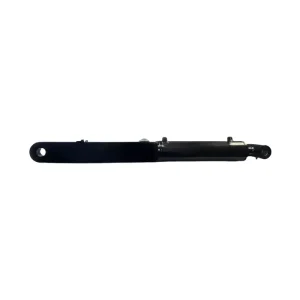
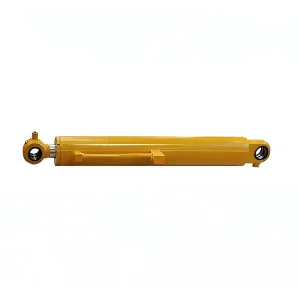
Custom Small Excavator Boom Cylinder Suppliers, Manufacturers
View Product Specs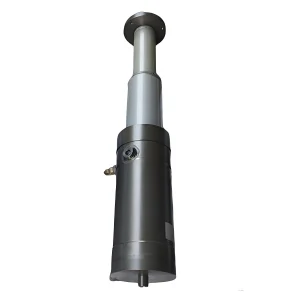
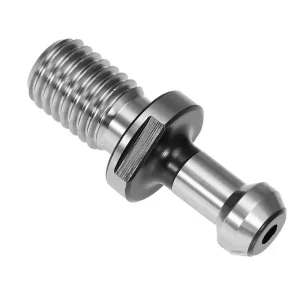
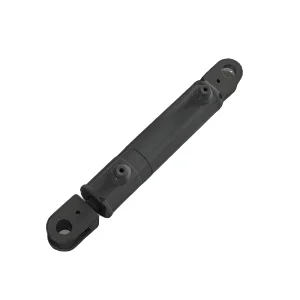
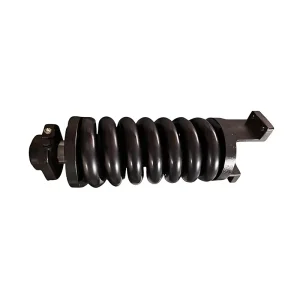
High-Quality Tightening Cylinder MPM-HCT401 for Excavator and Loader Suppliers, Factories
View Product Specs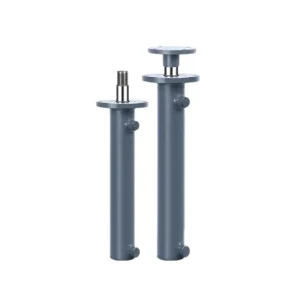
ODM Outrigger Hydraulic Cylinder MPM-OHC12 for Crane Supplier, Factory
View Product Specs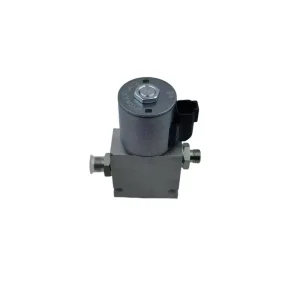
High-Quality Quick Change Solenoid Valve MPM-QCSV12 Suppliers, Factories
View Product SpecsPartner with Qingdao's Premier Agricultural Cylinder Manufacturer
Whether you require drop-in OEM replacements for existing tractor models or custom co-engineered smart hydraulic actuators for next-generation Korean agritech machinery, our senior fluid power engineers respond within 24 hours with complete 3D models, hydraulic calculations, and competitive FOB/CIF quotation terms.