High-Integrity Specialized Actuators for Swedish OEMs
Built to withstand extreme Nordic duty cycles, high-frequency impact loads, and rigorous ISO/SS (Swedish Standards) dimensional tolerances.
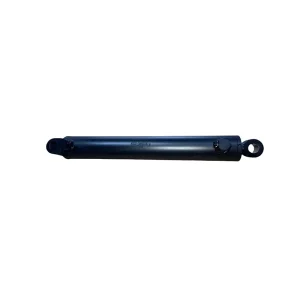
Sweden’s Industrial Reality & OEM Procurement Demands
Analyzing the intersection between Nordic mechanical excellence, harsh sub-arctic field conditions, and the demand for customized fluid power actuators.
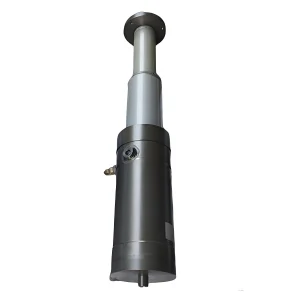
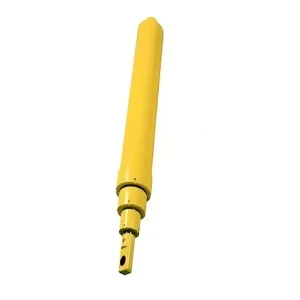
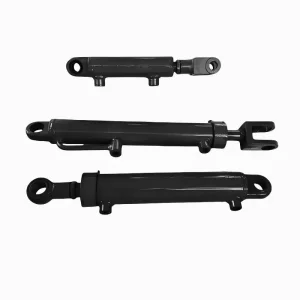
The manufacturing sector in Sweden represents a sophisticated benchmark for mechanical engineering across Europe. Characterized by prominent OEM global players in mining equipment, premium forestry harvesters, electrified heavy trucks, and steel mill infrastructure, Sweden's mechanical ecosystem relies extensively on tailored fluid power actuation. While mainstream hydraulic cylinders adhere to standardized tie-rod or general welded architectures, the operational reality of Sweden demands a dedicated category often classified as "Other Cylinders"—custom-engineered, application-specific actuators that operate reliably under non-standard geometries, dynamic pressures up to 450 bar, and sub-zero Arctic environments reaching down to -40°C.
Across Sweden, equipment operated in underground operations such as the Kiruna iron ore mines or extensive silviculture operations in Småland requires hydraulic components that minimize sudden seal degradation, rod galling, and lateral stress rupture. Standard catalog cylinders often lack the specific stroke-to-retracted-length ratios, integrated counterbalance load-holding valves, or sensor ports needed for modern CAN-bus telemetry. As a result, Swedish OEMs require fluid power manufacturers capable of agile prototyping, low-to-mid volume manufacturing flexibility, and rigorous material certification.
Arctic Grade Metallurgy & Sealing
Swedish winters require specialized cold-drawn micro-alloyed steel tubing (such as 20MnV6 or St52-3BK) paired with tandem sealing elements configured to retain hydrodynamic elasticity down to -40°C without stick-slip issues.
Corrosion & Impact Hardening
For maritime port handling in Gothenburg and roadside winter salting, rod plating utilizes double-layer micro-crack hard chrome or ceramic nickel-chrome deposition achieving ISO 9227 NSS corrosion resistance past 500 hours.
Embedded Smart Telemetry
Linear position transducers (LVDT and magnetostrictive sensors) integrated directly inside the high-pressure piston rod cavity deliver micron-precision digital position feedback compatible with Nordic autonomous control systems.
Macro-Level Supply Chain Solutions for Global Buyers
Overcoming supply concentration risks, lead-time volatility, and total cost of ownership (TCO) constraints through balanced international manufacturing partnerships.
Total Cost of Ownership Optimization
Global procurement teams face escalating raw material and labor costs in Western Europe. Partnering with dedicated facilities providing in-house CNC machining, induction hardening, honing, and robotic welding enables Scandinavian OEMs to reduce unit costs by 22%–38% while sustaining precision tolerances verified on coordinate measuring machines (CMM).
Dual-Track OEM Prototyping
From sample-based reverse engineering to complete 3D CAD stress calculations (FEA), modern supply frameworks offer quick turnaround prototype verification within 3 to 4 weeks, followed by seamless ramp-up to containerized batch shipments dispatched directly to Nordic logistics hubs.
Require Bespoke Hydraulic Solutions for Sweden or Global Operations?
Our application engineering team collaborates directly with your CAD, R&D, and purchasing departments to review step files, hydraulic schematic integration, and material certifications.
Send Inquiry Now →Technology Roadmap: The Next Era of Fluid Power
How electrification, bio-hydraulic oils, and sensor integration are redefining the engineering boundaries for specialized non-standard cylinders.
Bio-Degradable Fluid Compatibility
Sweden maintains strict environmental mandates (Vanguard of Fossil-Free Mining). Cylinder seals and scraper systems are continuously reformulated using modified fluoropolymers and PTFE to guarantee zero swelling and zero micro-leaks when running on synthetic ester (HEES) biodegradable fluids.
Electro-Hydraulic Actuator (EHA) Convergence
As electric battery excavators and battery-powered underground haulers scale in Sweden, hydraulic cylinders are converging with decentralized servo-driven mini-powerpacks, minimizing piping losses and maximizing regenerative descent power recuperation.
Predictive Wear & Digital Twin Monitoring
Equipping cylinder glands with integrated pressure pulsation sensors and internal ultrasonic wear rings enables telemetry systems to calculate remaining seal lifetime, averting catastrophic downtime during remote Arctic mining missions.
Localized Support & International Compliance Assurance
Comprehensive engineering governance ensuring compliance with EU directives, Nordic machinery standards, and reliable logistics execution.
To successfully integrate foreign manufacturing with Sweden’s high-standard industrial infrastructure, precision documentation and quality consistency are paramount. Every component shipped under our OEM frameworks includes full traceability back to virgin raw material billets, accompanied by EN 10204 3.1 chemical and mechanical inspection certificates.
Machinery Directive & CE Marking Alignment
All pressure-containing vessels and actuators are calculated according to EN 13445 and ISO 4413 guidelines. Welded joints undergo ultrasonic (UT) or magnetic particle inspection (MPI) to guarantee zero subsurface flaws, preventing failure under cyclical bending fatigue.
Customs & Direct DDP Jobsite Logistics
We facilitate complete customs clearance, VAT reporting, and DDP (Delivered Duty Paid) shipping to major Swedish logistics centers including Port of Gothenburg, Malmö, Stockholm-Arlanda, and direct consignment warehousing near customer assembly plants.
Specialized Cylinder Solutions, Agricultural Actuators & Precision Tooling
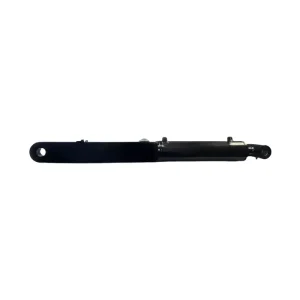
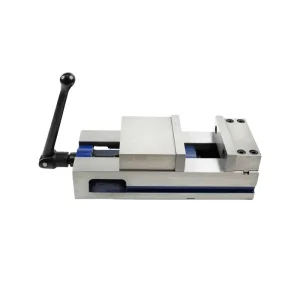
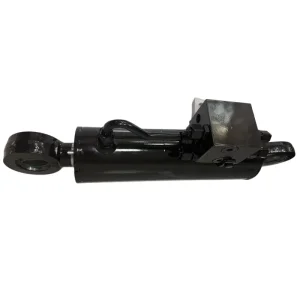
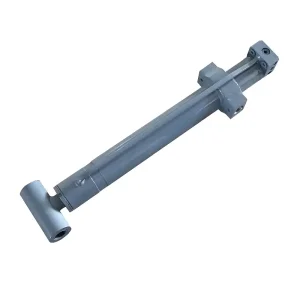
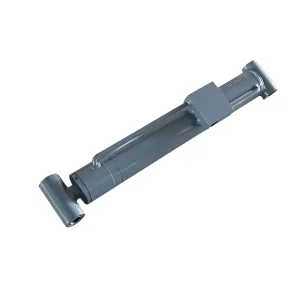
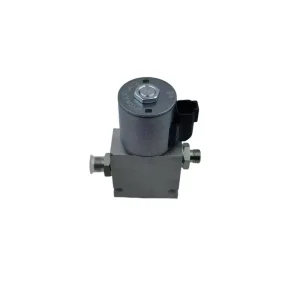
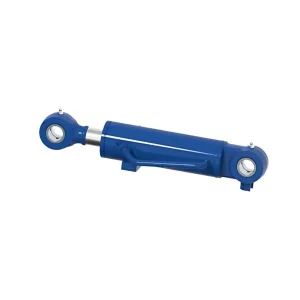
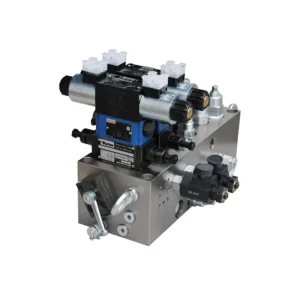
Explore our complete inventory of multi-industry cylinders, high-precision hydraulic manifolds, and CNC accessories configured for OEM and aftermarket applications.
Frequently Asked Questions: Sourcing & Engineering
Direct technical answers addressing materials, custom engineering tolerances, cold-climate sealing, and international shipping.
How do you ensure non-standard custom cylinders survive Swedish sub-zero temperatures (-30°C to -40°C)?
Low-temperature reliability requires three engineering safeguards: First, we specify high-impact cold-toughness steels such as fine-grain normalized St52-3 or 20MnV6 possessing guaranteed Charpy V-notch impact toughness at -40°C. Second, our engineering replaces standard nitrile (NBR) seals with premium Arctic-grade Polyurethane (PU), hydrogenated nitrile (HNBR), or specialized fluorocarbon elastomers paired with low-temperature PTFE back-up rings that retain elasticity and eliminate cold-shrink leakage. Third, all chrome coatings undergo strict micro-crack depth verification to prevent micro-fracturing under rapid thermal cycling.
What documentation is provided to satisfy Swedish and European regulatory standards?
Every OEM production batch comes with an exhaustive technical dossier. This includes raw material mill test certificates according to EN 10204 type 3.1, hydrostatic pressure test charts recorded on digital logging benches (typically pressurized to 1.5 times the maximum rated operating pressure for a minimum 3-minute dwell time), dimensional CMM inspection reports, coating thickness verification, and CE conformity declarations in compliance with the EU Machinery Directive (EU 2023/1230).
Can you manufacture non-standard telescopic and multi-stage cylinders from broken samples or incomplete CAD?
Yes. Our in-house engineering and R&D department utilizes precision coordinate measuring machines (CMM), laser scanners, and optical comparators to reverse-engineer worn or legacy components. We generate complete 2D manufacturing drawings and 3D STEP files, re-verify wall thicknesses against maximum column buckling loads using finite element analysis (FEA), and obtain written customer approval before cutting steel.
What are the typical lead times for custom prototype validation versus volume OEM delivery to Sweden?
Standard design review, CAD generation, and engineering verification generally take 48 to 72 hours. First-article prototype manufacturing typically ships within 20 to 28 calendar days via air freight directly to Arlanda or Gothenburg Landvetter. Volume container orders for scheduled serial production average 35 to 45 days, with multimodal container freight arriving directly at Nordic ports.
How do you handle hydraulic manifold valve blocks and peripheral integration?
In addition to bare actuators, we engineer and CNC-machine customized hydraulic manifold blocks (such as counterbalance valve blocks, pilot-operated check valves, and relief manifolds) from ductile iron or aircraft-grade 7075-T6 aluminum. These blocks mount directly onto cylinder barrels to protect against hose burst risks, improve system stiffness, and save space in compact machinery frames.
What minimum order quantity (MOQ) is required for custom OEM non-standard cylinders?
We maintain an agile, tiered manufacturing philosophy. For custom engineering or replacement programs for specialized machinery, our MOQ starts at 1 unit for prototype testing and validation. For serial OEM production, batch discounts apply starting at 10 to 50 units, enabling equipment manufacturers to avoid excess inventory carrying costs.