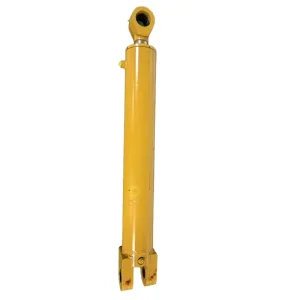
High-Torque Mobile Actuators for Indian Infrastructure
Engineered to withstand severe shock loads, abrasive monsoon slurry, and high ambient operating temperatures typical in Indian heavy engineering.
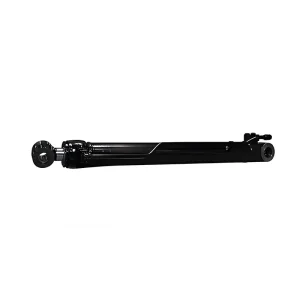
ODM Bucket Cylinder MPM-HCB101 (India Infrastructure Edition)
Technical Specs & RFQ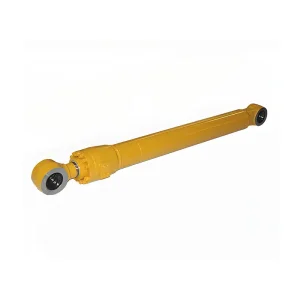
Heavy-Duty Boom Cylinder MPM-HCB212 for Indian Industrial Loaders
Technical Specs & RFQ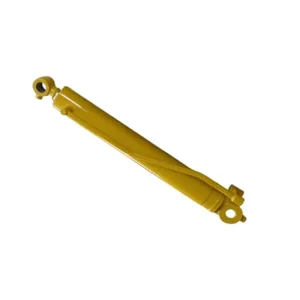
Performance Stick Cylinder MPM-HCS301 (India Heavy Quarry Series)
Technical Specs & RFQ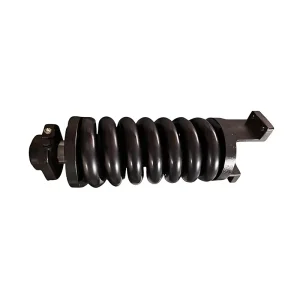
Track Tightening Cylinder MPM-HCT401 for Indian Mining Excavators
Technical Specs & RFQHydraulic Actuation Ecosystem: India Market Convergence & Global Benchmarks
A comprehensive technical analysis of hydraulic cylinder manufacturing, operational demands across the subcontinent, and supply-chain rationalisation.
The Indian Industrial Landscape & 'Make in India' Dynamics
India's rapid infrastructure modernisation—spearheaded by mega-initiatives such as the National Infrastructure Pipeline (NIP), Bharatmala Pariyojana, and dedicated freight corridors—has stimulated exceptional demand for robust fluid power actuators. Indian original equipment manufacturers (OEMs) and engineering contractors in hubs like Bengaluru, Pune, and Jamshedpur face unique operational challenges: severe thermal variations ranging from -5°C in high-altitude road projects to over 50°C in open-pit mining environments in Odisha and Jharkhand.
Hydraulic cylinders deployed within this geography must mitigate intense fluid viscosity shearing, airborne silicates, and aggressive dust ingress. Equipment downtime translates to severe financial liabilities on public utility installations. Consequently, procurement heads are transitioning from fragmented local assembly units toward tier-1 global manufacturers capable of supplying cold-drawn ST52/E355 honed tubes, induction-hardened chrome rods with micro-crack corrosion barriers, and advanced polyurethane-elastomer sealing matrices capable of sustained 350+ bar operation.
Global Fluid Power Shifts & Electro-Hydraulic Integration
Globally, the hydraulic cylinder manufacturing paradigm is being reshaped by digital electro-hydraulic hybridization and decarbonization directives. Mobile machinery OEMs across Europe, North America, and East Asia are demanding smart actuators integrated with linear magnetostrictive position transducers and embedded pressure feedback arrays. These intelligent cylinders facilitate real-time telemetry, predictive maintenance monitoring, and autonomous grade-control in earthmoving machines.
Simultaneously, the demand for weight reduction without sacrificing buckling safety has led to the adoption of high-yield structural steels, friction-welded rod assemblies, and optimized wall-thickness profiling through finite element analysis (FEA). As environmental regulations tighten, the tolerance for dynamic external leakage is virtually zero, compelling manufacturers to execute precise mirror-finishing down to Ra 0.1–0.2 µm on hard chrome-plated surfaces to guarantee seal longevity exceeding 10,000 operational hours.
Chinese Manufacturing Efficiency: Scalability & Precision
Our Qingdao-based manufacturing base represents the convergence of deep industrial vertical integration and rapid cycle times. By consolidating raw forging, precision CNC horizontal and vertical multi-axis machining, deep-hole boring, skiving-burnishing, automated dual-gun submerged arc welding, and cleanroom assembly under single-roof governance, we eliminate the multi-tier subcontractor markups and quality drift typical of decentralized manufacturing.
For Indian procurement authorities, this centralized supply chain translates into rapid prototypes (2–3 weeks), scalable series production (over 20,000 units monthly), and rigorous compliance with international standards including ISO 6020/2, DIN 24554, and SAE J1374. Coupled with direct sea-freight lanes from Qingdao Port to Nhava Sheva (Mumbai), Chennai, and Kolkata, Indian partners secure premium tier-1 build quality with an optimized total cost of acquisition (TCO).
Application Engineering Tailored to Indian Terrains
Off-the-shelf catalog hydraulic cylinders often degrade prematurely when subjected to the abrasive black-cotton soil of central India or the granite quarries of southern states. Our engineering engagement involves targeted material and geometry optimization:
- Enhanced Piston Rod Metallurgy: 40Cr / 42CrMo4 quench-and-tempered base material with double-layer chrome plating (min. 30–50 µm) offering 200+ hours in salt spray testing (ASTM B117) to withstand monsoon humidity.
- Aggressive Wiping Systems: Dual-lip metal-cased polyurethane scrapers to reject ultra-fine dust and river sand before contaminants compromise secondary u-cup buffers.
- Internal Cushioning Geometry: High-energy absorption floating cushion sleeves preventing violent metal-to-metal shock when operators perform rapid cyclical earthmoving.
Looking for Certified Hydraulic Cylinder OEM/ODM Solutions for India?
Whether replacing existing fleet actuators or developing custom hydraulic circuitry for new equipment lines, our engineering team delivers rapid feasibility reviews and competitive pricing within 24 hours.
Request Drawing Review & QuotationIndia Sourcing, Engineering & Export Clarifications
Detailed technical responses addressing design verifications, documentation, and logistical protocols for procurement managers.
How do you guarantee interchangeability with Indian domestic & global OEM cylinders?
We work directly from 2D production drawings (DWG/DXF/PDF) or 3D STEP files, matching pin-to-pin retracted centers, clevis tolerances, pin diameters, port pitch, and thread geometry (Metric ISO 6149, BSPP ISO 1179, or SAE J1926). For obsolete or uncatalogued actuators, our reverse-engineering department reconstructs parametric blueprints from physical sample units sent to our facility.
What testing routines are conducted prior to clearance for Indian ports?
Every single cylinder undergoes 100% hydrostatic pressure testing at 1.5 times the rated working pressure (up to 500 bar for high-pressure series). We inspect internal bypass leakage, external gland sealing under full stroke, and verify zero stick-slip response at low pressures (≤ 10 bar). Inspection documentation, raw material mill test certificates (EN 10204 3.1), and chrome plating thickness verifications accompany each export batch.
How are maritime transit corrosion and humidity issues mitigated?
Due to the humid tropical voyage through the Indian Ocean, bare steel cylinder surfaces receive heavy exterior epoxy primers or polyacrylic industrial topcoats (tested to ISO 12944 C4/C5 durability). Exposed rod surfaces and pin bushings are coated with anti-corrosion preservation wax, ports are sealed with thread-tight high-impact plugs, and assemblies are vacuum-wrapped with VCI (Vapour Corrosion Inhibitor) film inside reinforced plywood crates.
Can you provide custom integrated hydraulic manifolds directly mounted on the cylinder?
Yes. We specialize in integrated valve manifolds (counterbalance, over-center load holding, pilot-operated check valves, and relief manifolds) that bolt directly onto cylinder ports via SAE flanged or subplate interfaces. Direct cylinder mounting eliminates flexible hose lines between the cylinder and valve, preventing catastrophic dropped-load scenarios caused by hose bursts in Indian quarry and lifting works.
Precision Hydraulic Cylinders for Mini-Excavators & Mobile Plants
Exacting dimensional precision, custom stroke options, and extended duty-cycle ratings configured for India's evolving urban construction and agricultural modernization equipment.
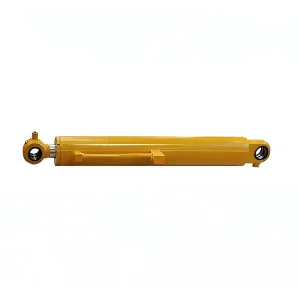
Custom Small Excavator Boom Cylinder (India Urban Works)
Explore Specifications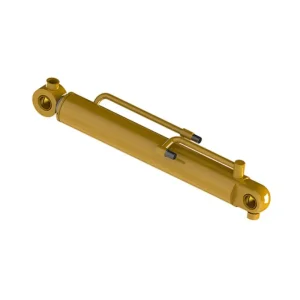
China Small Excavator Bucket Cylinder for Indian Contractors
Explore Specifications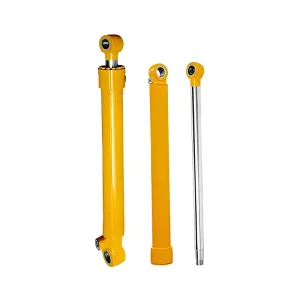
Precision Small Excavator Stick Cylinder for India Operations
Explore Specifications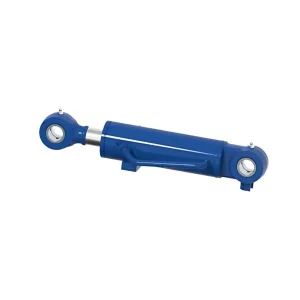
ODM Small Excavator Bulldozing Cylinder (India Series)
Explore Specifications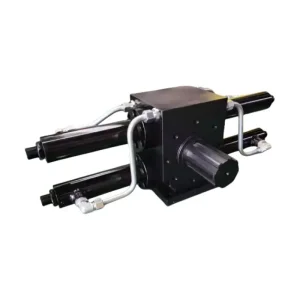
OEM Small Excavator Rotary Actuator for India Heavy Systems
Explore Specifications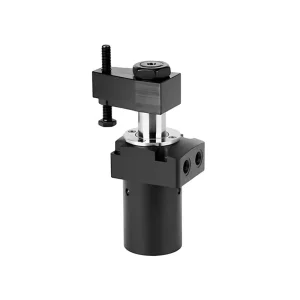
Custom Angle Push Cylinder for India Grading Machinery
Explore Specifications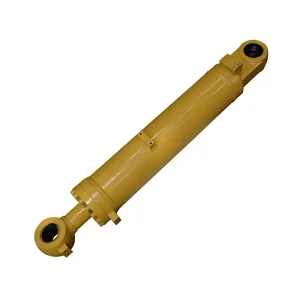
Heavy Chassis Telescopic Cylinder for India Haulage Trucks
Explore Specifications