
High-Torque Agricultural & Heavy-Duty Implement Cylinders
Engineered for immediate integration on heavy-duty tillage implements, precision reversible plows, loader booms, and harsh Canadian field operations.
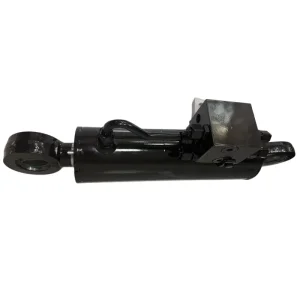
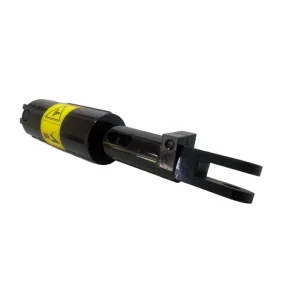
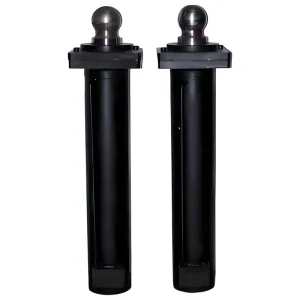
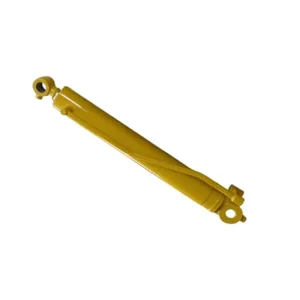
The Dynamics of Agricultural Hydraulic Cylinders in Canada
Analyzing operating thresholds across Saskatchewan, Alberta, Manitoba, Ontario, and Quebec broadacre terrains.
The Canadian agricultural equipment landscape is defined by vast acreage, demanding soil resistance, and extreme climatic swings. Spanning over 62 million hectares of agricultural land across the Canadian Prairies (Saskatchewan, Alberta, and Manitoba) down into the intensive row-crop belts and specialty orchards of Ontario and Quebec, fluid power systems are subject to operational stresses rarely encountered in milder agricultural zones. Farm implements in Canada—including high-clearance air seeders, precision deep-tillage rippers, high-capacity combine header controllers, and rock-picker linkages—require hydraulic cylinders that operate under 3,000 to 5,000 PSI while tolerating sudden tensile shock loads, lateral sideload deflection, and severe ambient freeze-thaw cycles.
In high-tonnage Canadian field conditions, hydraulic failure is not simply a maintenance nuisance; it directly threatens narrow seeding and harvesting windows where an hour of downtime can yield devastating yield penalties. Modern original equipment manufacturers (OEMs) and implement rebuilders based in Winnipeg, Saskatoon, Regina, and Calgary require cylinder manufacturing partners capable of meeting rigid Charpy impact specifications, advanced sealing formulations resistant to -45°C ambient temperatures, and metallurgical chemistry that rejects embrittlement.
Engineered for Demanding Canadian Implement Environments
Specific duty cycles, chemical vectors, and geological conditions requiring tailored fluid actuator architecture.
Sub-Zero Prairies & Cold Starts
Early spring seeding across Saskatchewan and Alberta occurs over permafrost subsoils at temperatures down to -30°C to -45°C. Standard nitrile seals crystallize and experience brittle failure.
- Arctic-grade Low-Temp Polyurethane (AU)
- Specialized HNBR wiper rings
- Charpy V-notch steel certified to -40°C
High Side-Loads in Heavy Tillage
Tillage across glacial till soils subjects reversible plows, disc cultivators, and subsoilers to extreme boulder strikes and eccentric side-loading forces that cause premature rod bending.
- Induction hardened 1045 / 4140 chrome rods
- High-tensile ductile iron/bronze wear rings
- Minimum yield strength: 100,000 PSI
Corrosive Fertilizer & Slurry Exposure
Fertilizer application, liquid nitrogen (UAN), manure slurries, and road de-icers during inter-field transport inflict severe pitting corrosion on standard chrome-plated piston rods.
- Dual-layer micro-crack chrome plating
- Optional Nickel-Chrome electrodeposition
- High-grade zinc-nickel exterior coatings
Engineering Standards & Dimensional Specifications
Direct interchangeability with Canadian and North American fluid power configurations (SAE vs ISO).
| Engineering Parameter | Standard Commercial Specification | Canada Heavy-Prairie Grade (Our Standard) | OEM Testing & Verification Protocol |
|---|---|---|---|
| Cylinder Barrel Material | ST52 / E355 Cold Drawn Tube | DOM St52.3 / E355 / 20MnV6 (Stress Relieved) | Ultrasonic flaw detection, Ra 0.2-0.4µm skive burnish |
| Piston Rod Metallurgy | Standard C45 Steel (Non-hardened) | AISI 1045 / 4140 High Yield Induction Hardened | Hardness HRC 54-60, case depth 1.5 - 2.5 mm |
| Plating & Corrosion Resistance | Single Chrome Layer (20 µm) | Multi-layer Micro-crack Hard Chrome (30-50 µm) | ASTM B117 Neutral Salt Spray ≥ 960 to 1,200 hrs |
| Sealing Architecture | Standard NBR (-20°C to +80°C) | Arctic Polyurethane + Low-temp HNBR / FKM (-45°C to +110°C) | Cyclic pressure shock impulse tested ≥ 350,000 cycles |
| Porting & Mounting | Metric BSPP / DIN standard | Dual SAE J1926 ORB, SAE J514 37° JIC, or NPTF | Air-decay leakage testing + 100% full stroke hydraulic test |
| Welding Certification | Basic factory standard | CWB (Canadian Welding Bureau) W47.1 & ISO 3834 compliant | Robotic multi-pass GTAW/GMAW, radiographic spot QA |
Precision Chinese Manufacturing Integrated with Canadian Distribution
Harnessing Qingdao's precision fluid-power cluster to optimize landed costs, mitigate lead times, and sustain tier-1 reliability.
In the wake of persistent North American supply bottlenecks, extended lead times from domestic cylinder builders, and inflated raw material costs, Canadian equipment manufacturers are diversifying tier-1 and tier-2 vendor networks. Based in Qingdao, Shandong—the core epicentre of heavy industrial precision machinery in East Asia—Micro Precision Machinery delivers deep horizontal supply chain integration that translates directly into cost advantages and supply certainty for Canadian partners.
Our Qingdao manufacturing facility controls every critical production phase under one roof: from raw alloy billet forging, deep-hole skiving, burnishing, and induction rod hardening to specialized sub-zero seal assembly, multi-stage robotic welding, and automated cleanroom pressure verification. By avoiding third-party subcontracting, we eliminate common manufacturing failure modes, reduce cycle-to-delivery lead times by 35-45%, and maintain complete lot traceability back to raw heat-treated melt numbers.
Precision CNC Deep Skiving
German-built automated skiving and roller-burnishing equipment finishing cylinder barrels up to 400mm internal bore to mirror tolerances (Ra < 0.25 µm).
Induction Hardening & Chrome
Continuous-feed high-frequency induction hardening reaching HRC 58, paired with double-layer micro-crack chrome bath exceeding ASTM B117 salt fog standards.
Robotic CWB-Grade Welding
Multi-axis automated GMAW/GTAW welding torches achieving 100% deep root penetration on cylinder bases, clevises, and cross-tubes under zero-porosity shield gas.
100% Full-Stroke Hydro-Testing
Every single manufactured cylinder undergoes dynamic stroke validation at 1.5x working pressure with computerized pressure-decay transducers prior to export packaging.
Technical Roadmap: Smart Electro-Hydraulics & Precision Ag
Bridging conventional fluid power with autonomous tractors, ISOBUS telematics, and bio-hydraulic sustainability.
The transition toward autonomous tractors, AI-driven selective weed spraying, and variable-rate seeding is transforming the baseline requirements for agricultural hydraulic cylinders across Canada. Mechanical open-loop hydraulic actuators are rapidly giving way to smart, sensor-integrated electro-hydraulic cylinders that communicate directly with onboard implement controllers via ISO 11783 (ISOBUS) protocols.
1. Embedded Linear Position Sensing (Smart Actuators)
Our engineering roadmap integrates contactless magnetostrictive and Hall-effect linear displacement sensors directly into the cylinder's hollow-bored rod assembly. This provides sub-millimeter positional feedback for autonomous furrow depth adjustment, implement fold sequence automation, and real-time boom height stabilization, completely sheltered from flying debris, mud, and corrosive fertilizer spray.
2. Advanced Laser Cladding for Zero-Chrome Alternatives
In response to tightening global environmental restrictions on hexavalent chromium electroplating, our R&D center is leading implementation of extreme-velocity laser cladding (EHLA). By fusing high-nickel and stainless metallurgical powders onto the rod substrate, we deliver surface finishes with zero microporosity, up to 3x higher scratch resistance against prairie flint rocks, and complete immunity to chemical fertilizer salts.
3. Full Bio-Hydraulic Fluid Compatibility
Canadian environmental bylaws and sustainable farming mandates are accelerating adoption of HEES (synthetic ester) and HETG (vegetable-based) biodegradable hydraulic oils. We specify fluorocarbon (FKM) and advanced thermoplastic elastomer compound seals certified for prolonged immersion in biodegradable oils without volumetric swelling, hardening, or hydrolysis failure.
Compliance Assurance & Seamless Canadian Logistics
Streamlined DDP (Delivered Duty Paid) shipping, Vancouver port clearance, and complete documentation compliance.
CWB & ISO 4413 Alignment
All structural cylinder welding meets Canadian Welding Bureau (CWB) equivalent performance profiles. Every unit complies fully with ISO 4413 safety criteria for fluid power installations.
Direct Canadian Logistics Lanes
Direct ocean freight lanes from Qingdao Port to Port of Vancouver and Port of Montreal, paired with bonded intermodal rail corridors straight into Calgary, Edmonton, Saskatoon, and Winnipeg depots.
Full Lot Traceability & MTRs
Every shipment is accompanied by complete Mill Test Reports (MTR), surface roughness profilometer records, weld inspection charts, and hydrostatic test documentation.
Frequently Asked Technical & Sourcing Questions
Essential guidance for mechanical engineers, procurement managers, and agricultural implement designers.
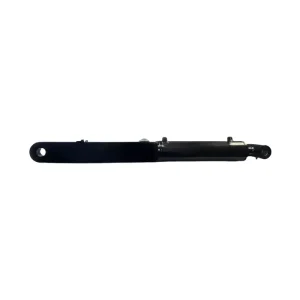
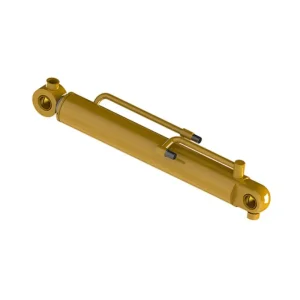
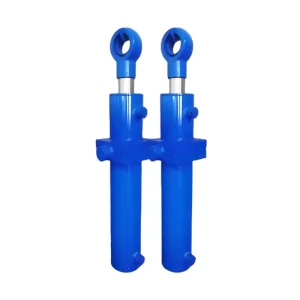
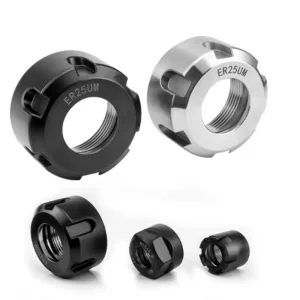
Explore Our Full Range of Precision Cylinders & CNC Tooling
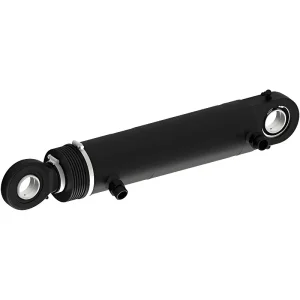
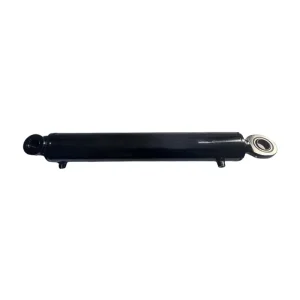
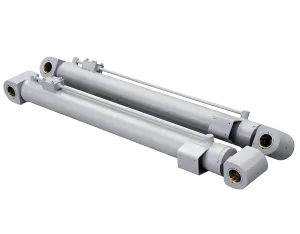
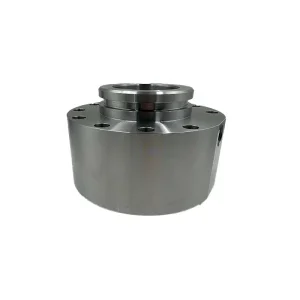
Supporting Canadian implement builders, ag equipment mechanics, and tractor loader retrofits with heavy-duty components.
Accelerate Your Implement Program with Micro Precision Machinery
Send your CAD models, 2D prints, or OEM interchange part numbers. Our senior fluid power design engineers provide technical reviews, cost projections, and thermal verification within 24 hours.