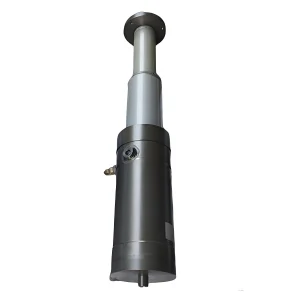
Featured Mini Excavator Cylinders & Hydraulic Systems
Engineered by Qingdao Micro Precision Machinery (MPM) to meet high-pressure working environments, ISO 6H thread precision, and extreme duty cycles.
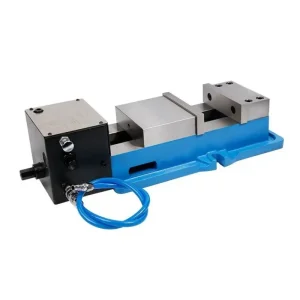
Custom Pneumatic Hydraulic Vise Suppliers, Manufacturer
View Product Specs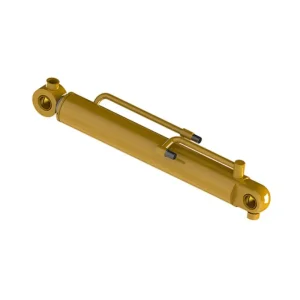
China Small Excavator Bucket Cylinder Suppliers, Supplier
View Product Specs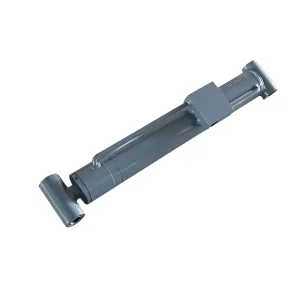
ODM Leveling Cylinder HCL603 Supplier, Manufacturers
View Product Specs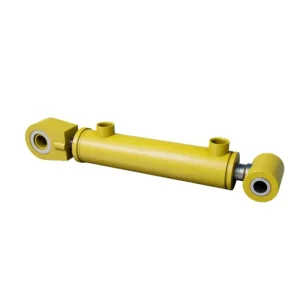
OEM Tilt cylinder MPM-HCT403 Manufacturers, Manufacturer
View Product Specs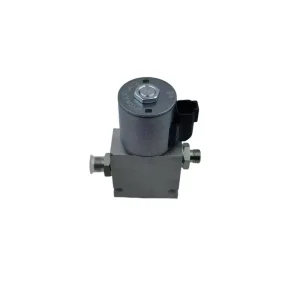
High-Quality Quick Change Solenoid Valve MPM-QCSV12 Suppliers, Factories
View Product Specs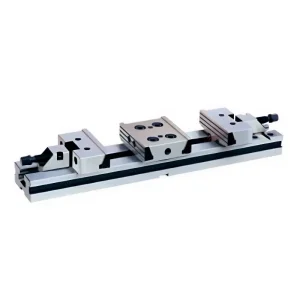
Wholesale ZQ83 Single & Double Action Vise Factories, Factory
View Product Specs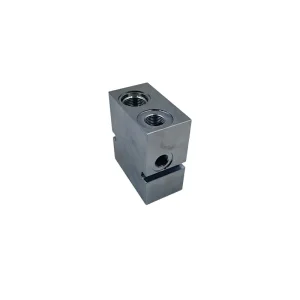
China Lift Cylinder Solenoid Valve MPM-LCSV12 Manufacturers, Factory
View Product Specs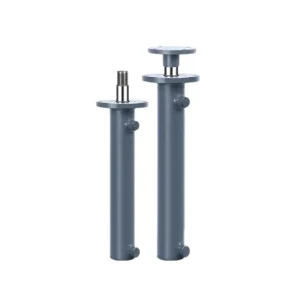
ODM Outrigger Hydraulic Cylinder MPM-OHC12 for Crane Supplier, Factory
View Product SpecsGlobal Procurement Demands for Compact Excavator Actuation
The surge in compact utility machinery demands higher power density, extended seal lifetimes under contamination, and strict cross-manufacturer kinematic interchangeability.
Duty-Cycle Fatigue Mitigation
Small excavators execute up to 250 digging cycles per hour. Boom foot and bucket link actuators absorb massive repetitive impulse spikes, requiring ST52.3/E355 cold-drawn steel tubes subjected to stress relief and high-yield ductile iron pistons that prevent cyclic fatigue cracking.
Dimensional Standardization
Original Equipment Manufacturers (OEMs) and aftermarket fleet distributors require exact adherence to metric and imperial pin-to-pin retracted centers, spherical plain bearing clearances (GE series), and dual-port flange geometry to guarantee zero-modification field replacement.
Contamination & Deflection Resilience
Compact machines experience severe lateral twisting when trenching on uneven grades. Sourcing criteria prioritize forged steel rod eyes, PTFE guide rings impregnated with bronze to counteract side loading, and double-lip polyurethane wiper seals impervious to abrasive quartz slurry.
Engineering Solutions Across Excavator Workgroups
A small excavator’s productivity depends on the harmonious interaction of four core hydraulic cylinders. Each actuator faces distinct fluid dynamics, pressure peaks, and environmental exposure.
| Actuator Position | Bore / Rod Ratio | Primary Dynamic Stress | Structural Engineering Countermeasure | Valve & Port Integration |
|---|---|---|---|---|
| Boom Cylinder | 1.8:1 to 2.0:1 (e.g. 75/45 mm) | Gravitational pull, shock loads during trench breakthrough | Integrated hydraulic head cushion; forged clevis with case-hardened bushings | Counterbalance hose-burst safety valve manifold mounted directly to port pad |
| Arm / Stick Cylinder | 1.6:1 to 1.75:1 (e.g. 65/40 mm) | High retraction speed, dynamic buckling during deep trenching | Induction-hardened 40Cr/42CrMo4 chrome-plated rod (layer ≥ 30µm; 850+ HV) | Proportional flow dampening cushions at both head and base dead-stops |
| Bucket Cylinder | 1.5:1 to 1.7:1 (e.g. 60/35 mm) | Abrasive rock contact, curling torque spikes, mechanical stalls | Heavy-wall honed seamless barrel; heavy-duty rod wiper with metal casing | Integrated cross-port relief line dampeners to absorb stall pressure transients |
| Dozer Blade Cylinder | 2.0:1 to 2.2:1 (e.g. 80/40 mm) | High continuous static downforce, impact with boulders & curbs | Pilot-operated check valve block; mechanical stroke stop limiters | Direct pilot flanged double check valve ensuring zero bleed drift during blade leveling |
| Swing / Boom Offset | 1.4:1 to 1.6:1 (e.g. 70/45 mm) | Torsional frame moments, aggressive start-stop directional deceleration | Self-aligning spherical bearing eyes (GE series) compensating for angular twisting | Bi-directional cushioning needle valves with adjustable bypass orifices |
Advanced Deceleration & Cushioning Technology
To protect the structural steel linkages of compact excavators, MPM integrates precision-tapered cushioning sleeves at stroke extremities. As the piston approaches the cylinder head or base, hydraulic fluid passes through an increasingly restricted annular orifice, generating a controlled hydraulic resistance curve that dissipates kinetic energy smoothly. This reduces structural mechanical shock by over 72% compared to uncushioned alternatives.
Sealing Geometry in Aggressive Media
Field degradation in small excavators is primarily driven by particulate contamination bypassing defective rod gland packings. MPM utilizes multi-stage sealing configurations comprising a primary step-seal (PTFE + bronze) for low friction, a secondary polyurethane U-cup with an integrated back-up ring to resist up to 400 bar spike pressures, and an aggressive double-lip scraper preventing sub-micron silt ingress.
Micro-Precision Manufacturing & Machining Roadmap
Since 2006 in Qingdao, China, MPM has maintained full control over the manufacturing lifecycle—from raw metallurgical billets to high-precision CNC finishing, induction hardening, and pressure testing.
Skiving & Roller Burnishing
Cylinder tubes are processed using advanced deep-hole skiving and burnishing machinery. This yields an internal bore tolerance within ISO H8, with surface roughness controlled to Ra ≤ 0.15 µm, work-hardening the inner wall to extend piston seal operational longevity.
High-Frequency Induction Quenching
Piston rods fabricated from 40Cr / 42CrMo4 alloy steel undergo induction heating to achieve a case hardness of HRC 52–58 at a depth of 1.5 to 3.0 mm. This hardened core withstands severe external rock strikes without denting or deforming.
Dual-Layer Micro-Crack Hard Chrome
Our electroplating process deposits a dense hard-chrome barrier (≥ 30 µm) featuring a controlled micro-crack network (over 40 cracks/mm). This network retains micro-droplets of hydraulic fluid to lubricate the wiper seal while surpassing 960 hours of neutral salt spray testing (ASTM B117).
ISO 6H Thread Precision & Welding
All piston retention threads, gland collars, and mount nuts are turned to ISO 6H tolerances on multi-axis CNC lathes. Cylinder base-to-barrel welds utilize multi-pass robotic metal active gas (MAG) welding, verified via ultrasonic non-destructive flaw detection.
Global Commercial Landscape & Procurement Strategy
Procurement executives balancing total cost of ownership (TCO) against unscheduled downtime risks rely on diversified, highly qualified Tier-2 hydraulic manufacturing partners.
North American Rental & Contractor Market
In North America, mini excavators (1.5 to 4.5 metric tons) dominate residential construction and municipal utilities. High utilization rates in equipment rental fleets make hydraulic seal failure the number one cause of unscheduled fleet downtime. Distributors and rebuild centers prioritize high interchangeability with domestic brands, rapid seal replacement availability, and heavy-duty chrome plating that withstands road de-icing salt and gravel wash.
European Environmental & Safety Compliance
The EU market enforces strict environmental standards regarding fluid containment and hydraulic efficiency. In addition to compliance with the Machinery Directive 2006/42/EC, compact excavators operating across Europe frequently deploy biodegradable hydraulic fluids (HEES / HEPAC ester formulations). MPM supports these operations with specialized fluorocarbon (FKM) and premium polyurethane compound seals engineered specifically to prevent premature hydrolysis.
Asia-Pacific High-Density Urban Infrastructure
Urban development throughout the APAC region demands zero-tail-swing excavators equipped with ultra-compact boom swing cylinders. These confined spaces require hydraulic actuators with high power-to-weight ratios, integrated valve manifolds that eliminate external hoses prone to snagging, and high cyclic thermal stability during continuous shift work under tropical conditions.
Quality Assurance Protocols & Regulatory Compliance
Every hydraulic actuator leaving our 3,500 m² facility is backed by full material lot traceability, digital coordinate measurement (CMM), and 100% full-cycle hydraulic testing.
ISO 10100 Pressure Testing
Prior to packaging, 100% of our hydraulic cylinders are mounted onto computerized test benches. Units undergo static proof testing at 1.5 times nominal operating pressure (up to 450 bar), followed by low-pressure friction tests and micro-leakage audits across stroke transitions to verify zero internal piston bypass.
Full Mill Material Certification (EN 10204 3.1)
Raw materials are procured exclusively from accredited steel mills. Each batch of 27SiMn seamless tubing and 40Cr cold-drawn bars is accompanied by EN 10204 Type 3.1 chemical and mechanical inspection certificates, independently verified via in-house optical emission spectrometry.
Export Packaging & Nitrogen Purging
Actuators slated for trans-oceanic export are preserved with internal rust-preventative hydraulic fluid, flushed, dry-nitrogen charged, sealed with threaded steel plugs, and shrink-wrapped inside fumigated, reinforced plywood cases to eliminate transit corrosion.
Technology Roadmap: Intelligent Actuators & Electrification
As the compact construction machinery segment transitions toward semi-autonomous operation and battery-electric platforms, hydraulic cylinders are transforming into intelligent, sensor-integrated electro-hydraulic actuators.
Integrated Linear Displacement Sensors
To facilitate 2D and 3D machine control, automated grade profiling, and virtual return-to-dig cycles, MPM engineers cylinders featuring internal gun-drilled piston rods accommodating non-contact magnetostrictive and inductive linear position transducers. These sensors operate protected within the pressurized hydraulic core, impervious to external worksite hazards.
Optimized for Electric Mini Excavators
Battery-electric compact excavators require maximum fluid efficiency to extend per-charge duty cycles. MPM is pioneering low-friction, zero-stick-slip sealing architectures utilizing diamond-like carbon (DLC) piston rod coatings and optimized fluid channel geometries inside manifolds, reducing parasitic drag by up to 18%.
Predictive Health Monitoring Integration
Future hydraulic manifolds manufactured by MPM integrate dynamic piezoresistive pressure transmitters and thermal telemetry channels. Transmitting telemetry to onboard ECUs enables real-time monitoring of seal wear indicators, impending aeration, and load spikes before mechanical failures occur.
Frequently Asked Engineering & Sourcing Questions
Direct, transparent answers compiled by our chief hydraulic design team for equipment engineers, fleet directors, and international purchasing managers.
What specific engineering parameters are required to quote a custom small excavator cylinder?
Can MPM reproduce exact OEM replacement cylinders from a worn physical sample?
What chrome plating and surface finishing standards prevent rod pitting in coastal or de-icing environments?
Does MPM supply separate replacement components for hydraulic cylinders and repair shops?
How does MPM handle export logistics, customs documentation, and sea freight protection?
What is the standard engineering inquiry response turnaround and sample lead time?
Explore Additional Actuation Components & Assemblies
Complete line of stick cylinders, boom cylinders, high-precision hydraulic valve blocks, suspension units, and CNC tooling engineered for rigorous industrial standards.
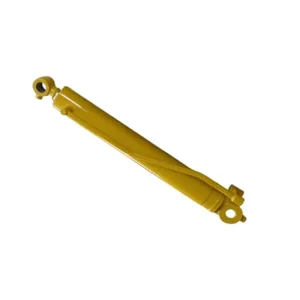
Best Stick Cylinder MPM-HCS301 for Excavator and Loader Manufacturer, Factories
View Product Specs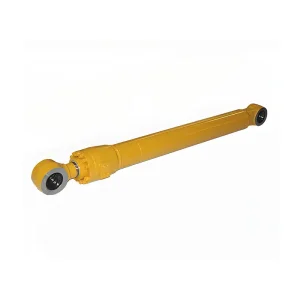
Cheap Boom Cylinder MPM-HCB212 for Excavator and Loader Manufacturer, Factories
View Product Specs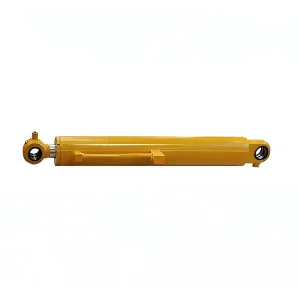
Custom Small Excavator Boom Cylinder Suppliers, Manufacturers
View Product Specs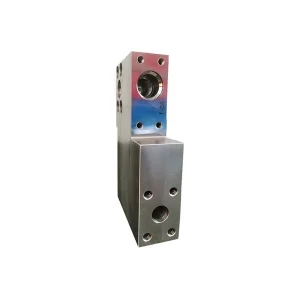
High-Quality T2A Hydraulic Relief Valve Block MPM-HRVB2A Manufacturers, Factory
View Product Specs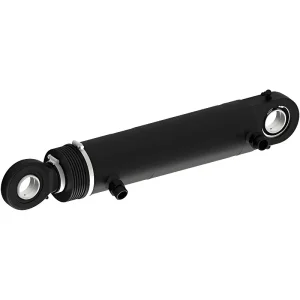
Wholesale Suspension Cylinder Suppliers, Manufacturers
View Product Specs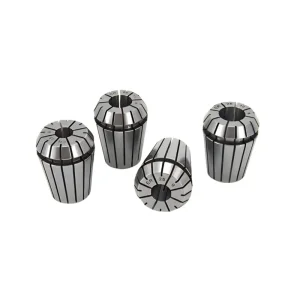
Cheap ER Collet MPM-EC0070 Supplier, Manufacturer
View Product Specs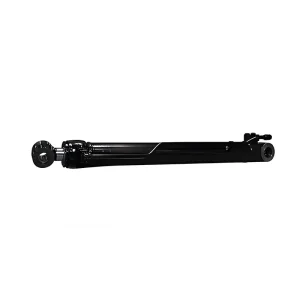
ODM Bucket Cylinder MPM-HCB101 for Excavator and Loader Supplier, Manufacturer
View Product Specs