
Precision Hydraulic Actuators for UK Mobile Crane Operations
Engineered for all-terrain, lorry loader, and heavy articulated crane platforms operating under rigorous British industrial cycles and marine-estuary environmental corridors.
The UK Lifting Equipment Market: Operational Realities & Stresses
A comprehensive examination of the mechanical demands placed on mobile crane hydraulic infrastructure across Great Britain and Northern Ireland.
Infrastructure Megaprojects & Loading
The UK civil engineering landscape—dominated by the Transpennine Route Upgrade, HS2, Sizewell C nuclear generation, and widespread offshore wind substation marshaling (such as the Humber and Tees ports)—demands uninterrupted crane availability. Telehandler and mobile crane operations cannot afford barrel fatigue or internal bypass during critical pick operations.
- Continuous high pressure: Operating pressures sustained at 350 to 420 bar.
- Repetitive dynamic cycles: Rapid outrigger set-up and stowing on constrained urban sites.
- Zero margin for drift: Zero permissible micro-creep under maximum rated capacity.
Aggressive Maritime & De-Icing Salts
UK atmospheric classifications frequently fall within C4 to C5-M (maritime coastal and industrial high-humidity) according to ISO 12944. Piston rods are simultaneously exposed to salty maritime winds, North Sea rainfall, and heavy highway application of magnesium/sodium chloride during winter road transits between regional depots.
- Corrosion resistance: Double-layer chrome or nickel-chrome platings (1,000+ hours NSS rating).
- Wiper geometry: Custom polyurethane dual-lip scrapers guarding against abrasive grit.
- Protected plumbing: Integrated counterbalance valves eliminating exterior tubing vulnerabilities.
Statutory Audits: LOLER & PUWER 1998
Under the UK Health and Safety Executive (HSE) Lifting Operations and Lifting Equipment Regulations 1998 (LOLER), every truck crane must undergo thorough periodic examinations. Cylinder seal integrity, structural weld integrity, and hydraulic load-locking devices are primary inspection targets. Sourcing non-traceable components introduces severe enterprise liability.
- Traceable heat treatment: Complete EN 10204 3.1 material mill test certifications.
- Proof pressure verification: 100% factory hydrostatic testing at 1.5x design working limit.
- Standardised threads: BSPP and metric O-ring boss ports matching UK fleet maintenance protocols.
Global Fluid Power Supply Chains vs. UK Domestic Requirements
Bridging tier-one global precision component manufacturing with local British commercial agility and engineering standards.
| Engineering Parameter | Global Standard Paradigm | UK & European Specific Demand | MPM Manufacturing Architecture |
|---|---|---|---|
| Hydraulic Locking | External sandwich check valves | Flange-mounted direct-to-port cartridge valves (BS EN 13000 mandatory) | Direct bolt-on manifolds with zero exposed line between cylinder and lock. |
| Piston Rod Finishing | Standard hard chrome plating (20–30 μm) | Induction hardened + micro-cracked hard chrome or nickel-chrome (C4/C5 resistance) | Induction-hardened 42CrMo4 with 960+ HV surface hardness and 1,000h salt spray rating. |
| Seal Compatibility | Mineral oil standard seals (Buna-N/NBR) | HEES biodegradable fluids / wide-temperature polyurethane (-30°C to +90°C) | Parker / Trelleborg PTFE stepped seals with secondary polyurethane wipers for eco-fluids. |
| Chassis Interface | Rigid trunnions & spherical bushings | Self-aligning spherical plain bearings with low-maintenance PTFE liners | High-load GEG-series spherical bearings with grease passages and anti-rotation locks. |
| Quality Traceability | Batch quality inspection report | LOLER-compliant single-part identification & EN 10204 3.1 mill certs | Laser serialised tracking on barrel and rod; digital test certificate archive. |
Specialised Deployments Across British Working Environments
Where high-cycle structural reliability meets the demanding geography of the United Kingdom.
Urban Compact Lorry Loaders (London / Low Emission Zones)
Deliveries within inner-city London (ULEZ), Manchester, and Birmingham rely on multi-articulating knuckle boom cranes mounted to rigid chassis. Space envelope constraints require ultra-compact retracted lengths with integrated pilot-operated check valves to avoid snagging on structural truck beds.
- Telescopic stage weight reduction through fine-grain Strenx® equivalent alloy steels.
- Smooth proportional inching control for precise offloading between brick-lined roadways.
Offshore Wind Port Logistics (Aberdeen & Hull)
Heavy crawler and truck-mounted cranes hoisting nacelle modules and monopile equipment at coastal staging terminals face heavy wind gusts and sea spray. Suspension locking cylinders and outrigger jacks must guarantee absolute pressure retention during hours-long sustained hold cycles.
- Integrated load-holding valve manifolds with internal relief set at 115% nominal limit.
- Salt-resistant rod thermal spray coatings and custom zinc-nickel outer barrel primers.
Highways England Network Support Services
Highway recovery cranes handling overturned freight on the M1, M6, and M25 motorways perform dynamic lifting under asymmetric load balances. Outrigger leveling cylinders feature internal smart stroke sensors to feed position data directly to cab stability limiters.
- Integration with modern cab Crane Stability Monitoring (CSM) protocols.
- Cushioning valves preventing pressure spike reflection into hydraulic pumps.
Engineering Evolution: Electrification, IoT & Light-Weighting
Addressing the next decade of fluid power requirements in British and European mobile equipment markets.
Electro-Hydraulic Integration for EV Cranes
As British fleets transition toward zero-tailpipe-emission electric truck chassis, hydraulic power supplies transition from PTO diesel engine mechanical drives to battery-fed electric motor pumps. MPM cylinders incorporate internal flow-optimised ports that minimise hydraulic turbulence and throttling losses, conserving battery kWh runtime.
Integrated Sensor Smart Actuators
Integrating contactless magnetostrictive and LVDT position sensors directly inside the high-pressure piston rod. This gives telematics systems millimetric extension validation for EN 13000 safety load calculations without requiring vulnerable external draw-wire transducers.
Cold-Temperature Elastomer Formulations
Specialised low-friction sealing matrices rated down to -40°C ensure that morning cold starts across the Scottish Highlands and northern industrial zones exhibit zero stick-slip shudder or seal hardening during critical load lifting.
Comprehensive Hydraulic Actuator Solutions for UK Fleets
Explore our complete manufactured selection of high-load crane actuators, telescopic booms, and structural hydraulic components.
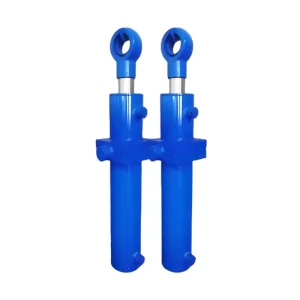
Custom Telescopic Boom Hydraulic Cylinder UK Heavy Build
Explore Cylinder Tech →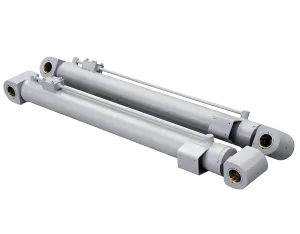
High-Quality Crane Luffing Cylinder UK Infrastructure Series
Explore Cylinder Tech →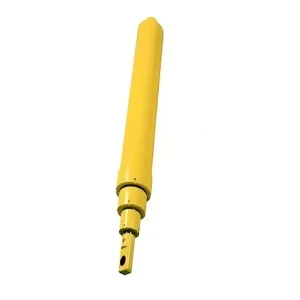
High-Quality 4-Stage Telescopic Cylinder UK Mobile Platform
Explore Cylinder Tech →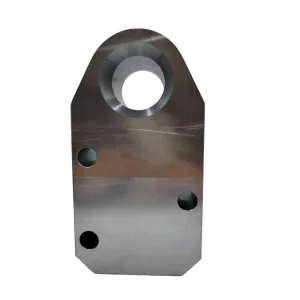
Custom Integrated Cylinder Barrel MPM-HCIB11 UK Engineering
Explore Cylinder Tech →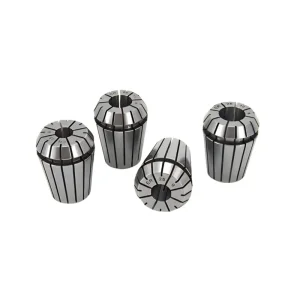
Machining Precision ER Collet MPM-EC0070 Workshop Supply
Explore Cylinder Tech →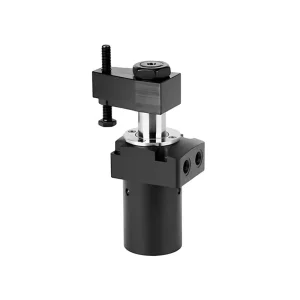
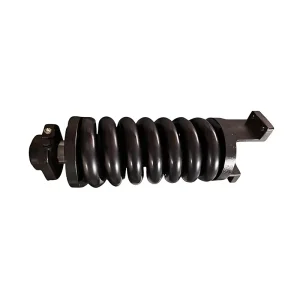
Crawler Crane Tightening Cylinder MPM-HCT401 UK Supply
Explore Cylinder Tech →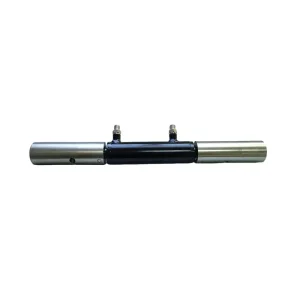
Frequently Asked Questions: UK Sourcing & Engineering
In-depth responses covering design approval, LOLER compliance, material metallurgy, and international lead times.
How do your truck crane cylinders comply with British LOLER regulations?
Under the Lifting Operations and Lifting Equipment Regulations 1998 (LOLER), lifting equipment must be safe for operation and accompanied by unambiguous material and testing validation. We subject every crane actuator to 1.5x working pressure hydraulic hold tests, provide complete EN 10204 3.1 mill test reports verifying chemical and tensile properties of barrel and rod steel, and stamp every unit with a unique laser-engraved serial code that ties directly to a permanent digital inspection docket for your LOLER Appointed Competent Person.
Can you manufacture replacement cylinders for older European crane brands?
Yes. We routinely reverse-engineer OEM cylinders for Grove, Terex, Liebherr, Tadano, Demag, and Cormach equipment. Whether you supply us with an original OEM parts diagram, sample cylinder, or dimensional pin-to-pin survey with port layout dimensions, our in-house engineering team converts the data into verified CAD/CAM drawings to confirm exact fitment, pin diameter tolerances, and port pitch before production.
What surface treatment is applied to combat UK road salt and coastal weather?
To resist corrosion from sea mist and highway de-icing agents across the British transport network, our standard piston rods use high-grade 42CrMo4 alloy steel, induction hardened to 50–55 HRC, finished with dual-layer micro-porous hard chrome plating (minimum 25–30 μm) offering over 1,000 hours salt spray resistance under ISO 9227 (NSS). For extreme marine operations, we also supply nickel-chrome plating and ceramic thermal spray treatments upon request.
Are your counterbalance valves directly integrated into the outrigger cylinders?
Yes. Safety compliance under BS EN 13000 requires that outrigger load-holding mechanisms prevent uncommanded piston retraction in the event of upstream hydraulic hose burst. We machine custom cartridge cavities directly into the cylinder base or weld-on steel manifolds, integrating certified pilot-operated load check valves without external pipework that could be damaged during operation.
What are typical lead times and logistics arrangements for UK deliveries?
For custom OEM production runs or replacement cylinder batches, drawing review and technical sign-off takes 3 to 5 business days, followed by 30 to 45 days precision CNC manufacturing and testing. Shipments to UK ports (Felixstowe, Southampton, London Gateway, Liverpool) are arranged via sea freight (approximately 30 to 35 days transit) with standard DAP/DDP terms available. Emergency replacement samples or critical components can be air-freighted directly within 7 to 10 working days.
Consult Our Hydraulic Engineering Team for UK Deliveries
From single-prototype replacement outriggers to long-term OEM supply contracts, share your CAD drawings or dimensional requirements with our technical team today.
Send Inquiry Now →