
Engineered Actuation Systems for Boston Material Handling
Direct OEM interchangeability, micron-honed barrel tolerances, and multi-stage polyurethane wiping systems configured to thrive across New England winter sub-zero dock ramps and continuous multi-shift operations.
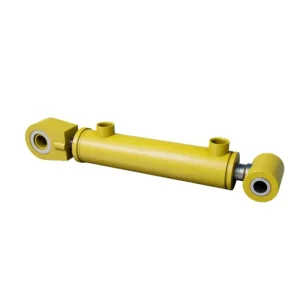
OEM Tilt Cylinder MPM-HCT403 (Boston Logistics Series)
- Nominal Pressure: 21 MPa (3,045 PSI)
- Rod Treatment: Hard Chrome 35µm
- Thermal Range: -35°C to +85°C
- Application: Mast Tilt Control
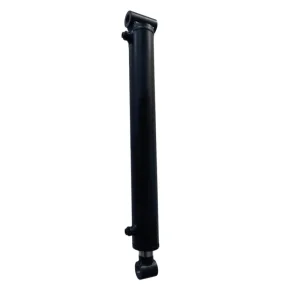
High-Quality Lifting Cylinder HCL602 (New England Cold-Duty)
- Bore Diameter: 45mm – 160mm
- Internal Cushioning: Self-Centering Decel
- Velocity Rating: Up to 0.6 m/s
- Application: Primary Free-Lift & Triplex
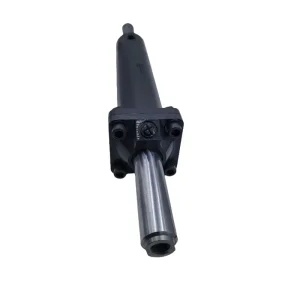
High-Quality Steering Cylinder HCS139495 (Port of Boston Fleet)
- Action Type: Double-Ended Balanced
- Sealing Profile: Hallite Zero-Drift PTFE
- Yield Strength: > 520 MPa (Q355D / 4140)
- Application: Tight-Turn Steer Axles
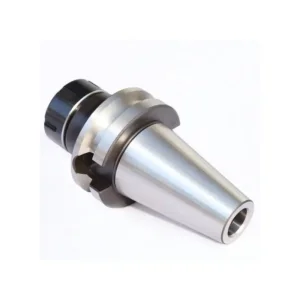
Custom Milling Tool Holder MPM-CTH400 (Cylinder Machining Spec)
- Dynamic Runout: ≤ 0.003mm at 12k RPM
- Standard: DIN 69871 / BT40 / HSK
- Core Hardness: HRC 58 – 62 Carburized
- Application: CNC Spindle Port Threading
The Greater Boston Material Handling Dynamics: Maritime, Cold-Chain & High-Tech
Greater Boston’s supply chain is unique along the Eastern Seaboard. From the salt-laden atmospheric humidity of Conley Marine Terminal in South Boston to the ultra-temperature-controlled cold storage complexes along the I-495 ring (Taunton, Franklin, and Marlborough), forklift hydraulic systems operate in taxing duty cycles.
Port of Boston & Conley Terminal Intermodal Ops
Handling 30-ton containerized freight requires counterbalance and heavy container handler forklifts that run non-stop. Marine salt spray rapidly corrodes piston rod plating if protective nickel-chrome layers fall short of 30–40 microns. Our marine-spec forklift cylinders feature dual-layer micro-crack chrome finishes tested to 960 hours ASTM B117 salt spray exposure without pitting.
Sub-Zero Cold Chain (Taunton, Worcester, Devens)
New England food logistics centers maintain cold-storage conditions ranging down to -30°C. Conventional nitrile seals turn brittle, leading to severe pressure bypass, weeping mast drift, and dangerous dropped pallet risks. We engineer low-temperature polyurethane (LT-PU) and fluorocarbon compounds retaining dynamic elasticity under rapid temperature swings.
Biotech Cleanroom & Pharma Distribution Corridors
Along Route 128 and Kendall Square, bio-pharmaceutical warehousing dictates absolute zero-leakage standards. Cylinder weeping can contaminate FDA-regulated pharmaceutical consignments. MPM hydraulic cylinders incorporate multi-lip primary rod seals, active leakage traps, and high-purity hydraulic fluid flushing before crating.
Precision Tribological Architecture for Extreme Mechanical Stress
A forklift cylinder does not merely cycle pressure; it bears high eccentric bending moments during uneven fork engagement, dynamic shock waves on dock leveler crossings, and sustained holding pressures under high mast extension.
High-Yield Barrel Fabrication & Micro-Honing
Our cylinder barrels are precision-machined from cold-drawn seamless steel tubes grade Q355D or AISI 1045, subjected to internal CNC skiving and roller burnishing. We achieve an internal surface finish of Ra ≤ 0.15 µm with roundness tolerance within ISO H8.
This mirror finish significantly reduces dynamic seal friction, prevents micro-scuffing during rapid stroke reversals, and extends seal packing longevity past 500,000 continuous extension-retraction cycles under 250 bar peak operating loads.
Piston Rod Induction Hardening & Chrome Deposition
Every piston rod is forged from high-tensile 40Cr/AISI 4140 alloy steel, medium-frequency induction hardened to HRC 52–58 to a depth of 2.0–3.5 mm. Following precision centerless grinding, rods receive a minimum 30 µm electrolytic hard chrome layer, super-finished to Ra ≤ 0.1 µm. This hard shell prevents denting from falling rocks or pallet impact in heavy-duty cross-docking environments.
| Component Parameter | MPM Boston Heavy-Duty Spec | Standard Aftermarket Spec |
|---|---|---|
| Barrel Yield Strength | ≥ 520 MPa (Cold-Drawn Seamless) | 355 MPa (Standard Welded DOM) |
| Internal Honing Finish | Ra 0.10 – 0.15 µm (Roller Burnished) | Ra 0.35 – 0.50 µm (Honed only) |
| Rod Plating & Hardness | HRC 55+ / 35µm Dual Chrome | HRC 40 / 15µm Single Chrome |
| Dynamic Sealing System | Polyurethane + PTFE Bronze Step-Seals | Standard Nitrile Rubber (NBR) O-Rings |
| Low Temp Operability | -40°C Certified (Arctic Glycol Compatible) | -15°C (Prone to extrusion blowouts) |
| Burst Pressure Safety | 3.5x Rated Design Pressure | 2.0x – 2.5x Rated Design Pressure |
Localized Application Environments in Massachusetts
Explore how our hydraulic tilt, lift, and steering cylinders perform under real operational constraints in Massachusetts logistics corridors.
South Boston Conley Seaport Intermodal
Heavy container reach stackers and high-tonnage counterbalance forklifts transfer refrigerated ocean containers directly from ships. The combination of sea mist and 24/7 salt exposure destroys standard cylinder rod finishes. MPM nickel-chrome composite plating prevents micro-pitting, saving logistics operators thousands of dollars in unplanned cylinder overhaul costs.
I-90 / I-495 Worcester E-Commerce Hubs
Distribution centers for major e-commerce platforms run narrow-aisle reach trucks and electric order pickers with up to 12-meter lift heights. Our triplex mast free-lift cylinders incorporate built-in hydraulic end-cushions, dampening mechanical shock when stopping suddenly with heavy pallet racks, eliminating mast vibration and driver fatigue.
Logan Airport Air-Freight Cargo Centers
Pallet transporters and ground support equipment (GSE) forklifts handle sensitive belly cargo. Fast cycle speeds demand precision steering cylinders that maintain neutral alignment without drift. Our double-ended balanced steering cylinders feature zero internal cross-leakage tolerances, guaranteeing sharp steering response in crowded airport aprons.
Need Immediate Engineering Interchange or Custom Forklift Cylinders?
Direct factory engineering consultation for fleet managers, OEM builders, and maintenance facilities across New England. Drawings confirmed within 24 hours.
Safety Standards, Testing & Compliance Mandates
Industrial equipment operated in Massachusetts is regulated under strict federal and state workplace directives. MPM cylinders are built and certified to comply with all primary United States material handling standards.
ANSI/ITSDF B56.1 Structural Integrity
Meets American National Safety Standards for Low Lift and High Lift Trucks. Our cylinders are engineered with a minimum proof pressure test safety margin of 2.5:1, and a theoretical structural yield factor exceeding 4:1 under nominal operational load, preventing catastrophic burst even during extreme hydraulic pressure spikes.
OSHA 1910.178 Safe Lift Drift Control
OSHA regulations require that forklift mast assemblies prevent excessive unintended downward drift that may crush workers or destabilize loads. MPM lift cylinders achieve an internal bypass leak rate of less than 0.2 cc per 10 minutes at rated holding pressure, ensuring absolute stability on raised loads.
ISO 4413 Hydraulic Fluid Power Rules
Every port configuration—whether SAE O-ring Boss (ORB), JIC 37° Flare, or Metric ISO 6149—is precisely CNC machined to ISO 4413 specifications. This eliminates thread-galling and port distortion during high-pressure thermal shock situations common in continuous warehouse cycling.
The Next Era of Material Handling: Smart Electrified Hydraulics
As Boston’s warehousing fleet shifts toward Lithium-ion, hydrogen fuel cells, and autonomous mobile robot (AMR) high-bay stacking, hydraulic actuation must evolve from passive mechanical muscle into intelligent, data-driven fluid networks.
Embedded Smart Stroke Sensors & AGV Integration
Traditional reach trucks rely on external draw-wire mast sensors that are easily snagged, crushed, or misaligned. MPM is engineering smart forklift cylinders featuring integrated non-contact magnetostrictive linear position sensors embedded directly inside the high-pressure cylinder rod. This provides real-time millimeter-precise height feedback directly to AGV fleet controllers (via CANbus or IO-Link), facilitating autonomous high-density warehouse racking without manual intervention.
Energy Recovery Regenerative Lowering Manifolds
Electric counterbalance forklifts consume significant battery capacity during continuous lift-and-lower cycles. By integrating compact counter-balance and regenerative valve manifolds directly onto the base of the mast lifting cylinder, potential energy from descending 3-ton loads is converted into pressurized fluid assist, reducing battery drain by up to 18% per shift and lowering fleet recharging overhead.
Frequently Asked Questions: Forklift Hydraulic Sourcing
Detailed answers prepared by senior fluid-power application engineers for fleet directors, OEM design teams, and procurement professionals.
Why do forklift tilt cylinders fail prematurely in New England winter warehouse conditions?
The primary culprit is cold-temperature seal hardening coupled with dock ramp icing chemicals. In Boston facilities where forklifts transition rapidly between heated warehouses (+20°C) and outdoor winter loading docks (-15°C), standard Nitrile Butadiene Rubber (NBR) seals lose their glass transition elasticity. When the rod extends, chilled, crystallized road salt and moisture pass the rigid wiper ring, scoring the rod and causing hydraulic fluid bypass. MPM addresses this by using specialized low-temperature polyurethane (LT-PU) step seals rated to -40°C, accompanied by aggressive ice-scraping secondary bronze wipers.
Can you fabricate direct-replacement cylinders for obsolete or custom forklift brands?
Yes. We regularly support Boston and New England maintenance shops by reverse engineering cylinders from physical samples, old production blueprints, or broken core units. Our engineering team utilizes coordinate measuring machines (CMM) and laser scanning to document bore dimensions, stroke lengths, spherical bearing diameters, and hydraulic port pitch. We furnish full 2D/3D CAD approval models before cutting raw steel, guaranteeing bolt-on interchangeability without mast modifications.
What causes hydraulic mast "creep" or uncommanded fork lowering, and how do your cylinders prevent it?
Mast creep usually stems from either directional control valve spool leakage or internal piston seal blow-by inside the primary lift cylinder. If the cylinder bore suffers from barrel bulging under overpressurization, fluid escapes from the high-pressure cap side to the rod side. MPM designs forklift barrels with heavy wall thicknesses that maintain structural rigidity under 3.5x working pressure spikes, coupled with high-modulus filled-PTFE slipper seals that eliminate internal fluid bypass.
What surface plating specifications are recommended for marine terminals like Port of Boston?
For coastal, marine, and de-icing salt exposure, standard commercial hard chrome (15–20 µm) is insufficient because microscopic surface fissures allow salt moisture to reach the parent steel. We recommend our Marine-Duty Chrome Plating System: an electroplated base layer of ductile nickel (15–20 µm) followed by a hard micro-cracked chrome layer (20 µm). This dual-barrier protection achieves over 960 hours in ASTM B117 neutral salt spray testing without rust spotting.
What quality assurance checks are executed prior to dispatching cylinders to the United States?
Every single cylinder manufactured at our Qingdao facility undergoes 100% full-cycle testing on computerized hydraulic test rigs. Tests include: (1) Proof-pressure testing at 150% of rated pressure to verify weld seam and barrel integrity; (2) Low-pressure seal friction and slip-stick evaluation; (3) Internal cross-piston zero-leakage test holding pressure for 3 minutes; (4) Thread and pin-eye dimensional CMM verification. Full inspection certificates and material mill test reports (EN 10204 3.1) accompany every shipment.
Specialized Hydraulic Actuators & Precision CNC Tooling
Expanding beyond forklift masts: Explore our comprehensive manufacturing portfolio serving municipal fleets, earthmoving machinery, sub-surface mining, and precision machine shops across the Greater Boston and New England industrial landscape.
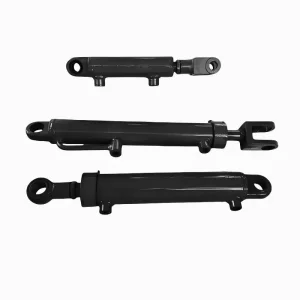
Garbage Truck Lifting Cylinder (Boston Municipal Sanitation)
- Stroke: Custom up to 2,500mm
- Design: Heavy-Duty Welded Clevis
- Protection: Internal Rod Wiper Boot
- Application: Compactor & Tailgate Lift
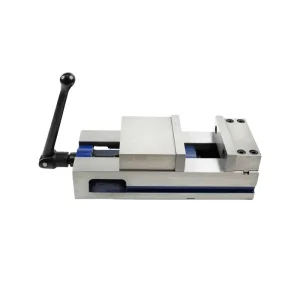
ZQ80 Precision Horizontal Vise (Machining Center Ready)
- Jaw Width: 80mm – 200mm Options
- Clamping Force: Hydraulic-Assisted 35 kN
- Parallelism: Within 0.005mm / 100mm
- Application: Cylinder Head Milling Setup
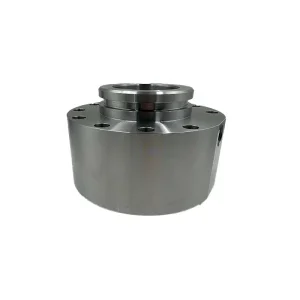
ODM Hydraulic Cylinder Flange MPM-HCFG11 (Heavy Mount)
- Material: Forged 45# / 42CrMo Alloy
- Machining: Precision Multi-Axis CNC
- Mounting: Front/Rear Rectangular Flange
- Application: Rigid Mast Cylinder Anchors
High-Quality Steering Cylinder HCS139495 (Narrow Aisle Reach)
- Cylinder Type: Double-Rod Symmetrical
- Bore Range: 50mm – 90mm
- Operating Pressure: 16 – 21 MPa
- Application: High-Angle Steer Axles
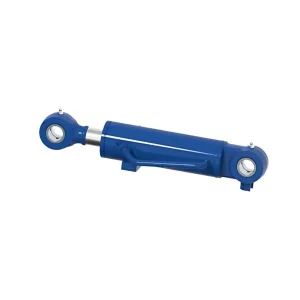
Small Excavator Bulldozing Cylinder (Boston Civil Sites)
- Impact Rating: Heavy Ground Reaction Shock
- Rod Coating: Nitride + Hard Chrome
- Bushings: Hardened Steel Self-Lube
- Application: Compact Earthmoving Blades
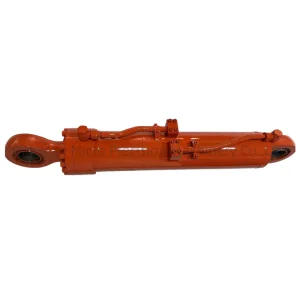
Underground LHD Lift Cylinder (Mining & Hard-Rock Tunnels)
- Working Cycle: Continuous High-Impulse Shock
- Barrel Wall: Heavy Forged Q355D
- Port Lock: Integrated Counterbalance Block
- Application: Heavy Loader Bucket Lift
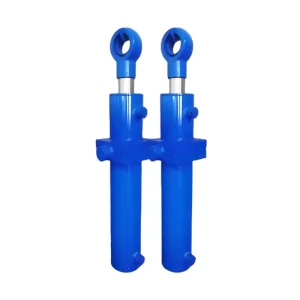
Custom Multi-Stage Telescopic Cylinder (Compact Clearance)
- Stages: 2 – 5 Stage Sleeve Designs
- Sleeve Finish: Hard-Chromed & Superfinished
- Seal Package: Chevron Multi-Lip Packing
- Application: High Lift Masts & Dumper Beds
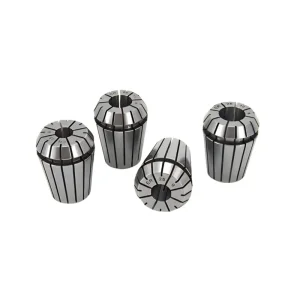
Industrial ER Collet MPM-EC0070 (Spindle Clamping Tool)
- Standard Range: ER11 – ER40 Available
- Total Runout: ≤ 0.005mm High Precision
- Material: 65Mn Spring Steel Tempered
- Application: Hydraulic Port Drilling/Reaming
Equip Your Forklift Fleet with Unrivaled Hydraulic Precision
Partner directly with an established engineering manufacturer. From single OEM replacement sets to annual production contracts delivered straight to your Boston distribution hub or manufacturing site.