
How to Choose the Right Cylinder Head for Your Engine?

Time:2026-10-26 Author:Madeline
0%

Choosing the right Cylinder Head can transform an engine’s breathing, durability, and response. It is not simply a matter of selecting the largest ports or highest advertised airflow. A practical choice begins with the engine’s purpose, displacement, operating range, and supporting parts.

A daily-driven truck needs different head characteristics than a high-revving track engine. For example, oversized intake ports may weaken low-speed torque, even when flow-bench numbers look impressive. Check the combustion-chamber volume, valve size, port design, material, and compression ratio together. Confirm compatibility with the block, pistons, camshaft, intake manifold, exhaust system, and cooling layout. Small differences matter. A few millimeters of valve clearance can prevent serious damage.

Experienced builders also inspect manufacturer data instead of trusting marketing claims. Flow figures should include test pressure and measurement conditions. Material quality, seat design, casting accuracy, and machining support deserve equal attention. Aluminum heads usually reduce weight and transfer heat quickly, while cast iron can offer strong heat retention and robust durability. Neither option automatically suits every application.

There is no perfect formula. I have seen engines lose drivability after a seemingly impressive upgrade. That mistake is easy to repeat when specifications are viewed separately. Recheck the complete combination before ordering. A qualified machinist can verify deck height, spring pressure, installed valve height, and clearance measurements. Reliable results come from matching evidence with real engine demands, not chasing one impressive number. Consider how the vehicle actually feels on the road, because dyno gains alone may not tell the whole story.
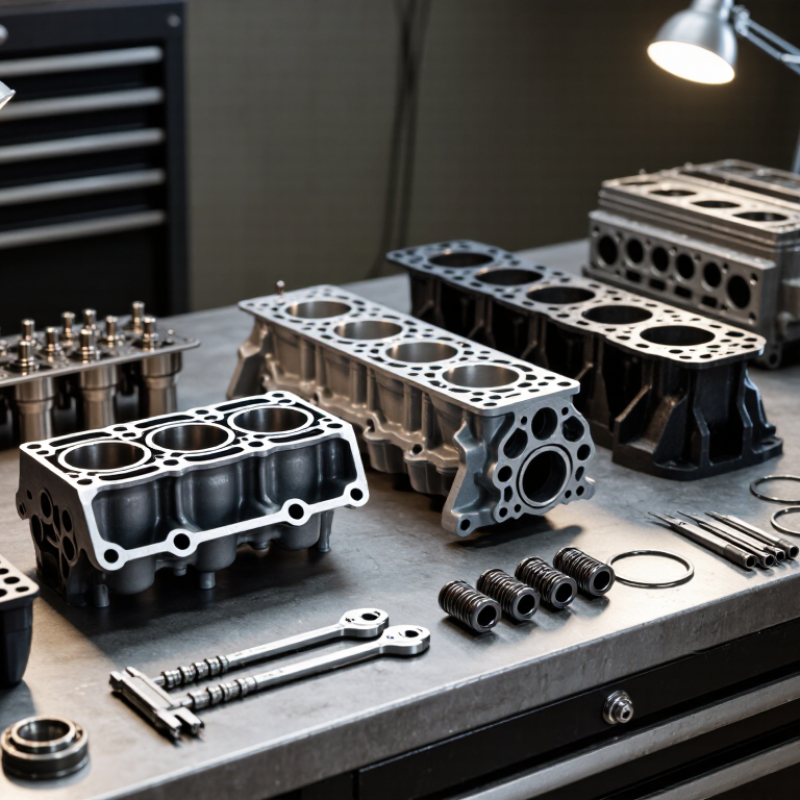
How to Choose the Right Cylinder Head for Your Engine?

Engine Cylinder Head Basics and Its Role in Performance

How to Choose the Right Cylinder Head for Your Engine?

Engine Cylinder Head Basics and Its Role in Performance

The cylinder head closes the top of the engine block and shapes the combustion process. It contains the valves, ports, spark plug area, and coolant passages. Its chamber volume affects compression, while port size controls how air and fuel enter and leave the cylinder. Small details matter.

A well-matched head can improve torque, throttle response, and high-rpm power. However, larger ports are not automatically better. Large ports may reduce air speed and weaken low-speed performance. Smaller ports often support stronger response in street-driven engines. Your choice should match displacement, camshaft timing, operating speed, fuel type, and intended use.

Check valve size, chamber design, material, and piston clearance before buying. A practical workshop check uses modeling clay to measure valve-to-piston distance. Inspecting coolant passages also helps prevent overheating problems. The head must seal evenly against the block, with correct fasteners and tightening procedures. Never judge performance by port size alone.

Compression ratio deserves careful attention. A smaller chamber can raise compression, but excessive compression may create heat and detonation concerns. I have seen carefully assembled engines lose performance because the head did not suit the camshaft. That mistake is easy to repeat. Review measured data, not attractive specifications. Some advertised airflow figures also come from controlled testing that may not match your engine.

Matching Cylinder Head Design to Engine Type and Intended Use

How to Choose the Right Cylinder Head for Your Engine?

Matching Cylinder Head Design to Engine Type and Intended Use

A cylinder head should match the engine’s operating range, not just its advertised airflow. A street engine usually needs strong low-speed torque and stable cooling. A competition engine may accept weaker low-speed response for improved high-rpm breathing. Decide where the engine spends most of its time.

Port size matters. Large ports can support high airflow, but they may reduce air velocity at moderate speed. Smaller ports often improve throttle response and fuel mixture movement. Chamber shape also affects compression, flame travel, and detonation resistance. Measure the existing deck height and piston position before choosing a head. Small errors here can become expensive.

Material and valve design deserve equal attention. Aluminum heads remove heat quickly, while iron heads can offer durability and stable dimensions. Check valve diameter, spring pressure, retainer clearance, and the camshaft’s lift. They must work together. A head with impressive flow numbers may still perform poorly with unsuitable valves or weak springs. I have found that published figures rarely tell the whole story; testing conditions can differ. Review verified specifications, inspect machining quality, and ask an experienced engine builder to confirm compatibility. Leave room for doubt.

How to Choose the Right Cylinder Head for Your Engine? - Matching Cylinder Head Design to Engine Type and Intended Use

Engine Type Typical Intended Use Recommended Head Material Valve and Port Configuration Combustion Chamber Considerations Useful Operating Characteristics Key Selection Priorities Important Cautions
Naturally Aspirated Gasoline Daily driving, balanced street performance, and reliable moderate-power builds. Aluminum is commonly preferred for its lower weight and ability to transfer heat efficiently. Cast iron may be suitable for original-equipment replacement or high-durability applications. Moderate port volume and velocity-focused port design. A four-valve arrangement per cylinder can improve breathing, but the complete valve train must be compatible. Chamber volume must match the piston design and target compression ratio. Quench areas should support efficient combustion without creating piston-to-head interference. Strong low- and mid-range response with a broad usable power band when port size is matched to engine displacement and rpm.
  • Head volume
  • Port cross-sectional area
  • Valve diameter and clearance
  • Compatibility with the intake and exhaust manifolds
Oversized ports can reduce air velocity and low-speed torque. The compression ratio must be checked after machining and gasket selection.
Turbocharged or Supercharged Gasoline Street performance, track use, and applications requiring increased specific power. Aluminum is widely used because it reduces weight and can help dissipate heat. Material choice must also account for cylinder pressure, temperature, and required durability. Ports should support the intended airflow without becoming excessively large. The valve train should be selected for the target boost level, rpm range, and valve-train stability. A moderate compression ratio may provide additional detonation margin, but the correct value depends on fuel quality, boost pressure, combustion-chamber shape, and engine management. High airflow potential and strong power density, provided charge temperature, fuel delivery, ignition timing, and cooling are properly controlled.
  • Head-gasket sealing capacity
  • Fast and stable combustion
  • Valve and seat heat resistance
  • Cooling passage design
  • Port matching to the forced-induction system
More boost increases cylinder pressure and thermal load. Detonation, inadequate clamping, or insufficient cooling can damage the head, gasket, or pistons.
High-Rpm Naturally Aspirated Racing Circuit racing, autocross, competition engines, and maximum top-end power. Lightweight aluminum is commonly selected to reduce mass and improve heat transfer, provided the casting and valve-seat structure meet the intended service requirements. Larger, efficient ports and larger valves may be appropriate when the engine operates at high rpm. Multi-angle valve-seat work can improve flow around the valve. Chamber shape should promote efficient flame travel and adequate piston clearance at high rpm. Compression ratio is usually selected with the fuel and operating conditions in mind. High peak airflow and power at elevated rpm, with less emphasis on low-speed torque and idle quality.
  • Flow balance between cylinders
  • Valve-seat concentricity
  • Spring control and retainer clearance
  • Port velocity at the intended rpm
Maximum flow on a bench does not always produce the best track performance. Excessive port volume can make the engine weak below the peak power range.
Diesel Engine Commercial vehicles, towing, industrial equipment, and fuel-efficient heavy-duty service. Cast iron is often used where high strength, durability, and resistance to sustained combustion pressure are priorities. Aluminum may be used when weight reduction and the engine design support it. Port design should support efficient air motion and complete combustion rather than simply maximize flow. Valve materials and seat durability are especially important under high thermal loading. Chamber configuration depends on whether the engine uses direct injection or a pre-chamber system. Piston bowl geometry, injector position, and air motion must be treated as one system. High low-speed torque, strong durability, and efficient operation under sustained load when the head is matched to the injection and turbocharging systems.
  • Combustion-pressure capability
  • Injector and glow-plug compatibility where applicable
  • Cooling around the exhaust valve area
  • Head-bolt and gasket requirements
A gasoline-oriented head design is not a direct substitute for a diesel head. Incorrect chamber geometry or injector location can severely affect combustion and emissions.
Small-Displacement Economy Engine Urban commuting, fuel economy, compact vehicles, and low-cost maintenance. Either aluminum or cast iron can be suitable, depending on the original engine architecture, repair requirements, and thermal-management strategy. Small or medium ports that preserve air velocity are generally more appropriate than maximum-size ports. Compact multi-valve designs can improve breathing while maintaining efficiency. Chamber volume should preserve the manufacturer’s intended compression ratio and emissions performance. Quench and turbulence are important for stable combustion. Good cold starting, stable idle, efficient combustion, and useful torque at low and medium rpm.
  • Correct replacement dimensions
  • Port velocity
  • Valve-to-piston clearance
  • Compatibility with sensors and emissions equipment
Installing a large performance head may reduce drivability and fuel economy. The camshaft, intake, exhaust, and engine-control calibration must remain compatible.
Classic or Restored Engine Original-style restoration, recreational driving, and period-correct builds. The material should match the engine block, original cooling design, and restoration goals. Cast iron may preserve originality, while aluminum can reduce weight if compatibility is confirmed. Original-style ports and valve sizes are suitable for authenticity and predictable street behavior. Mild improvements can be used when they do not compromise fit or reliability. Chamber volume should be checked against the piston crown, deck height, gasket thickness, and fuel availability to prevent an unintended compression increase. Predictable drivability, serviceability, and compatibility with original accessories and operating speeds.
  • Original bolt pattern and dimensions
  • Accessory and manifold fitment
  • Replacement-part availability
  • Fuel and ignition-system compatibility
Older engines may require different valve-train geometry, hardened valve seats, or unleaded-fuel considerations. Confirm these requirements before installation.
Towing or Heavy-Duty Street Engine Frequent towing, hauling, utility vehicles, and sustained high-load operation. A robust casting with reliable heat management is more important than minimum weight. The material must tolerate repeated thermal cycles and the engine’s cylinder pressure. Moderate ports that maintain useful air velocity and strong mid-range torque are generally preferred over very large racing ports. Chamber volume should support the required compression ratio while maintaining adequate detonation margin under load. Cooling around exhaust valves is a priority. Broad torque curve, stable coolant temperature, and consistent performance during prolonged operation.
  • Thermal capacity
  • Valve and seat durability
  • Head-gasket sealing
  • Cooling-system compatibility
  • Low- and mid-range airflow
A head designed only for peak horsepower may produce poor towing behavior and excessive heat. Check the cooling system and ignition or fuel calibration as a complete package.
General Compatibility Check Any engine build before purchasing or installing a replacement or performance cylinder head. Confirm that the selected material is compatible with the block, fasteners, coolant, gasket type, and expected thermal expansion. Verify bolt pattern, bore spacing, intake and exhaust alignment, valve diameter, rocker or cam arrangement, and available valve-train adjustment. Measure chamber volume and calculate the actual compression ratio using piston dish or dome, deck clearance, gasket thickness, and cylinder displacement. The best head is the one that works as part of the complete engine system, not necessarily the one with the highest advertised airflow.
  • Check piston-to-valve clearance
  • Check retainer-to-seal clearance
  • Confirm spring installed height and pressure
  • Verify pushrod or camshaft geometry
  • Match intake, exhaust, and fuel systems
Do not select a cylinder head by valve size or flow figures alone. Final suitability requires dimensional measurements and compatibility checks for the complete engine.

Comparing Materials, Port Shapes, Valve Sizes, and Chamber Designs

How to Choose the Right Cylinder Head for Your Engine?

Material and port shape strongly influence an engine’s response, temperature control, and usable power. Aluminum heads reduce weight and shed heat quickly, but they may need careful cooling management. Cast iron retains heat longer and can offer stable combustion temperatures. My first assumption was that larger ports always produced more power. That choice was not always right.

A smaller, smoother port often keeps air moving at low engine speeds. This helps throttle response and street drivability. Large ports can support high-rpm airflow, but they may weaken mixture speed below the intended power range. Valve size matters too. Bigger valves can improve breathing, yet they may become shrouded by the cylinder wall. Check the bore diameter before choosing them.

Combustion chamber design deserves equal attention. A compact chamber with effective quench areas can improve flame travel and reduce detonation risk. However, chamber volume changes compression ratio, so piston shape and deck height must be measured together. Leave enough piston-to-valve clearance. Small errors become expensive.

I usually compare airflow data with the engine’s camshaft, bore, stroke, and driving purpose. Flow numbers alone can mislead. A head that performs well on a test bench may feel lazy on the road. Measure twice. Then question the first choice.

Checking Compatibility with Compression, Camshaft, and Induction Systems

Choosing a cylinder head starts with compatibility, not advertised airflow. Match the chamber volume to your target compression ratio. A smaller chamber can raise compression sharply, especially with a thin gasket. DOE advanced-combustion research reports have demonstrated brake thermal efficiency above 50% in heavy-duty test engines. That result depends on precise combustion control, not compression alone. Detonation risk still rises when chamber design, fuel octane, and ignition timing disagree.

Your camshaft also decides whether the head works well. Large ports may reduce air velocity at low engine speed. That can make throttle response feel lazy. Check valve diameter, spring pressure, retainer clearance, and piston-to-valve clearance. I have seen calculations look safe until real assembly measurements exposed a problem. A dial indicator and clay check remain valuable. Valve lift must suit the head’s installed geometry.

Induction hardware completes the match. Intake runner length, throttle capacity, and exhaust flow should support the camshaft’s operating range. SAE J1349 standardizes engine-power testing at 99 kPa and 25°C, helping compare flow and power claims fairly. However, a 10% increase in bench airflow will not automatically produce 10% more power. Port shape, surface finish, and flow stability matter. Measure the complete combination, not one impressive number.

Evaluating Installation Requirements, Costs, and Long-Term Reliability

How to Choose the Right Cylinder Head for Your Engine?

Choosing a cylinder head starts with installation requirements, not appearance. Confirm the engine family, bore size, combustion chamber volume, and valve arrangement. Measure deck height and piston clearance carefully. A head that fits the block may still interfere with pistons or accessories. Do not trust catalog dimensions alone. Inspect threaded holes, coolant passages, and mounting surfaces before purchase. One overlooked passage can create overheating or a persistent coolant leak.

Installation costs extend beyond the cylinder head. Include gaskets, fasteners, valve adjustments, machining, fluids, and labor. Older engines may need resurfacing or replacement guides. Ask a qualified machinist to check flatness and pressure-test the casting. This adds time, but skipping it can multiply repair costs later. A cheap estimate can mislead. Keep a small reserve for damaged threads or unexpected clearance problems.

Long-term reliability depends on compatibility and maintenance. Choose materials and chamber designs suited to the engine’s temperature, compression, and intended use. Confirm the cooling system can support the selected head. Follow measured torque sequences and the correct tightening stages. Recheck valve adjustment after initial operation. Record compression readings and coolant temperature. These details reveal problems early. No checklist catches everything. Even experienced builders can miss a minor alignment issue when working quickly. Reconsider the choice if installation requires repeated compromises, custom parts, or uncertain measurements.

FAQS

How should I match a cylinder head to my engine’s intended use?

Match the head to the engine’s usual operating range. A street engine needs strong low-speed torque and steady cooling. A competition engine may prioritize high-rpm airflow instead. Think about real driving conditions.

Do larger intake ports always produce more power?

No. Large ports can support high airflow at high engine speeds. They may reduce air velocity during normal street driving. Smaller, smoother ports often improve throttle response and mixture movement. My earlier assumption was wrong.

How does cylinder head material affect engine behavior?

Aluminum heads are lighter and remove heat quickly. They may require careful cooling management. Iron heads retain heat longer and can provide stable dimensions. Neither material is automatically better.

What should I check before selecting valve sizes?

Check the cylinder bore before choosing larger valves. A large valve may become partly blocked by the cylinder wall. Also inspect spring pressure, retainer clearance, and camshaft lift. The parts must work together.

Why does combustion chamber shape matter?

Chamber shape affects compression, flame travel, and detonation resistance. Compact chambers with effective quench areas may improve combustion control. Measure chamber volume carefully. Small errors matter.

How do piston position and deck height affect head selection?

Measure deck height and piston position before installation. These measurements help determine compression ratio and clearance. Piston shape must match the chamber volume. Guessing can become expensive.

Can airflow test numbers predict real driving performance?

Not by themselves. Test conditions may differ from real engine operation. A head with impressive airflow can feel weak on the road. Compare flow data with bore, stroke, camshaft, and intended use. Question the first choice.

What clearances should I verify during cylinder head selection?

Verify piston-to-valve clearance, retainer clearance, and spring compatibility. Check camshaft lift against the available valve train space. Inspect machining quality before assembly. Measure twice.

Should I ask an experienced professional to review the combination?

Yes, especially when specifications conflict or measurements seem uncertain. An experienced engine builder can confirm compatibility. Published figures rarely explain everything. Leave room for doubt.

Conclusion

Choosing the right Cylinder Head is essential for balancing engine performance, efficiency, durability, and drivability. The cylinder head controls airflow, supports the valves, shapes the combustion chamber, and strongly influences how an engine responds. Start by considering the engine type and intended use, such as daily driving, towing, racing, or general performance. Then compare construction materials, port shapes, valve sizes, and chamber designs to find a combination that matches the desired power range and operating conditions.

Compatibility is equally important. The Cylinder Head should work properly with the engine’s compression ratio, camshaft profile, intake and exhaust systems, and fuel requirements. Before purchasing, check mounting dimensions, valve clearance, fastener specifications, cooling passages, and other installation needs. It is also important to evaluate total cost, including supporting components and professional setup. A well-matched cylinder head may deliver stronger performance and better efficiency, while a poorly matched design can reduce reliability, complicate installation, and create unnecessary expenses over time.

Madeline

Madeline

Madeline is a dedicated marketing professional with a wealth of expertise in our company's core offerings. With a keen understanding of the industry, she brings a unique perspective to her role, consistently delivering high-quality content that highlights the superior aspects of our products. As......