
Choosing the right Cylinder Nut in 2026 requires more than matching a thread size. A nut may look simple, yet its performance depends on load, material, temperature, vibration, and installation access. In real workshop conditions, a small mismatch can cause loosening, damaged threads, or costly downtime.
This guide explains how to evaluate cylinder nuts with practical engineering judgment. It covers thread compatibility, steel grades, corrosion resistance, surface finishes, dimensions, and locking methods. It also considers supplier traceability, inspection reports, and relevant technical standards. These details matter when a component supports machinery, fixtures, hydraulic assemblies, or repeated maintenance work. A reliable supplier should provide clear measurements, material information, tolerance data, and application guidance. Do not rely only on attractive product photos.
There is no universal best choice. A stainless nut may resist moisture but perform differently under heavy mechanical stress. A hardened steel option may handle higher loads, yet require better corrosion protection. Check the drawing, measure the mating thread, and confirm the working environment before ordering. Small details matter.
This article also questions common buying habits. Choosing the cheapest part can appear efficient, but replacement labor may cost far more. Even experienced buyers sometimes overlook thread pitch or installation clearance. That mistake is worth admitting. By comparing evidence instead of assumptions, you can select a Cylinder Nut that offers dependable fit, suitable strength, and consistent service in 2026.
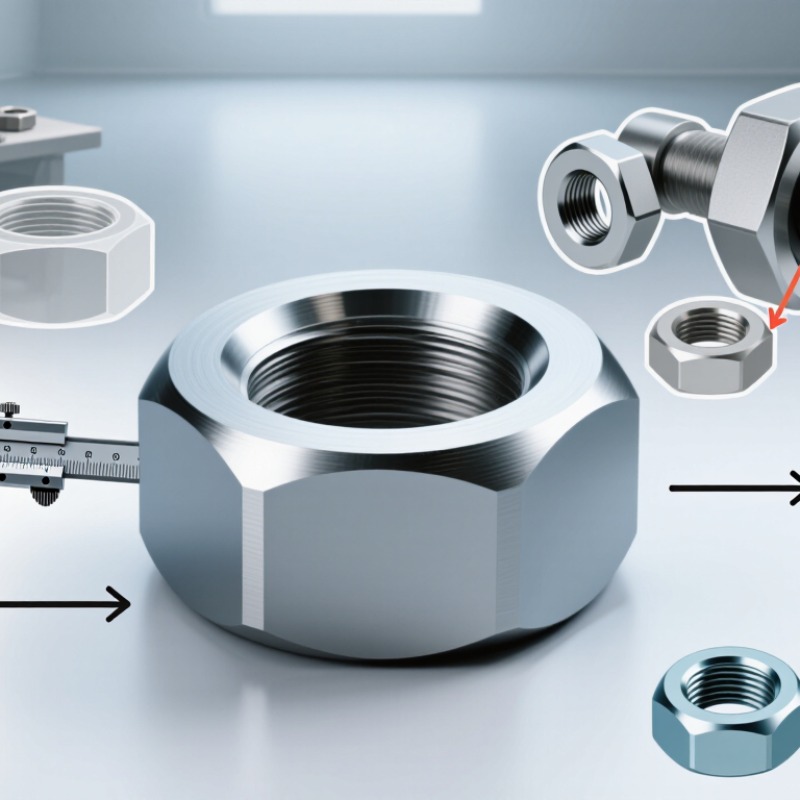
A cylinder nut is a cylindrical fastener with an internal female thread. It receives a screw or bolt from one direction. When tightened, the threads convert rotation into axial clamping force. That force holds two parts together without needing a visible hexagonal head.
Its round body fits inside drilled channels, slots, and recessed furniture joints. Some versions use a cross-hole for alignment. Others include a screwdriver slot or internal hex feature.
In practical assembly, thread size, pitch, outer diameter, and usable length must match the mating screw. A small mismatch can cause cross-threading or weak clamping. It happens easily.
For steel options, ISO 898-2 defines mechanical property classes for compatible nuts, including proof-load requirements. However, not every cylinder nut is certified to that standard. Check the test documentation, not only the appearance.
The NACE IMPACT study estimated global corrosion costs at US$2.5 trillion annually, equal to about 3.4% of global GDP. This supports careful material selection in damp environments. Stainless steel, zinc plating, or protective coatings may reduce risk, but each choice affects strength, friction, and cost.
A 2024 fastener market analysis by Grand View Research also identifies construction and industrial equipment as major demand areas, where vibration and repeated maintenance influence nut design. In 2026, select the nut by load, access space, corrosion exposure, and installation tool. The cheapest part is not always the economical one.
How to Choose a Cylinder Nut in 2026?
Which Materials and Strength Grades Suit Your Application?
Material selection should begin with the working environment, not appearance. Carbon steel cylinder nuts suit indoor machinery and general structural assemblies. They offer strong thread engagement and practical cost control. Choose stainless steel for moisture, cleaning chemicals, or outdoor exposure. However, stainless threads can gall during installation. A light, compatible lubricant may reduce this risk. Brass works well in electrical or low-load applications. It is easier to machine, but it should not replace steel under heavy tension.
Strength grade must match the bolt, load, and joint design. A grade 10 nut is not automatically safer for every assembly. Its bolt, washer, thread length, and tightening method must also support the load. Always check the applicable technical standard and supplier test data. In field inspections, damaged threads often cause failure before the nut reaches its rated capacity. Temperature, vibration, repeated tightening, and corrosion can reduce real-world performance. That part is easy to underestimate.
Tips: Measure the thread before ordering. Confirm diameter, pitch, length, and clearance. Keep the nut and bolt grades compatible. For vibrating equipment, use a tested locking method rather than excessive torque. Inspect the first assembled joint, then recheck it after operation. A small trial installation can reveal binding, poor alignment, or insufficient engagement. Do not rely only on catalog strength figures. Your actual joint may behave differently.
Which materials and strength grades suit your application?
Values represent nominal or specified minimum tensile-strength levels associated with common ISO property designations. Confirm thread size, proof load, temperature, preload and corrosion conditions before final selection.
Choosing a cylinder nut in 2026 starts with accurate measurements, not guesswork. Measure the mating shaft or bolt diameter with calipers, then identify the thread pitch. A nut marked M12 may still be unsuitable if its pitch differs from the shaft. For inch threads, count threads per inch instead. Check whether the thread is coarse, fine, internal, or external. Clean damaged threads before measuring. Small errors matter.
Size also depends on available space and engagement length. The nut should provide enough thread contact to prevent stripping, especially in softer materials. As a practical guide, engagement often approaches the bolt diameter, but the exact requirement depends on material strength and loading. Check the nut’s outside diameter and height against the assembly drawing. I once selected a compact nut that fit perfectly but left too little tool clearance. That mistake delayed installation.
Load capacity requires more than reading a single rating. Separate tensile, shear, bending, and repeated loads. Include vibration, temperature, corrosion, and shock. Apply a suitable safety factor, then verify the thread’s stripping resistance and the shaft’s strength. A higher-strength nut cannot compensate for weak mating threads. Use manufacturer test data, engineering standards, and, when possible, a prototype test with the real assembly. Record the torque, load direction, and failure signs. Recheck the calculation when conditions change.
When choosing a cylinder nut in 2026, examine the installation space before comparing finishes. A compact hex profile works inside narrow brackets, while a knurled surface helps hand tightening. Thread form matters more than appearance. Fine threads offer precise adjustment, but they can clog in dusty assemblies. Coarser threads install faster and tolerate minor contamination. Check pitch, diameter, and engagement length against the mating part. Do not rely on a visual match.
Design features directly affect holding power and service life. A flange can spread pressure across a thin panel and reduce pull-through. A locking element can resist vibration, although it may increase installation torque. Stainless or coated steel can improve corrosion resistance, but material compatibility still deserves attention. In wet environments, trapped moisture under a flange may create problems. Drainage and cleaning access are easy to overlook. They matter.
During evaluation, measure torque with a calibrated wrench and inspect the nut after repeated cycles. Look for thread galling, deformation, and loosening marks. Test the assembly at its real temperature and vibration range, not only on a clean workbench. I once favored a smaller nut for access, then found its shallow engagement unsuitable under load. That choice was convenient, not robust. Review drawings, tolerances, and maintenance tools with the installer. A design that fits perfectly on paper may still frustrate a gloved technician.
| Design Feature | Common Options | Typical Selection Data | Installation Effect | Performance Effect | Recommended Use |
|---|---|---|---|---|---|
| Thread Size | Metric coarse internal thread | M6, M8, M10, M12, M16, M20 and M24 are common general-purpose sizes. | Choose a size that matches the mating bolt or threaded rod. The nut should rotate freely by hand before tightening. | Larger diameters generally provide greater tensile and shear load capacity, provided the mating material and engagement length are adequate. | Use the smallest size that satisfies the calculated load, space and torque requirements. |
| Thread Pitch | Coarse pitch or fine pitch | Coarse threads are the default for most assemblies; fine threads are available for selected metric sizes and applications. | Coarse threads are quicker to assemble and are less sensitive to dirt and minor thread damage. Fine threads require more turns and cleaner alignment. | Fine threads provide smaller axial movement per turn and can improve adjustment resolution. Coarse threads generally resist cross-threading better during routine installation. | Select coarse pitch for general fabrication and fine pitch where adjustment accuracy, thin-wall engagement or higher tensile area is important. |
| Nut Length | Short, standard or extended cylindrical body | Typical lengths are approximately 1.0 to 2.5 times the nominal thread diameter, depending on the design and load. | A longer body gives more thread engagement but requires greater installation space. | Increasing engagement length can reduce thread stripping, especially when the nut material is softer than the bolt. Excessive length does not automatically increase joint strength once the bolt or parent material governs. | Use extended lengths for blind holes, joining threaded components or applications requiring additional thread engagement. |
| External Drive | Plain cylindrical surface, flats, hex socket or cross holes | Drive features should be sized for the available tool and required tightening torque. | Hex sockets and cross holes support controlled installation in confined spaces. A completely round body may require pliers or a dedicated tool and is less suitable for torque-controlled tightening. | A positive drive reduces installation damage and helps achieve more repeatable preload. | Choose an internal hex or cross-hole drive where access is restricted; choose external flats where fast installation is more important than compactness. |
| Locking Method | Plain, prevailing-torque, slotted with retaining pin, adhesive-compatible or mechanical lock washer | Plain nuts do not provide independent vibration locking. Prevailing-torque designs must be selected for the specified temperature and reuse conditions. | Locking features can increase installation torque and may require a defined tightening procedure. | Mechanical or prevailing-torque locking helps resist loosening caused by vibration, but it does not replace correct preload. | Use a locking design for vibration or cyclic loading. For critical joints, verify clamp load rather than relying only on the locking feature. |
| End Configuration | Open-ended, closed-end, chamfered or shoulder-ended | Closed-end designs protect the exposed thread; chamfers are commonly used to improve alignment and reduce edge damage. | A chamfer helps the nut start smoothly. A closed end prevents the bolt from passing through and may limit usable thread engagement. | Closed ends can protect threads from impact, moisture and contamination, while shoulders can provide repeatable seating. | Choose a closed end for protective covers or exposed assemblies; choose an open end when full bolt penetration is required. |
| Material | Carbon steel, stainless steel, brass or engineering polymer | Material selection should consider strength class, corrosion exposure, operating temperature and galvanic compatibility. | Material hardness affects thread durability and the risk of galling. Stainless steel threads may require controlled lubrication and moderate tightening speed. | Steel provides high mechanical strength; stainless steel improves corrosion resistance; brass and polymer reduce weight but generally carry lower loads. | Match the nut material to the environment and the strength of the mating fastener. Avoid using a low-strength nut with a high-strength bolt when the joint load is significant. |
| Surface Finish | Plain, zinc-coated, passivated, black oxide or dry-film coated | Finish selection depends on corrosion category, friction requirements and service temperature. | Coatings can change the friction coefficient, so tightening torque values may not transfer directly between finishes. | Corrosion-resistant finishes preserve thread fit and load capacity over time. Damaged coatings can become initiation points for corrosion. | Specify both the coating and the required friction condition when torque-controlled installation is used. |
| Thread Tolerance and Fit | Standard internal thread fit or specified precision fit | Use the tolerance class stated on the engineering drawing or applicable fastener specification; common metric internal-thread classes include 6H. | Correct fit balances smooth assembly with limited play. A loose or damaged thread can prevent accurate seating. | Consistent fit improves load distribution and reduces local thread wear, especially in repeatedly assembled joints. | Use a standard fit for normal fastening and a specified precision fit for alignment, adjustment or repeatable positioning. |
| Load Direction | Axial tension, compression, shear or combined loading | Load capacity depends on thread diameter, engagement length, material strength, joint geometry and safety factor. | Misaligned or side-loaded cylindrical nuts can bind during installation and concentrate stress at the first engaged threads. | Proper alignment improves load sharing. For substantial shear, use a joint design that transfers shear through a shoulder, pin or bearing surface rather than relying only on the threads. | Calculate the complete joint for combined loads; do not select the nut by diameter alone. |
| Installation Torque | Torque-controlled, angle-controlled or hand-installed | Torque is affected by thread size, pitch, lubrication, coating, prevailing torque and bearing friction. | Use a calibrated torque tool where preload is important. Do not reuse a prevailing-torque nut unless the specification permits reuse. | Controlled tightening reduces the risk of thread stripping, joint separation and fastener fatigue caused by insufficient or excessive preload. | Define the tightening method and friction condition in the assembly instructions. |
| Operating Environment | Indoor, humid, outdoor, chemically exposed, high-temperature or low-temperature service | Evaluate moisture, salt, chemicals, temperature cycling, contamination and UV exposure before choosing the material and finish. | Environmental contamination can increase friction and make starting or removal difficult. | Corrosion, thermal expansion and lubricant loss can change preload and reduce service life. | Select material, coating and lubricant as a complete system rather than as separate choices. |
| Inspection Requirements | Visual inspection, thread gauge, dimensional inspection or torque verification | Check thread condition, body diameter, length, drive geometry, burrs, coating damage and identification markings required by the drawing. | Inspection before installation prevents cross-threading and seating problems. | Consistent incoming quality improves repeatability and reduces premature loosening or thread failure. | Use documented inspection criteria for safety-critical, automated or high-volume assemblies. |
Note: Dimensions and performance ranges shown are typical engineering selection guidance, not a substitute for the applicable product drawing, fastener standard, joint calculation or manufacturer’s installation specification.
Choosing a cylinder nut starts with safety, not price. Confirm the cylinder connection, thread profile, diameter, and pressure rating before comparing products. A nut that looks correct may still have incompatible threads. Cross-threading can damage the valve and weaken the seal. Check the material, surface condition, and required tightening method. Never rely on appearance alone.
Compatibility also depends on the sealing system. Some connections use a gasket, while others depend on a precisely matched metal surface. Review the cylinder’s technical documents and applicable local requirements. Certified testing information is more useful than vague claims. In practical inspections, small burrs, corrosion marks, or distorted threads often reveal previous misuse. Replace questionable parts.
Cost needs a wider view. A cheaper nut may require frequent replacement or create expensive downtime. Compare purchase price, inspection effort, installation time, and expected service life. Maintenance should remain simple. Choose a design that allows easy cleaning and clear visual checks. Keep threads dry and protected as specified by the manufacturer. Do not add lubricant unless the technical instructions permit it. This detail is easy to overlook. I would also record installation dates and inspection findings, although many workshops skip this step. That missing record can make later troubleshooting unnecessarily difficult.
Start with the working environment, not appearance. Carbon steel suits indoor machinery and general structural assemblies. Stainless steel suits moisture, cleaning chemicals, and outdoor exposure. Brass works for electrical or low-load applications. It should not replace steel under heavy tension. Stainless threads may gall. Use only compatible lubricant when technical instructions permit it.
Match the nut grade with the bolt, washer, thread length, and joint design. A higher grade is not automatically safer. Check the applicable technical standard and supplier test data. Temperature, vibration, repeated tightening, and corrosion can reduce performance. Damaged threads may fail first. That detail is easy to underestimate.
Measure the diameter, pitch, length, and available clearance. Confirm the thread form against the mating component. Fine threads allow precise adjustment. They may clog in dusty assemblies. Coarse threads install faster and tolerate minor contamination. Never trust a visual match alone.
A compact hex profile helps inside narrow brackets. Knurled surfaces support hand tightening. A flange spreads pressure across thin panels. Locking elements can resist vibration. They may also increase installation torque. Check whether gloves, tools, and cleaning access fit the design.
Use a tested locking method instead of excessive torque. Confirm the method suits the nut, bolt, and joint. Measure tightening torque with a calibrated wrench. Inspect for loosening marks after operation. Recheck the first assembled joint. Torque alone is not a complete solution.
Look for binding, poor alignment, shallow engagement, and thread damage. Check the joint at its actual temperature and vibration range. Inspect for galling, deformation, corrosion, and burrs. A small trial can expose problems early. Paper fit can mislead.
Confirm the connection type, thread profile, diameter, and pressure rating. Review the cylinder’s technical documents and local requirements. Check whether the seal uses a gasket or matched metal surfaces. Cross-threading can damage components and weaken sealing. Replace parts with distorted threads or corrosion marks.
Compare purchase price, installation time, inspection effort, replacement frequency, and downtime. A cheaper nut may cost more later. Choose a design with clear visual checks and easy cleaning access. Follow the specified thread protection method. Do not add lubricant without approval. Record installation dates and inspection findings. Many workshops skip this, and later troubleshooting becomes harder.
Choosing the right Cylinder Nut in 2026 requires more than matching a basic thread size. A cylinder nut is a threaded fastening component designed to join, secure, or position parts, often where access, alignment, or compact installation matters. Selection should begin with the application’s load, vibration, temperature, and environmental conditions. Material and strength grade must provide suitable resistance to tension, shear, corrosion, and wear, while the nut’s diameter, length, thread type, pitch, and fit should match the mating fastener precisely.
Design details can strongly influence performance and installation. Features such as internal drive profiles, locking elements, flanges, chamfers, and accessible tool surfaces may improve alignment, tightening, and resistance to loosening. Before purchase, compare safety margins, dimensional compatibility, installation tools, expected service life, maintenance requirements, and total cost rather than focusing only on the initial price. A well-selected Cylinder Nut should deliver reliable clamping force, straightforward servicing, and stable performance throughout its intended operating conditions.
