
Global buyers are rethinking hydraulic sourcing. Reliability now matters as much as price. An Oil Cylinder can determine whether a press, excavator, or lifting platform performs safely under pressure.
Grand View Research estimated the global hydraulic cylinder market at approximately USD 14.3 billion in 2023. Its report also projects steady growth through 2030, supported by construction, agriculture, mining, and industrial automation. MarketsandMarkets identifies mobile equipment and material handling as important demand areas. These figures describe hydraulic cylinders broadly, not every Oil Cylinder category. That limitation matters.
Herbert E. Merritt, a respected hydraulic-control author, wrote, “The performance of a hydraulic system depends upon the performance of its components.” This principle remains practical. A cylinder with poor sealing can leak beside a clean factory floor. A weak rod can bend during an unexpected side load. A supplier’s brochure will not reveal every failure risk.
This guide introduces China’s top 10 Oil Cylinder manufacturers for global buyers. The selection considers manufacturing experience, engineering capability, pressure testing, material traceability, quality systems, and export service. ISO 9001 certification is useful, but it is not a complete performance guarantee. Buyers should also review drawings, fatigue data, coating specifications, seal brands, and inspection records.
No ranking is permanently correct. Applications differ. A compact agricultural cylinder may need different priorities than a large mining cylinder. Currency, delivery distance, and after-sales support also change the decision. The following manufacturers offer strong starting points, but careful technical verification remains necessary. That part cannot be outsourced.
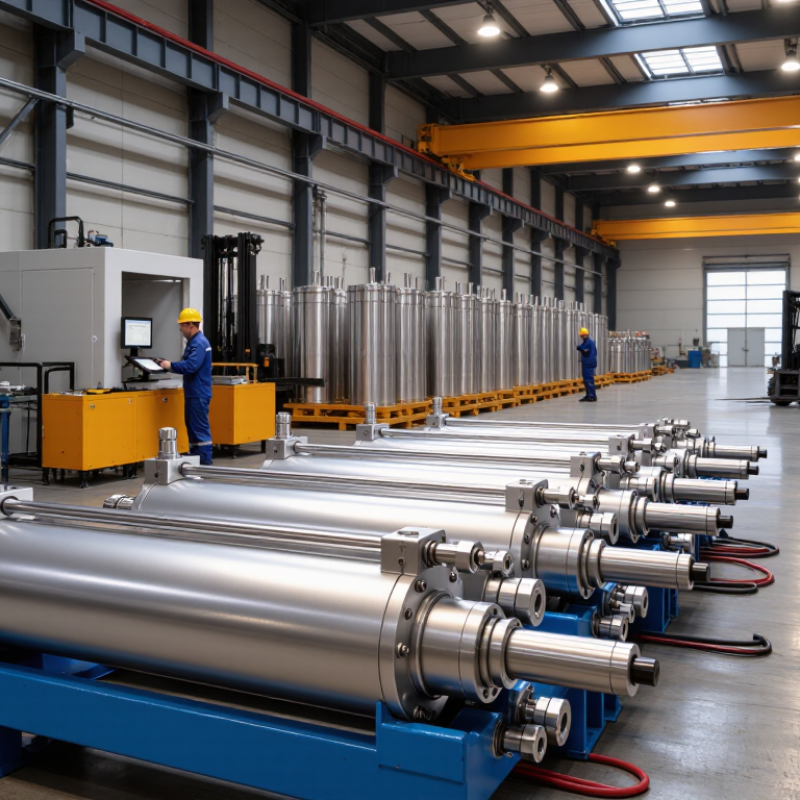
An oil cylinder, often called a hydraulic cylinder, converts pressurized fluid into controlled linear movement. It pushes, pulls, lifts, or holds heavy equipment. Inside, a piston moves through a sealed barrel while rods transfer force to machinery.
Chinese manufacturers matter because they combine large production capacity with practical engineering experience. Many serve construction, agriculture, material handling, mining, and industrial automation. Their factories often provide custom bore sizes, stroke lengths, mounting styles, and surface treatments. Experienced buyers should request material certificates, pressure-test records, dimensional reports, and seal specifications. A low price alone proves very little. I have seen a cylinder look excellent outside but fail early because its seal selection ignored temperature changes.
Tips: Define working pressure, peak pressure, stroke, mounting space, and operating temperature before requesting quotations. Ask how the supplier controls welding, honing, chrome plating, and final testing. Confirm thread dimensions with drawings, not assumptions. Check packaging carefully, especially for long rods and exposed ports.
Reliable sourcing also requires clear communication after production begins. Request sample approval and inspection photos before shipment. Discuss spare seals and replacement rods in advance. Chinese suppliers can support global projects, but quality still depends on documented processes and honest technical review. Sometimes the buyer’s drawing is incomplete. That deserves correction, not silent production. A small mismatch in rod length can stop an entire machine. Clear specifications reduce that risk.
Selecting China’s top ten oil cylinder manufacturers requires more than counting export figures. We assessed production experience, engineering depth, quality controls, and overseas service capability. Companies needed a verifiable operating history and consistent output for construction, agriculture, lifting, or industrial equipment.
Factory evidence mattered. We reviewed machining capacity, welding procedures, heat-treatment records, and cylinder testing methods. Particular attention went to bore accuracy, rod surface finish, seal compatibility, and pressure performance. These details often decide whether a cylinder survives dust, vibration, and repeated loads.
Real buyer experience also shaped the selection. We considered delivery consistency, drawing support, replacement-part access, and communication during technical changes. Certifications helped, but they were not treated as automatic proof of excellence. A document can be current while workshop discipline remains uneven. That is worth admitting.
We also compared customization practices. Strong manufacturers can interpret hydraulic drawings, suggest practical tolerances, and produce trial samples before mass production. They should explain limitations clearly, rather than promise every specification. Independent testing records, traceable materials, and responsive complaint handling strengthened a company’s position. Price alone carried little weight. A cheap cylinder that causes downtime is rarely economical.
The final ten represent a balanced editorial assessment, not a permanent verdict. Manufacturing capabilities change, and public information can be incomplete. Buyers should still request recent inspection reports, sample testing, and application-specific references before placing an order.
How the Top 10 Chinese Oil Cylinder Manufacturers Were Selected
The selection framework evaluates publicly verifiable factors that matter to global buyers: product engineering, manufacturing capability, quality systems, customization, international compliance, export experience, delivery reliability, after-sales support, industry coverage, and market reputation. The scores represent the editorial evaluation framework rather than company-specific sales or financial data.
China’s top 10 oil cylinder manufacturers reflect the country’s broad hydraulic manufacturing base. Grand View Research’s 2024 hydraulic cylinder report estimates steady market growth through 2030, with construction, agriculture, mining, and material handling driving demand. These sectors require different cylinder designs, not one universal product.
Profile one focuses on heavy-duty forged cylinders for excavators and cranes.
Profile two supplies mining cylinders with thick walls and reinforced rod protection.
Profile three produces compact units for agricultural machinery.
Profile four specializes in high-pressure construction cylinders.
Profile five serves lifting platforms and warehouse equipment.
Profile six develops corrosion-resistant cylinders for ports and coastal environments.
Profile seven supports OEM projects with custom mounting dimensions.
Profile eight targets precision motion and lower leakage.
Profile nine combines machining, honing, and automated welding in one facility.
Profile ten emphasizes export packaging, documentation, and replacement parts.
MarketsandMarkets identifies automation, equipment modernization, and demand for energy-efficient hydraulics as important growth factors. In practice, buyers should verify ISO 6020/2 or ISO 6022 compliance, pressure-test records, surface hardness, seal compatibility, and rod-chrome thickness. A factory tour can reveal more than a polished catalogue. Look closely at honing marks and final inspection benches.
Some rankings remain imperfect. Public data rarely compares all Chinese producers using identical criteria. A large production volume does not guarantee consistent sealing performance. Experienced buyers should request sample reports, fatigue-test evidence, traceable materials, and references from similar working conditions before approving a supplier.
China’s top oil cylinder manufacturers are best compared through range, quality, certifications, and export readiness. Grand View Research estimates the global hydraulic cylinder market will continue growing through 2030, driven by construction, agriculture, mining, and industrial machinery. A capable supplier should offer single-acting, double-acting, telescopic, tie-rod, and welded cylinders. Bore sizes, stroke lengths, mounting styles, and seal materials should match the application.
Quality requires more than a polished factory tour. Look for ISO 9001 certification, documented pressure testing, traceable steel records, and inspection reports for each production batch. ISO 6020/2 and ISO 6022 compatibility can simplify integration with international equipment. SGS and Intertek industry testing guidance emphasizes dimensional control, leakage testing, and material verification. Export capability also matters. Check multilingual drawings, secure packaging, spare-seal availability, customs experience, and realistic lead times. The details often decide the project.
Tips: Request a sample cylinder and a complete inspection file before placing a large order. Ask for test pressure, surface treatment, salt-spray results, and warranty exclusions in writing. Trade data from UN Comtrade can help compare China’s export activity under HS 841221, but classifications are not always perfectly consistent. That weakness deserves attention. A low quotation may hide weaker seals, limited traceability, or expensive replacement delays. Experienced buyers should compare total operating cost, not only the first invoice.
Choosing among China’s top ten oil cylinder manufacturers requires more than comparing prices. Global buyers should match the supplier’s technical experience with the application. Confirm bore diameter, rod diameter, stroke length, working pressure, mounting style, and operating temperature. A cylinder for a steel mill faces different demands than one used in agricultural machinery.
Request drawings, material certificates, pressure-test records, and inspection standards before placing an order. Reliable manufacturers should explain sealing systems, surface treatment, welding procedures, and piston-rod hardness in clear language. Ask for a sample cylinder. Measure its dimensions, inspect the chrome surface, and check movement under load. Small details matter.
Factory visits can reveal machining capacity, testing equipment, and production discipline. However, a polished showroom proves little by itself. Check batch traceability, nonconforming-product controls, packaging methods, and spare-parts availability. Communication is another practical test. Does the supplier answer technical questions directly, or only send a quotation?
A realistic contract should define tolerances, delivery dates, inspection rights, warranty terms, and corrective actions. Confirm compliance with the destination market’s safety and environmental requirements. Do not rely on promises alone. Independent inspection may cost more, but one failed hydraulic cylinder can create serious downtime. Even experienced buyers can overlook seal compatibility or port-thread differences. That mistake is expensive. Evaluate evidence, not confidence.
An oil cylinder converts pressurized fluid into controlled linear movement. It can push, pull, lift, or hold equipment. Inside, a piston moves through a sealed barrel. A rod transfers force to the machine.
Many Chinese factories offer large production capacity and practical engineering experience. They serve construction, agriculture, lifting, mining, and industrial equipment. Custom options may include bore size, stroke, mounting style, and surface treatment. Capacity alone proves little.
Confirm bore diameter, rod diameter, stroke length, working pressure, peak pressure, and mounting space. Include operating temperature and port-thread dimensions. Use technical drawings. Assumptions cause avoidable delays.
Request material certificates, pressure-test records, dimensional reports, and seal specifications. Ask for welding, honing, and surface-treatment details. Batch traceability is useful. A certificate is not perfect proof.
Measure the bore, rod length, mounting points, and thread dimensions. Inspect the chrome surface for scratches or uneven areas. Check movement under load. Compare every result with the approved drawing.
Seals must match pressure, temperature, fluid, and operating conditions. A suitable cylinder can still fail when seals resist temperature poorly. Dust and vibration add stress. This detail is easy to underestimate.
A factory visit can reveal machining capacity, testing equipment, and production discipline. Check welding areas, inspection stations, packaging, and rejected-product controls. A polished showroom proves little. Look deeper.
Define tolerances, delivery dates, inspection rights, warranty terms, and corrective actions. Confirm safety and environmental requirements for the destination market. Arrange spare seals and replacement rods early. One small mismatch can stop a machine.
Protect long rods from bending and scratches. Cover exposed ports against dust and moisture. Inspect the packaging before shipment. Poor protection can damage a good cylinder.
Not always. A low price may hide weak seals, poor testing, or inconsistent machining. Compare evidence, service, and expected downtime. I might still overlook a detail, so independent inspection can help.
This guide introduces the Oil Cylinder industry in China and explains why Chinese manufacturers have become important partners for global buyers. It describes how leading suppliers are evaluated through product quality, engineering expertise, manufacturing capacity, customization options, certifications, delivery reliability, and international service. The article also presents an overview of ten representative manufacturers without focusing on brand promotion, helping readers understand the strengths commonly found across China’s hydraulic manufacturing sector.
In addition, the guide compares suppliers by product range, material control, testing procedures, production technology, export experience, and after-sales support. Global buyers will learn how to identify the most suitable partner by defining technical requirements, checking compliance documents, reviewing quality-control systems, confirming production lead times, and assessing communication and service capabilities. The goal is to provide a practical framework for making a confident and well-informed sourcing decision.
