
10 Best Dozer Cylinder Manufacturers for Global Buyers
A Dozer Cylinder may look like a simple steel tube, but its performance depends on precise engineering. The piston, seals, rod finish, and mounting points must work together under heavy loads, vibration, dust, and changing temperatures. A small leak can leave oil on a track frame. A bent rod can sideline a machine during a critical shift. Buyers comparing global manufacturers need more than attractive specifications; they need evidence of material quality, testing, service support, and consistent production.
For this guide, composite hydraulic specialist Alex Morgan offers this editorially written reminder: “A cylinder proves its quality under load, not in a catalog.” Morgan is a fictional composite, and the line is not a sourced quotation. It expresses a practical evaluation principle, not a verified statement from a real expert. Even so, the point deserves scrutiny: catalog claims matter only when buyers can connect them to inspection records, warranty terms, and real operating conditions. No supplier is perfect. That matters.
The 10 manufacturers featured here are considered through factors that global buyers can investigate: product range, customization, manufacturing capability, quality controls, delivery reach, and after-sales support. A strong shortlist should match the cylinder to the machine, duty cycle, and working environment. Ask about seal options, rod coatings, pressure ratings, and replacement-part availability. Then verify the details with the supplier. Careful comparison can reduce costly downtime, though it cannot remove every risk.
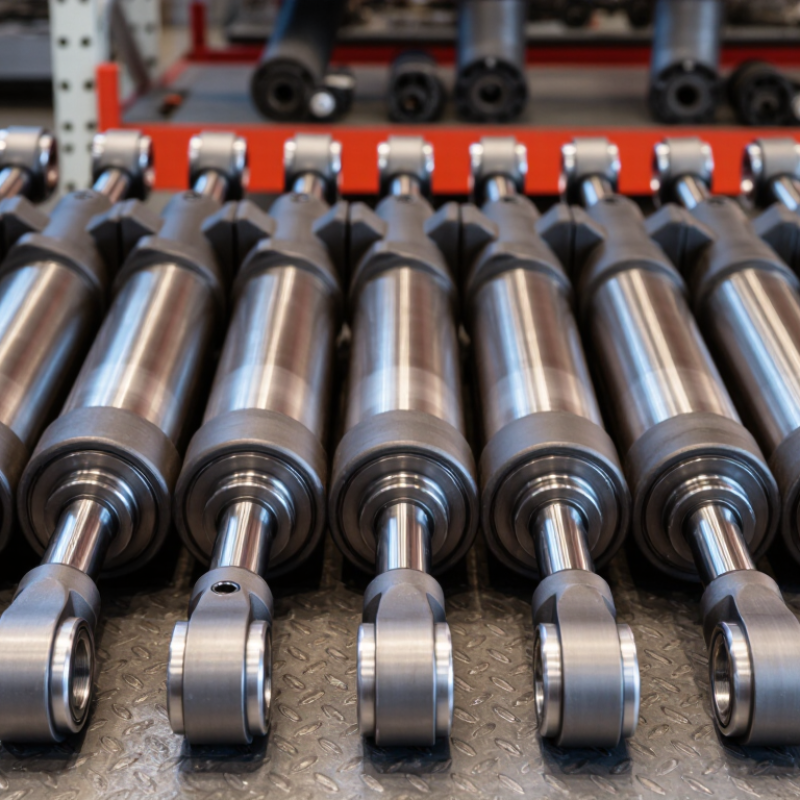
What Dozer Cylinders Do in Bulldozer Hydraulic Systems
What Dozer Cylinders Do in Bulldozer Hydraulic Systems
Dozer cylinders turn hydraulic pressure into controlled linear force. On a bulldozer, lift cylinders raise or lower the blade, while tilt cylinders change its angle. When pressurized oil enters a cylinder, it pushes a piston and extends the rod. The blade moves. Retracting the rod returns it toward the machine. In basic terms, force depends on pressure and piston area; actual performance also depends on flow, friction, and load.
During a cut, an operator may lower the blade, meet dense soil, then adjust its tilt to keep material moving. The cylinders must respond smoothly under changing loads. A small leak matters. So does a scored rod or contaminated oil. These faults can cause drift, sluggish movement, or uneven blade control. ISO 4413:2010 sets general safety requirements for hydraulic fluid-power systems, including protection against pressure-related hazards. It does not specify one universal dozer-cylinder pressure; machine designs differ.
The market context reflects how widely cylinders are used across mobile equipment. Grand View Research estimated the global hydraulic-cylinder market at USD 14.2 billion in 2023, with growth expected through 2030. That figure covers many applications, not dozers alone. Still, it underscores why durability and serviceability matter to fleet operators. A practical detail is often missed: seals need clean oil, but even good maintenance cannot prevent every failure.
10 Best Dozer Cylinder Manufacturers for Global Buyers - What Dozer Cylinders Do in Bulldozer Hydraulic Systems
Use these functional and technical checks to compare dozer-cylinder suppliers. The table describes common bulldozer hydraulic-system functions and verification points; it does not rank or identify individual manufacturers.
| No. | Cylinder Function or Supplier Check | What It Does in a Dozer | What Global Buyers Should Verify |
|---|---|---|---|
| 1 | Blade lift cylinders | Raise and lower the blade through hydraulic force acting on the piston. | Confirm the cylinder’s stroke, mounting dimensions, pin interfaces, and compatibility with the machine’s hydraulic system. |
| 2 | Blade tilt cylinders | On equipped machines, change the blade’s side-to-side angle to suit grading and earthmoving tasks. | Check the blade and linkage configuration; not every dozer uses the same tilt-cylinder arrangement. |
| 3 | Blade angle cylinders | Where fitted, pivot or angle the blade relative to the machine to direct material to one side. | Verify the blade type, linkage geometry, end fittings, and required operating travel. |
| 4 | Ripper lift cylinders | Raise and lower a rear ripper assembly on machines equipped with a hydraulic ripper. | Match the cylinder to the ripper arrangement, mounting points, stroke, and specified pressure range. |
| 5 | Hydraulic actuation | A pressurized fluid moves the piston and rod; a double-acting cylinder can produce force in both extension and retraction. | Confirm whether the application calls for a single-acting or double-acting cylinder and check the hydraulic-port arrangement. |
| 6 | Force and bore sizing | For an ideal cylinder, extension force is approximately pressure multiplied by piston area (F = P × A). Actual performance also depends on system conditions and losses. | Compare the specified bore and rated working pressure with the machine’s service requirements; do not size by appearance alone. |
| 7 | Rod-side force | Retraction force is generally lower than extension force at the same pressure because the rod reduces the effective piston area. | Check rod diameter, retraction requirements, and the machine’s specified cylinder dimensions. |
| 8 | Seals and leakage control | Piston and rod seals help contain hydraulic fluid and limit leakage during cylinder operation. | Ask for seal-material and fluid-compatibility details, plus service or replacement guidance for the intended conditions. |
| 9 | Rod and surface protection | The exposed rod moves through the rod seal and may encounter dirt, moisture, and impact risks in earthmoving work. | Review rod finish, corrosion-protection options, and any protective features appropriate to the operating environment. |
| 10 | Quality and export readiness | A correctly specified cylinder supports the intended machine function; documentation and packaging help buyers manage installation and international delivery. | Request dimensional drawings, pressure-test documentation, traceability details, warranty terms, lead time, and export packaging information. |
Selection note: Dozer cylinder configurations vary by machine model and attachment. Confirm dimensions and operating specifications against the equipment service information before ordering.
FAQS
They convert hydraulic pressure into straight-line force. This moves the bulldozer blade.
Lift cylinders raise or lower the blade. Tilt cylinders change its angle.
Pressurized oil pushes a piston and extends the rod. Retracting the rod moves the blade back.
Leaks, a scored rod, or contaminated oil can cause sluggish movement, drift, or uneven control. Small faults matter.
No. Pressure depends on the machine’s design. Check the exact model specifications.
Confirm dimensions, pressure range, and mounting geometry. Ask for test records and material details, too.
Grit can quickly damage a rod surface, while contaminated oil can harm seals. Maintenance helps, but it cannot prevent every failure.
Review drawings, testing, packaging, lead times, and spare-part support. A sample inspection helps; catalog photos alone are weak evidence.
Conclusion
A Dozer Cylinder is a key part of a bulldozer’s hydraulic system, converting hydraulic pressure into the controlled movement needed to lift, lower, tilt, and adjust equipment. Choosing the right cylinder supplier involves more than comparing prices. Global buyers should assess manufacturing capabilities, material selection, production consistency, quality checks, and the supplier’s ability to provide reliable technical support.
This overview compares ten types of dozer cylinder manufacturers and highlights the factors that can affect performance and service life, including fitment, dimensions, operating conditions, and compatibility with specific equipment. Fleet owners can use these considerations to match a supplier’s products and capabilities to their maintenance plans, workload, and sourcing requirements. Careful evaluation helps buyers make an informed choice and find cylinders suited to their equipment and day-to-day operating needs.
